
• Skip to primary navigation
  • Skip to main content
  • Skip to primary sidebar
  • Ramadan Specials
  • Get your Saucebook
  • Recipe Index
  • Dr. Who?
  • Contact

Butter Over Bae logo

menu icon
go to homepage
  • Ramadan Specials
  • Get your Saucebook
  • Recipe Index
  • Dr. Who?
  • Contact
    • Facebook
    • Instagram
    • Pinterest
    • TikTok
    • Twitter
  • search icon
    Homepage link
    • Ramadan Specials
    • Get your Saucebook
    • Recipe Index
    • Dr. Who?
    • Contact
    • Facebook
    • Instagram
    • Pinterest
    • TikTok
    • Twitter
  • ×
    Home

    Blog

    Simple Kachumber Salad Recipe

    September 20, 2023

    Probably the easiest and quickest salad I’ve fallen in love with is this easy Kachumber salad. It’s a classic, easy, crunchy, vegetable salad, that is VERY VERY hard to mess up. Imma gonna throw in some variations and pairings for you, just to show you how versatile this is.

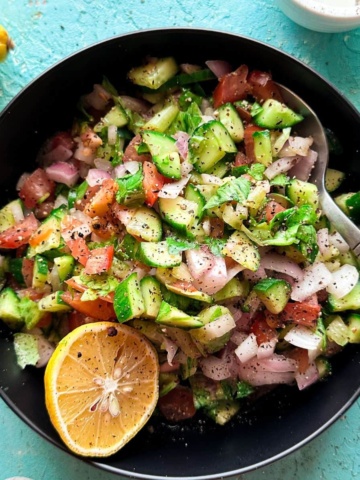
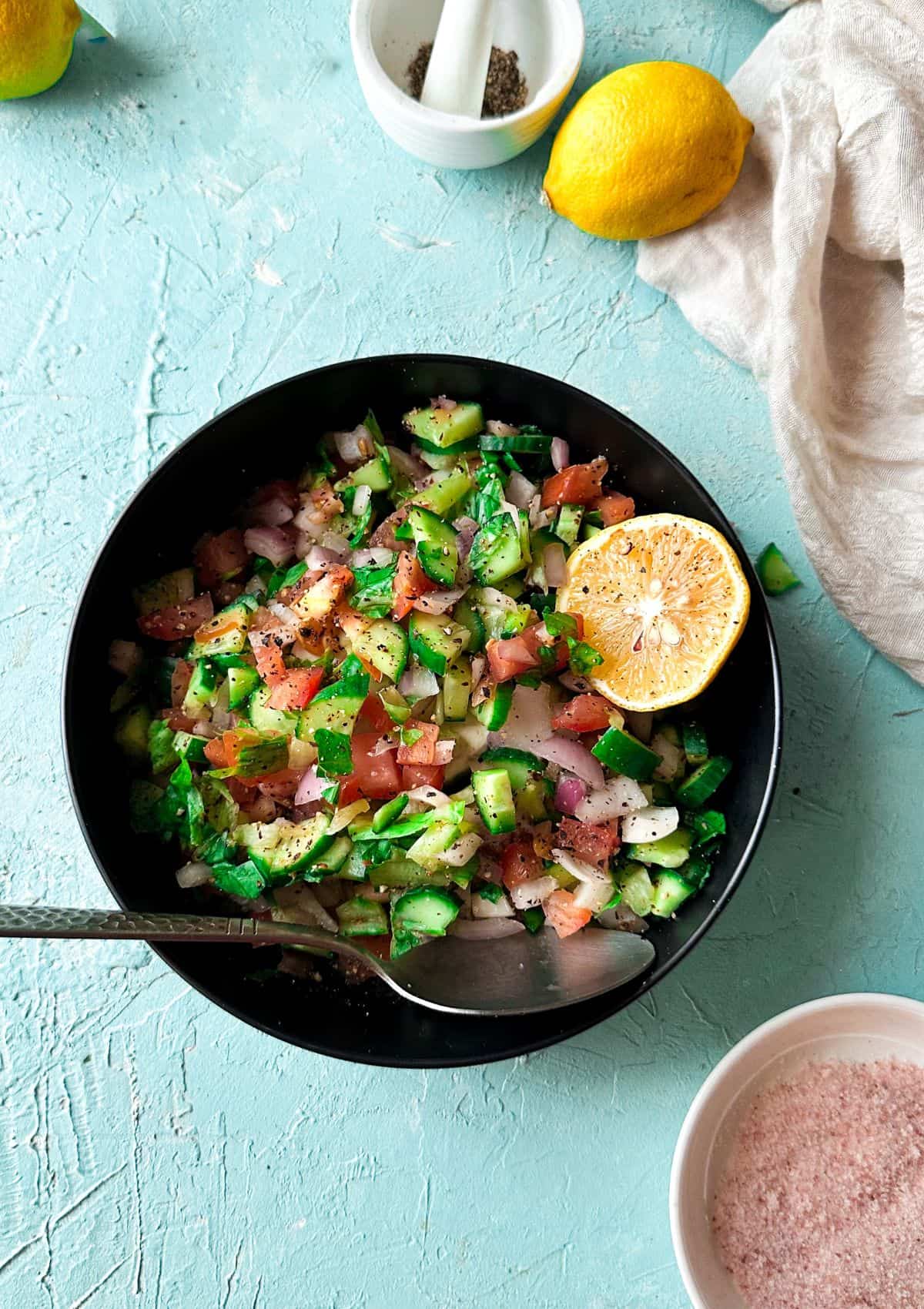
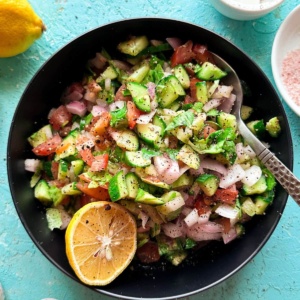
    kachumber salad served in a black bowl.

    To be honest, this is literally the ONLY salad in Pakistani and North Indian cuisine, that has a proper name and a dressing. Otherwise, growing up, for most of us, salad pretty much meant, sliced cucumbers, tomatoes, and onions on a plate.

    [feast_advanced_jump_to]

    What is Kachumber Salad?

    The word Kachumber, (pronounced as Ka-choo-mer), means “pounded” or grounded. As the name suggests, common vegetables like onions, tomato, and cucumber are chopped up and tossed together to create this salad. This is literally the only salad that has an actual name in the Pakistani and North Indian cuisine. Otherwise, salads per se don’t really exist, and the vegetables are usually just eaten in “bhujia” or dry curry form, like the lauki ki bhujia “bottle gourd curry”.

    Ingredients and Substitutions

    Every family has their own favorite veggies and their own preferred dressing for this salad. I’m going to put up the one most commonly eaten in restaurants and at home.

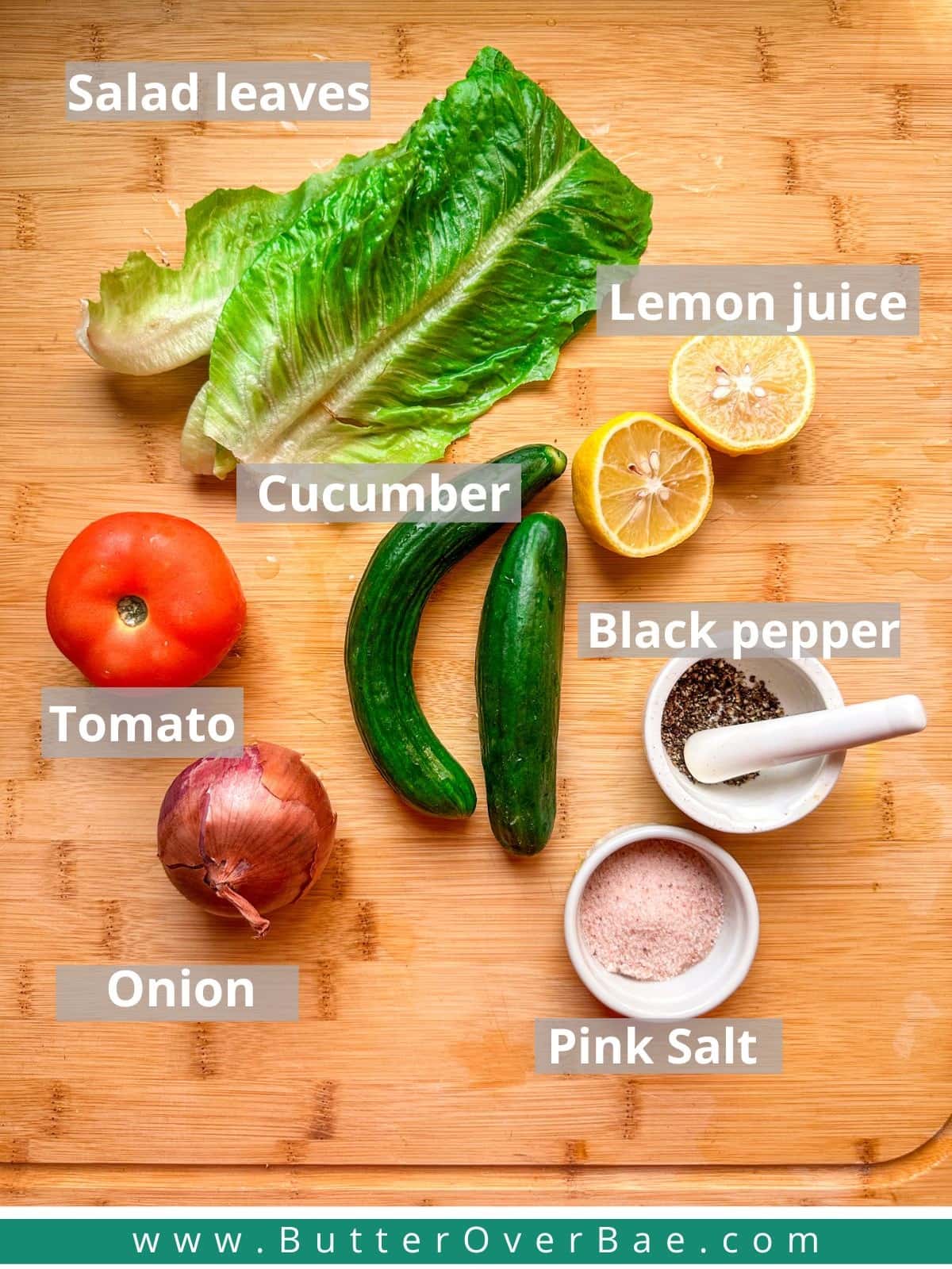
    ingredients for kachumber salad.
    • Cucumbers – This is the essential of a kachumber salad, which is sometimes also called the “cucumber salad”. You can peel the cucumber or leave it on for crunch. I personally prefer leaving it on, and only peel if my cucumbers are extra bitter.
    • Onions – I use red onions because I like how they taste. You can use shallots or yellow onions too.
    • Tomato – You need firm, juicy, ripe tomatoes for this recipe to make sure that they don’t squish when being chopped finely. Use any tomato you have at hand, as long as they are juicy and red.
    • Seasoning – This recipe uses a very basic, lemon, salt, and pepper seasoning. But I am going to give you some fun add-ons at the end if you feel like spicing things up!

    See the recipe card for full information on ingredients and quantities

    Variations and Add-ons

    This is the fun part, where you take an average Joe (not the serial killer kind) (shoutout YOU fans) and make it your own.

    • Make it Spicy
      Pack your salad with heat by adding just a dash of cayenne pepper powder or sliced up Thai chilies.
    • Add more vegetables
      Add any favorite or seasonal vegetable to this salad. My personal favorite add-ons are carrots, radishes, and sometimes bell peppers.
    • Flavor enhancers
      For a fancier salad dressing, try adding chaat masala, which is a very popular spice mix to add to this salad. Or try roasted cumin seed powder or a pinch of garam masala powder. They all add warmth and subtle heat to the dish. I love adding dahi bara masala to my kachumber sometimes. You can also try adding a small clove of finely chopped garlic.
    • For Crunch
      Although the vegetables add the perfect crunch to this recipe, try topping it off with crispy pappar, crushed chips or peanuts.
    • Fruit and Carbs
      Kachumber Salad with Mango and/or pomegranate are apparently popular add on in a lot of restaurants during summers. I haven’t been daring enough to try it, but maybe you can. Chickpeas is another favorite to add to your kachumber. My recommendation would be to add chickpeas and chaat masala together for a perfect hearty snack.
    • Kachumber Salad with Yogurt
      For recipes like tahiri or biryani, it is common practice to make a kachumbar raita, where this salad is mixed with beaten yogurt to make a sort of loaded raita.

    Ofcourse, the best kachumbar salad version for you, is the one that your palate eventually falls in love with.

    How to make Kachumber Salad

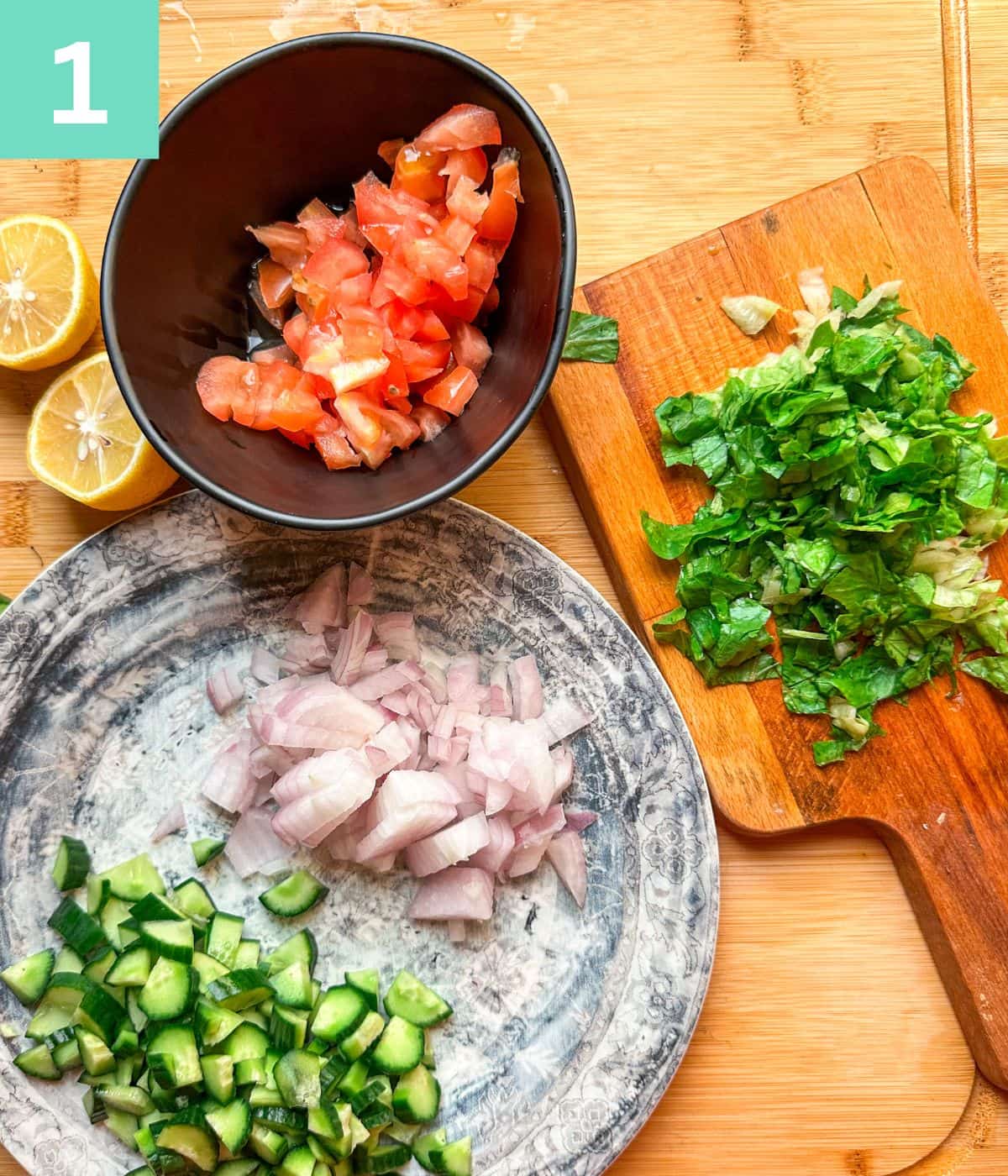
    The only real skill you need for this salad is, your chopping. And honestly you can bypass that too, if you have a hand chopper, like this Easy Pull Food Chopper and Manual Food Processor. There is no right or wrong way to chop this salad, go with whatever size and shape you prefer.

    vegetables chopped up and kept seperately.

    STEP 1 – Chop up all the vegetables by a knife or a chopper

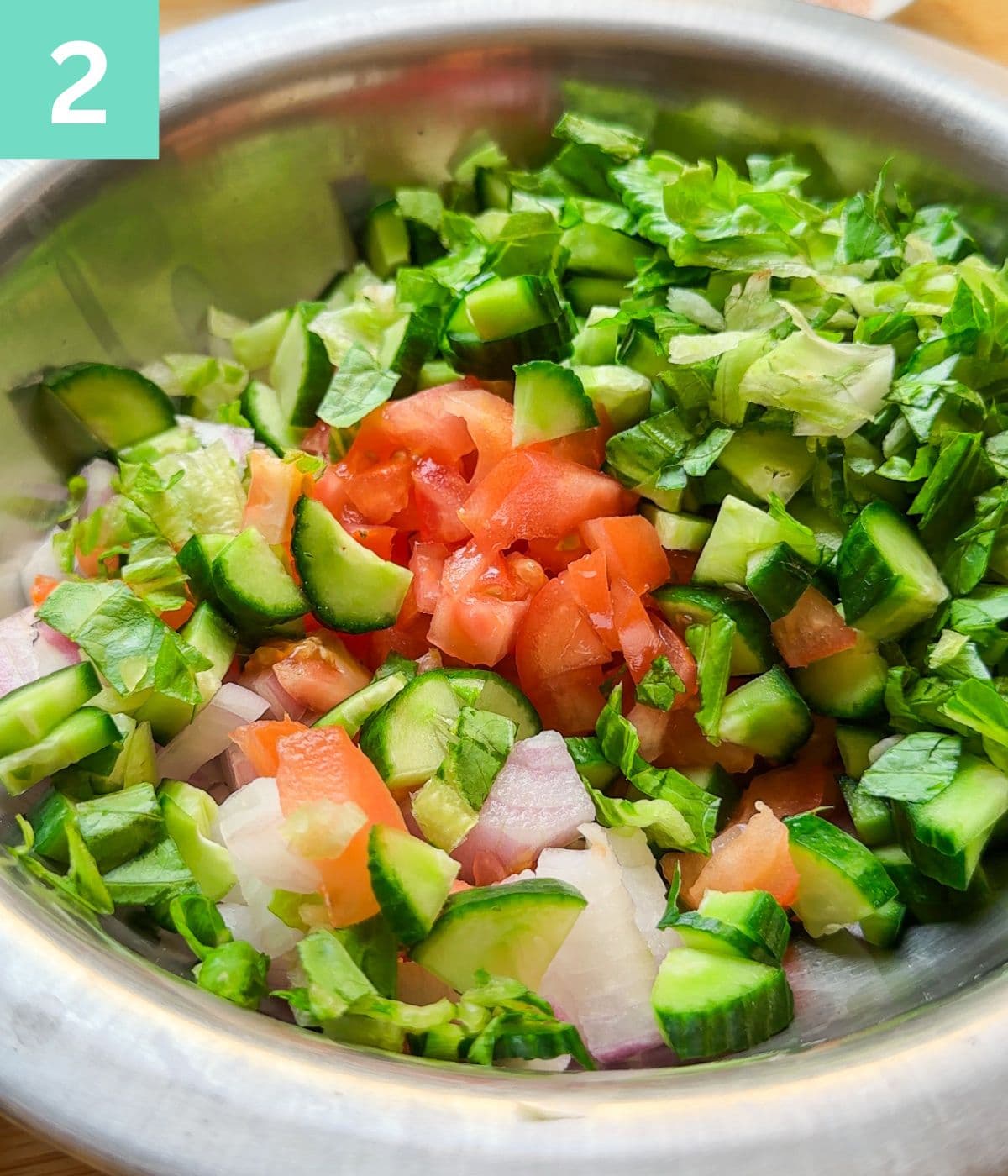
    chopped up vegetables tossed in a bowl.

    STEP 2 – Toss all the vegetables in a bowl

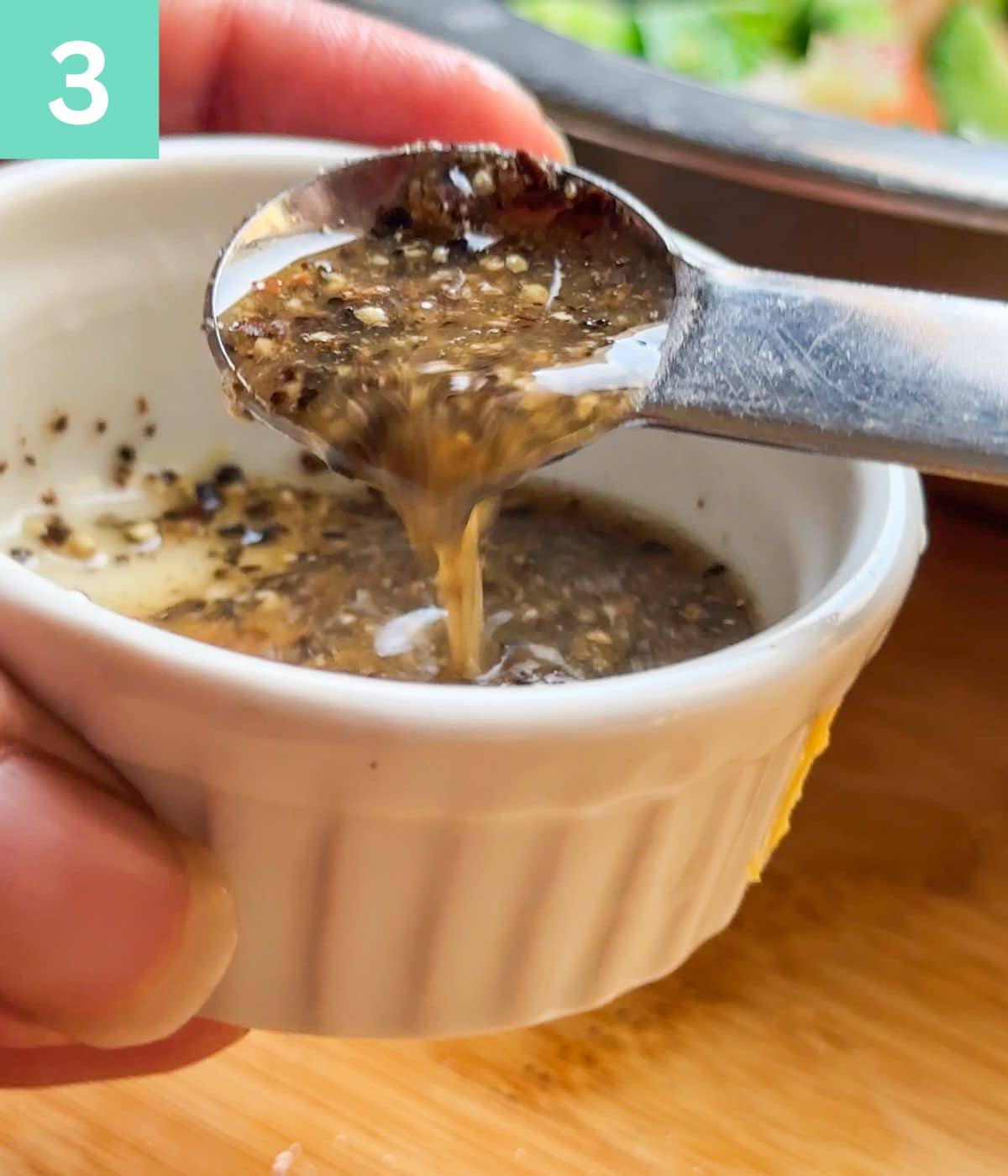
    mixing dressing for the salad.

    STEP 3 – Prepare the seasoning seperately

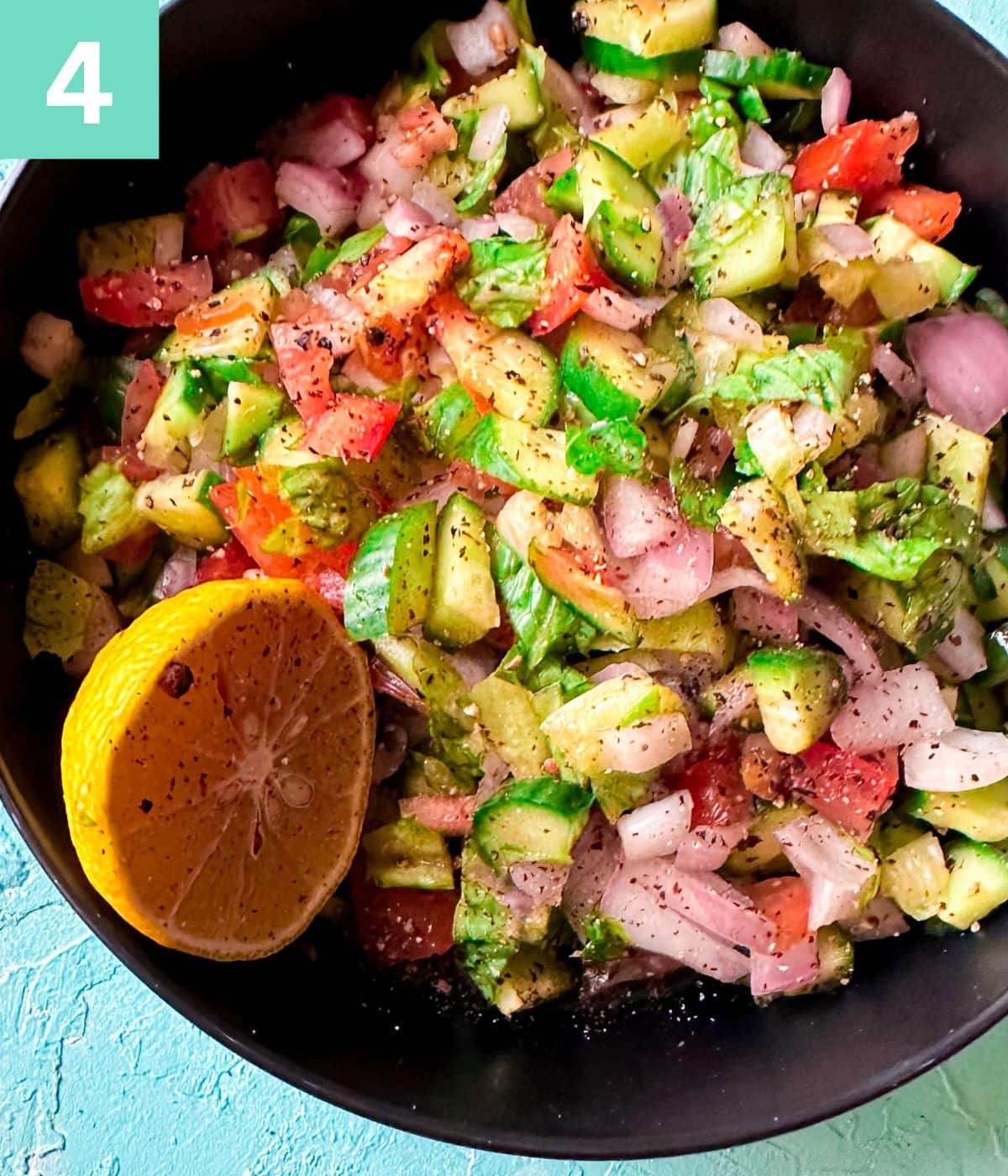
    dressing poured all over the salad.

    STEP 4 – Pour the seasoning all over the salad and mix.

    kachumber salad served in a black bowl.

    Top tip

    Only add the dressing to the vegetables when you are ready to eat. The salt releases water from the vegetables and you’ll get a lot of liquid floating at the base of your salad if you let the dressing sit in the salad for hours.

    Recipe FAQs

    Can I use any other vegetables?

    Yes! Make the salad as fancy or as minimal as you like. Most crunchy vegetables will work nicely, like carrots, radishes. Look into the variations section above to get more ideas.

    How long can the Kachumber salad last?

    If you don’t add the dressing, the chopped vegetables will stay fresh in the fridge for 2 to 3 days in an airtight container. After that, the onions become pungent.

    How do I make this salad into a meal?

    Add grilled fish, chicken or steaks and turn this salad into a beautiful easy dinner.

    What to Serve with Kachumber Salad

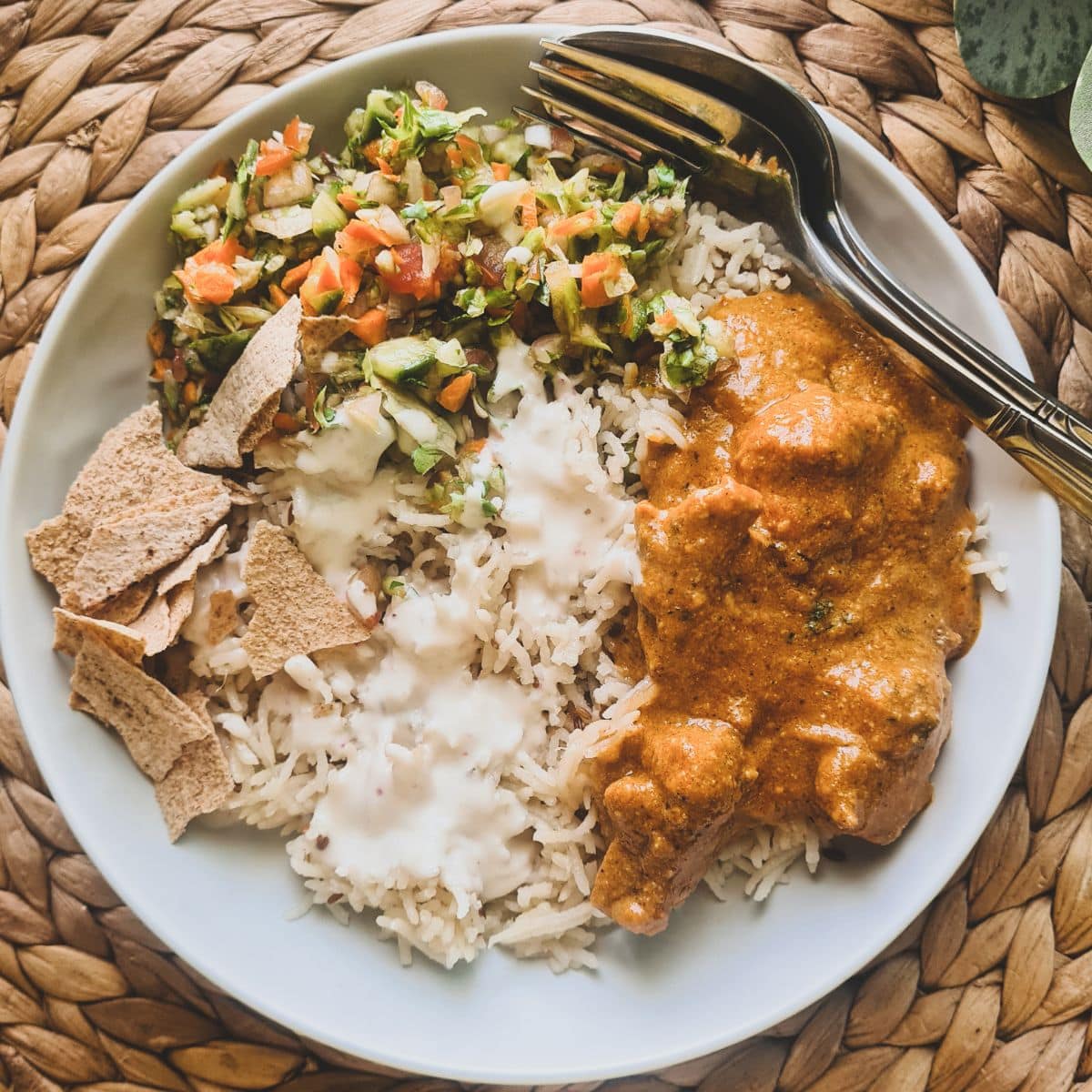
    kachumber salad paired with chicken curry, rice, salad and crisps.

    Oh, everything! It literally goes well with everything I kid you not. But fine, I’ll give you some sweet pairing option

    • Fried fish, daal chawal (lentil rice)
    • A good roast chicken and palak raita! Yummm
    • On the side of a pulao and a kebab like the chicken cheddar kebab
    • Served with freshly grilled chicken tikka
    • Of course, who can forget, A classic chicken biryani
    • Honestly, I enjoy it as a dip for my tortilla chips, when I am watching my calories

    More Salad Recipes

    I love pairing these salads with my mains. See for yourself

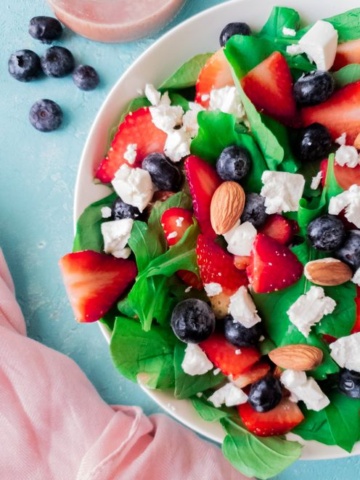
    • spinach and berry salad with feta cheese on a blue backdrop with a strawberry vinaigrette in a glass bowl on the upper left corner
      Spinach and Berry Salad with Strawberry vinaigrette
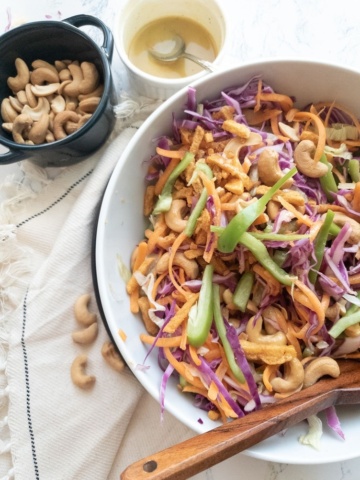
    • A white bowl full of salad with cashew nuts and veggies
      Crunchy Cashew Salad With Honey Dressing
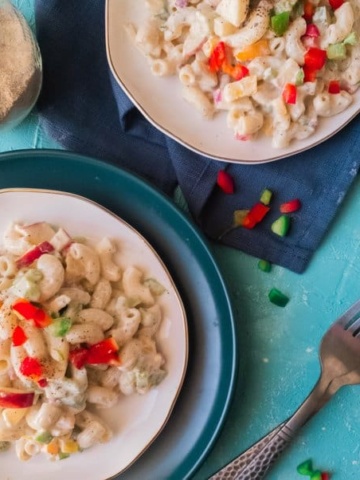
    • creamy pasta salad on two plates along with a fork on the side against a blue background
      Sweet and Creamy Pasta Salad

    Do you have any questions? I’m happy to help! And of course, If you try this recipe, I’d loveeeee to see it or simply hear about it! Hit me up in the comment section below and I’ll get back to asap! Happy Cooking!

    Kachumber Salad

    This is a traditional Pakistani/North Indian salad made with onions, tomato and cucumber with a simple dressing and a whole lot of variation options
    5 from 1 vote
    Print Pin
    Course: Salad
    Cuisine: Indian, pakistani, South Asian
    Prep Time: 7 minutes minutes
    Total Time: 7 minutes minutes
    Servings: 2 servings
    Calories: 50kcal
    Author: Wajiha

    Equipment

    1 manual chopper optional

    Ingredients

    • 1 medium red onion or any onion you prefer
    • 1 small tomato
    • 2 medium cucumbers
    • 2 to 3 fresh salad leaves of your choice optional

    Salad Dressing

    • 1/4 teaspoon table salt or to taste
    • 1/2 teaspoon freshly ground black peppercorns
    • 2 tablespoon lemon juice

    Instructions

    • Finely dice all the vegetables and salad leaves into around 1/4th cubes
    • Toss the chopped vegetables into a bowl and mix well.
    • Prepare the salad dressing by combining the salt, black pepper and lemon juice.
    • Pour the salad dressing over the vegetables and mix. Serve immediately.
      To serve later, keep the salad dressing seperate, and only pour when ready to serve.

    Notes

    • The cucumbers can be used peeled or unpeeled, based on your preference. But I’d recommend to peel the cucumbers if they are bitter.
    • Your chopping can be done with a knife or a simple hand chopper
    • Do not add the dressing to your salad if you aren’t ready to eat. Keep the dressing separately, if you are preparing the salad hours before having it.

    Variations and ad-ons

    • Spices – Just a dash of cayenne pepper powder or sliced-up thai chilies to pack heat. 
    • Other vegetables and fruits – Any seasonal or favorite produce. Popular options include carrots, radishes, bell peppers, mango and pomegranates. 
    • Flavor enhancers – Chaat masala, garam masala powder, or roasted cumin seed powder. Minced chopped garlic
    • For Crunch –  pappar, crushed chips, or peanuts.
    • Yogurt

    Nutrition

    Serving: 1gCalories: 50kcalCarbohydrates: 11gProtein: 2gFat: 0.4gSaturated Fat: 0.1gPolyunsaturated Fat: 0.02gMonounsaturated Fat: 0.01gSodium: 10mgPotassium: 377mgFiber: 2gSugar: 6gVitamin A: 241IUVitamin C: 16mgCalcium: 42mgIron: 1mg
    Can’t wait to see your remakes! Tag meon IG with your pictures @butteroverbae

    Chicken Shashlik Dry

    August 16, 2023

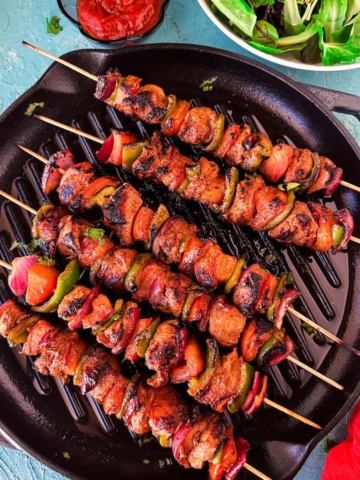
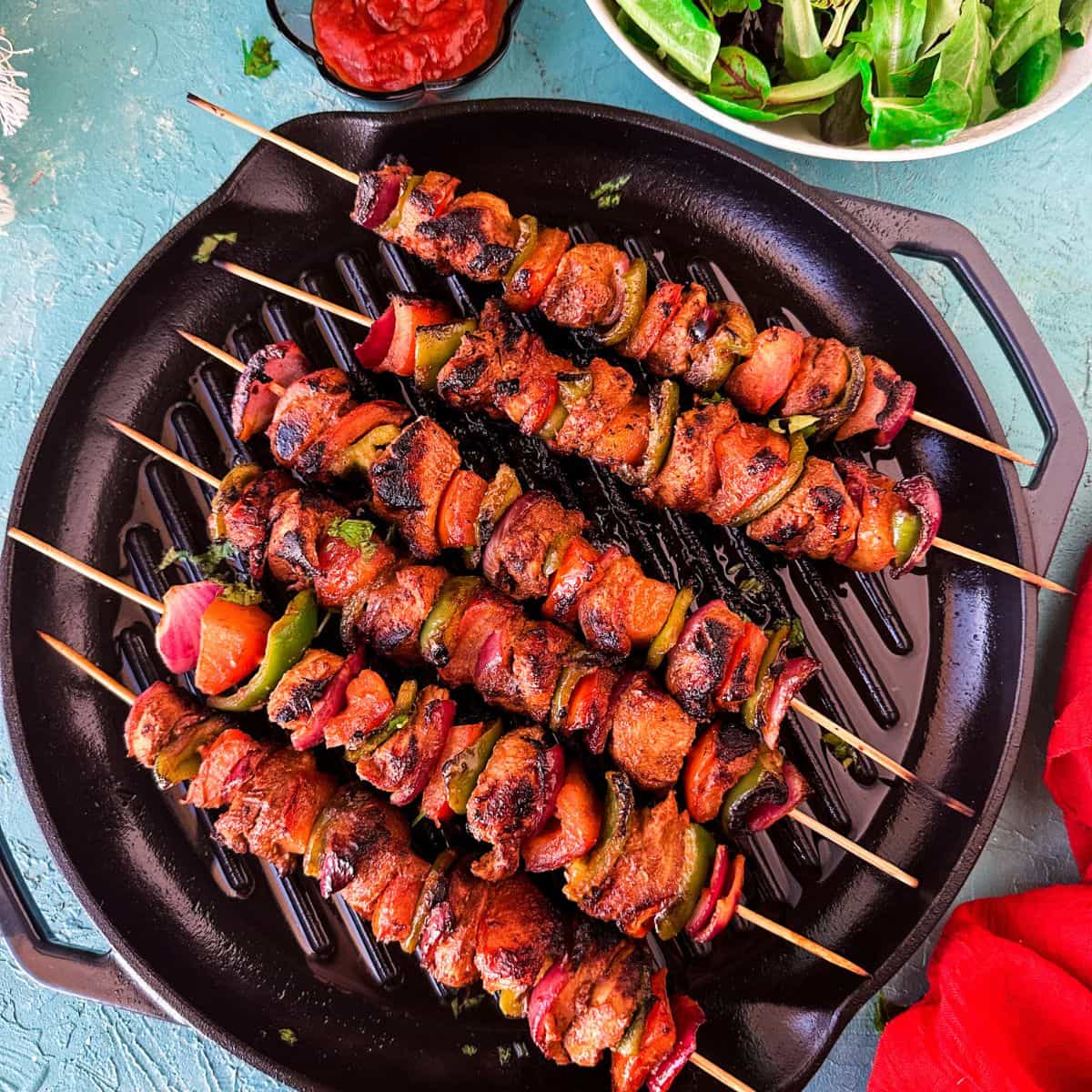
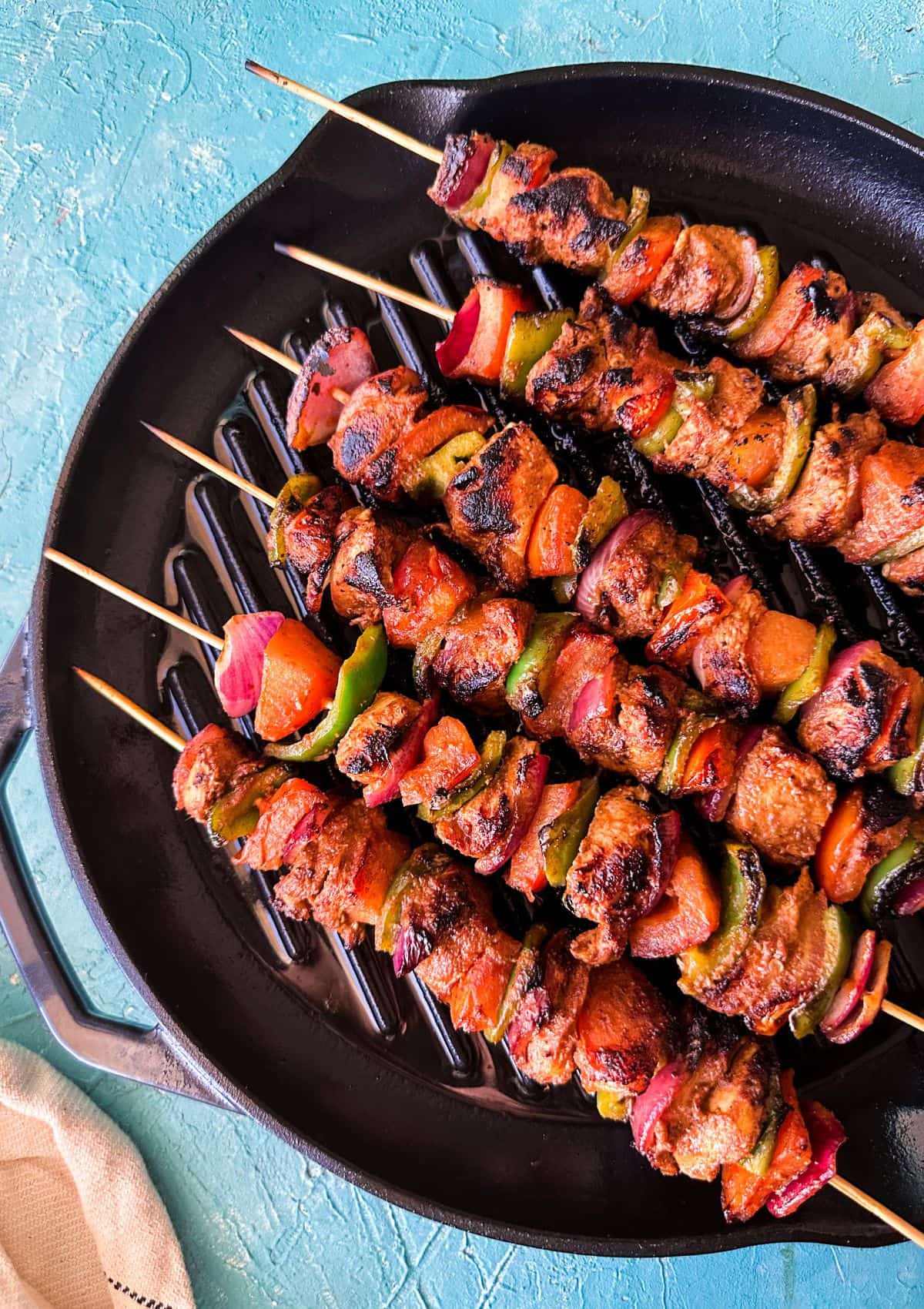
    chicken shashlik skewers served on a grillpan.

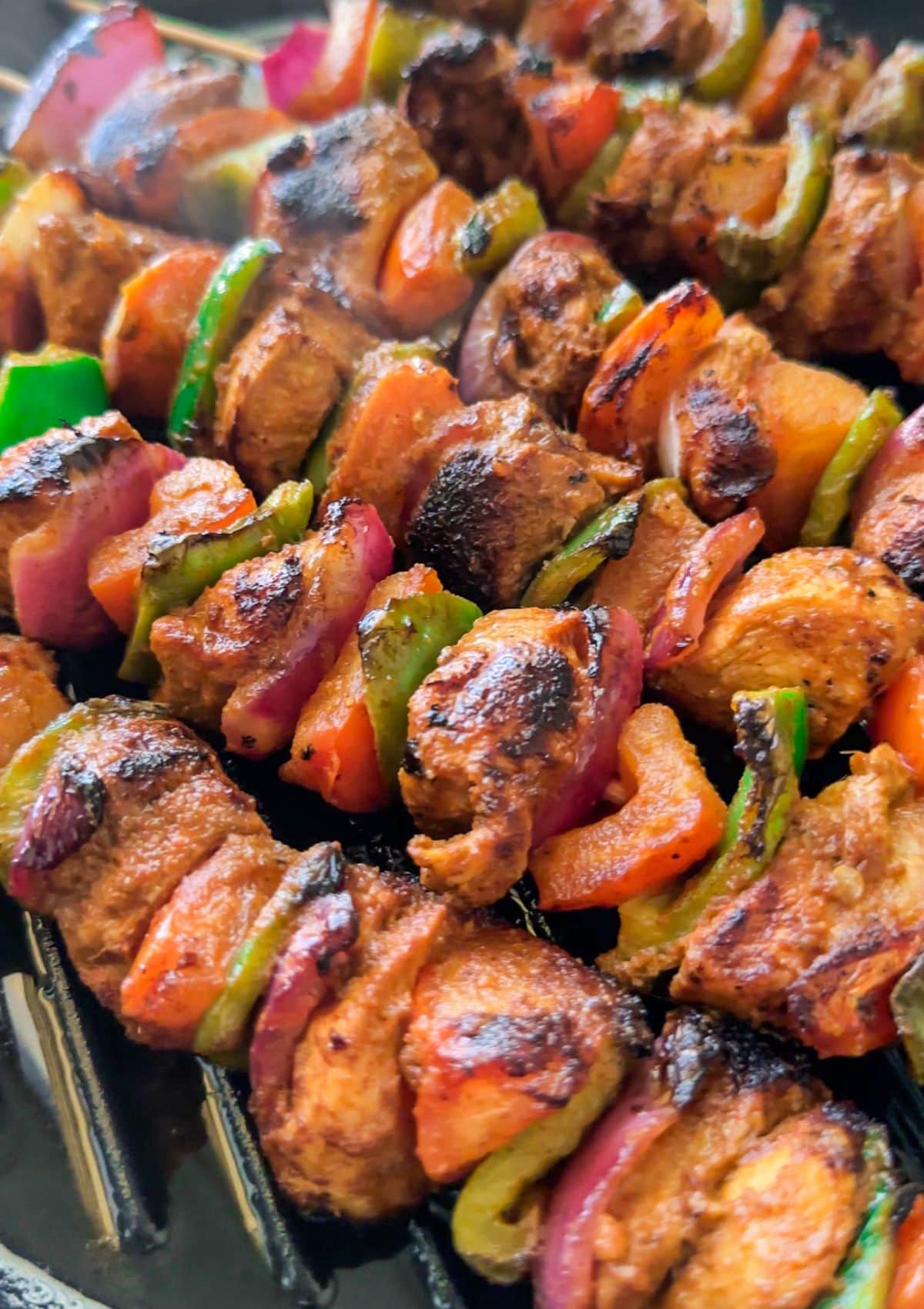
    Chicken Shashlik is a delicious Indo-Chinese dish, made with chicken, bellpeppers, onions, tomatoes, marinated in a beautiful spicy tangy tomato sauce. This recipe is the dry skewer version of the shashlik, while the other versions of chicken shashlik are gravy like. This is an easy weeknight dinner idea, comes together quickly, and any beginner can make it without a glitch!

    chicken shashlik skewers served on a grillpan.

    If you’ve been following me for a while, than you know, I am a sucker for recreating restaurant style recipes at home, and Indo-Chinese is my favoriteeee genre! This recipe joins the list of my other classic restaurant remakes like the Dynamite Shrimps, Crispy Beijing Beef , Sichuan Chicken, and Nando’s Chicken livers.

    [feast_advanced_jump_to]

    What is Chicken Shashlik

    The word ‘Shashlik’ means skewered grilled meat, synonymous with “Shish” kebab in Turkey. It was traditionally made with Mutton and the internet says it originated from Central Asia and Russia. The Chicken Shashlik, while delicious, is somehow not as well known as other more popular Desi Chinese dishes like the Hot and Sour soup, or the Chicken manchurian.

    Like most fusion recipes, the Shashlik too, was made by restaurants either owned by Chinese immigrants in the lands of India/Pakistan or by locals serving the immigrants.

    The modern day shashlik can now be made in skewers or sticks (like this recipe), or simply like usual Chinese stirfry or gravy. Both are delicious btw

    chicken shashlik skewers served on a grill pan.

    What to pair it with

    • This version of the recipe is great as a stand alone dish! Simply served with some spicy sichuan sauce on the side.
    • You can also pair it with fried rice or simple pulav rice like matar pulao
    • You can also serve it on a bed of garlic fried noodles
    • On my low-carb phase, I like pairing it with a simple green salad
    • Prawn crackers are a great side for these shashlik sticks.

    Ingredients and Substitutions

    The ingredients used to make this delicious dinner are super basic and easily swappable with substitutes in your pantry.

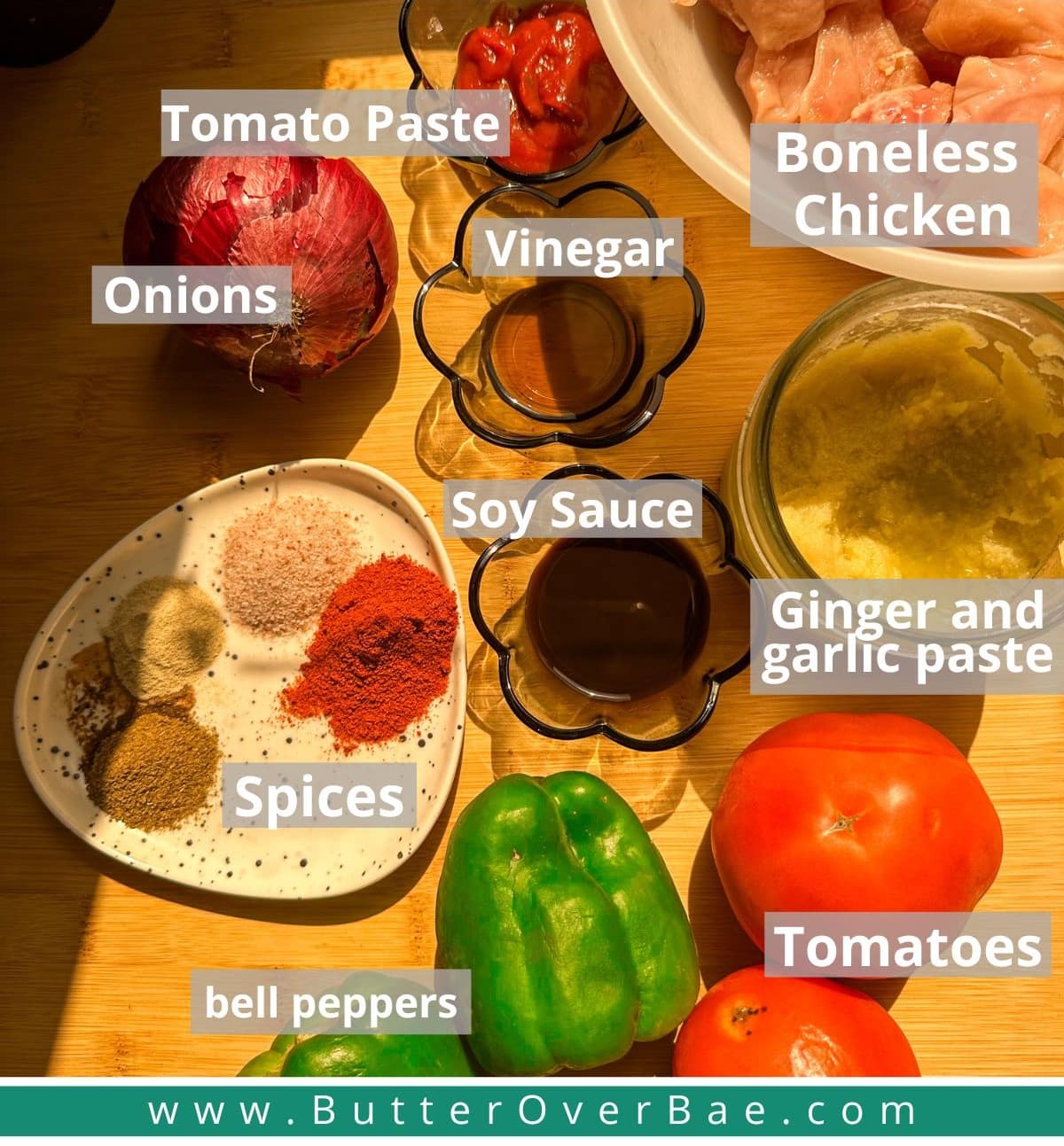
    chicken shashlik ingredients displayed and labelled.
    • Chicken – I used breast piece cut up 1 inch chunks. You can use thigh pieces too for a more tender and juicy chicken cut.
    • Vegetables – Onions and Bellpeppers (aka capsicums) are the “crunch” of the skewer. You can swap it out for any other crunchy vegetable you’d like to thread in. The tomatoes are added for flavor that they give once they are charred on the grill pan, so I wouldn’t recommend swapping them out with anything.
    • Spices – You need salt, white pepper powder, cumin powder and Kashmiri Red chili powder. This kind of red chili powder is mild but has a beautiful red color. If you’d like to cook more Indian/Pakistani food, I’d suggest you get a pack from your Asian grocery store. Or you can simply use paprika if you don’t have this in your pantry.
    • Sauces – The marinade uses your typical Chinese sauces like the Soy Sauce, Red Vinegar, and tomato paste. But worry not, use regular vinegar if you don’t have the red one. And use tomato ketchup if you are out of paste! Told ya this was an easy recipe.
    • Other – Then you need garlic paste for marination and vegetable oil for grilling. Use any neutral oil that you cook with at home.

    See the recipe card for full information on ingredients and quantities

    Instructions

    This chicken shashlik just needs a couple of easy steps to come together. Chop, marinate, thread and grill!

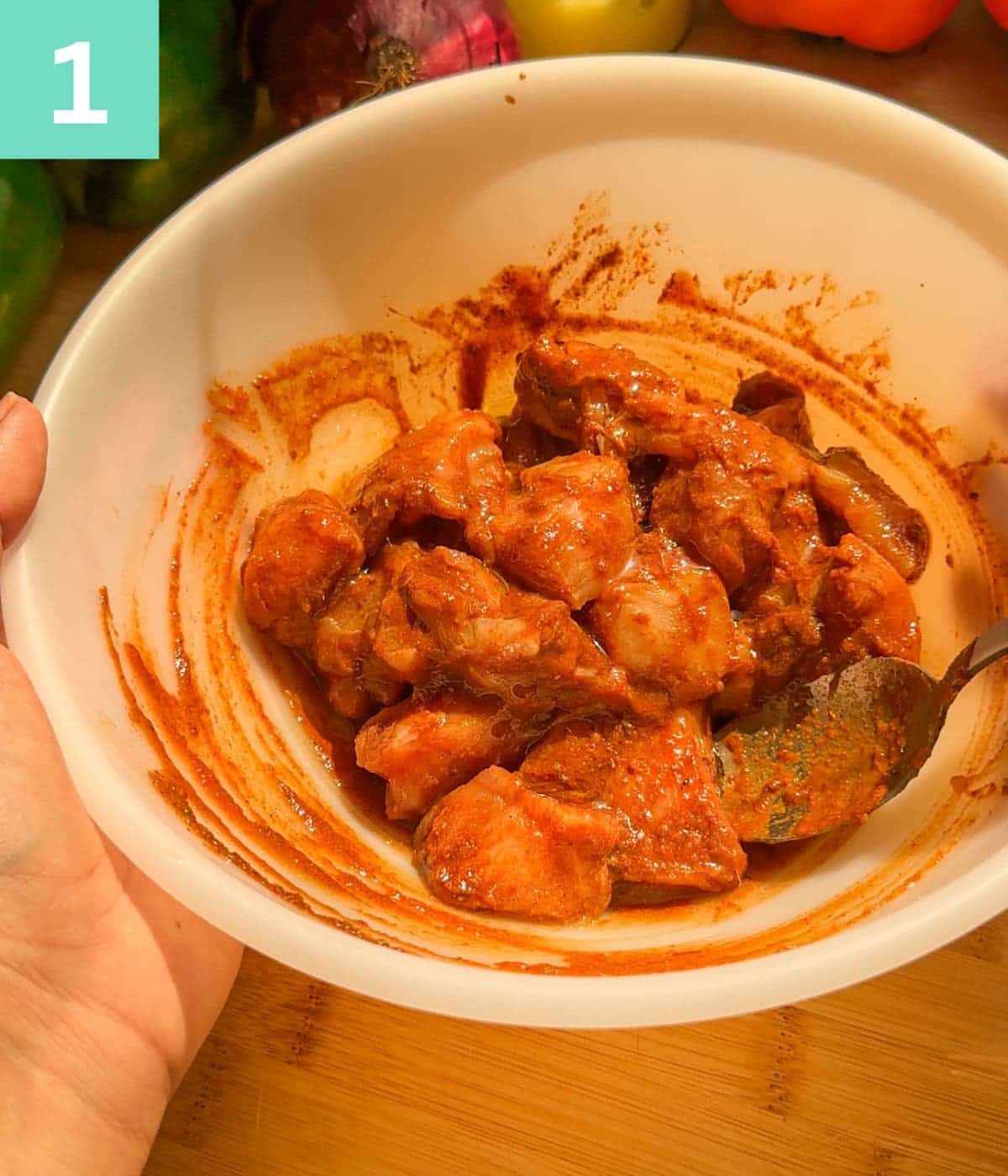
    boneless chicken cubes marinated in a bowl.

    STEP 1 – Marinate Chicken in all the spices and sauces listed.

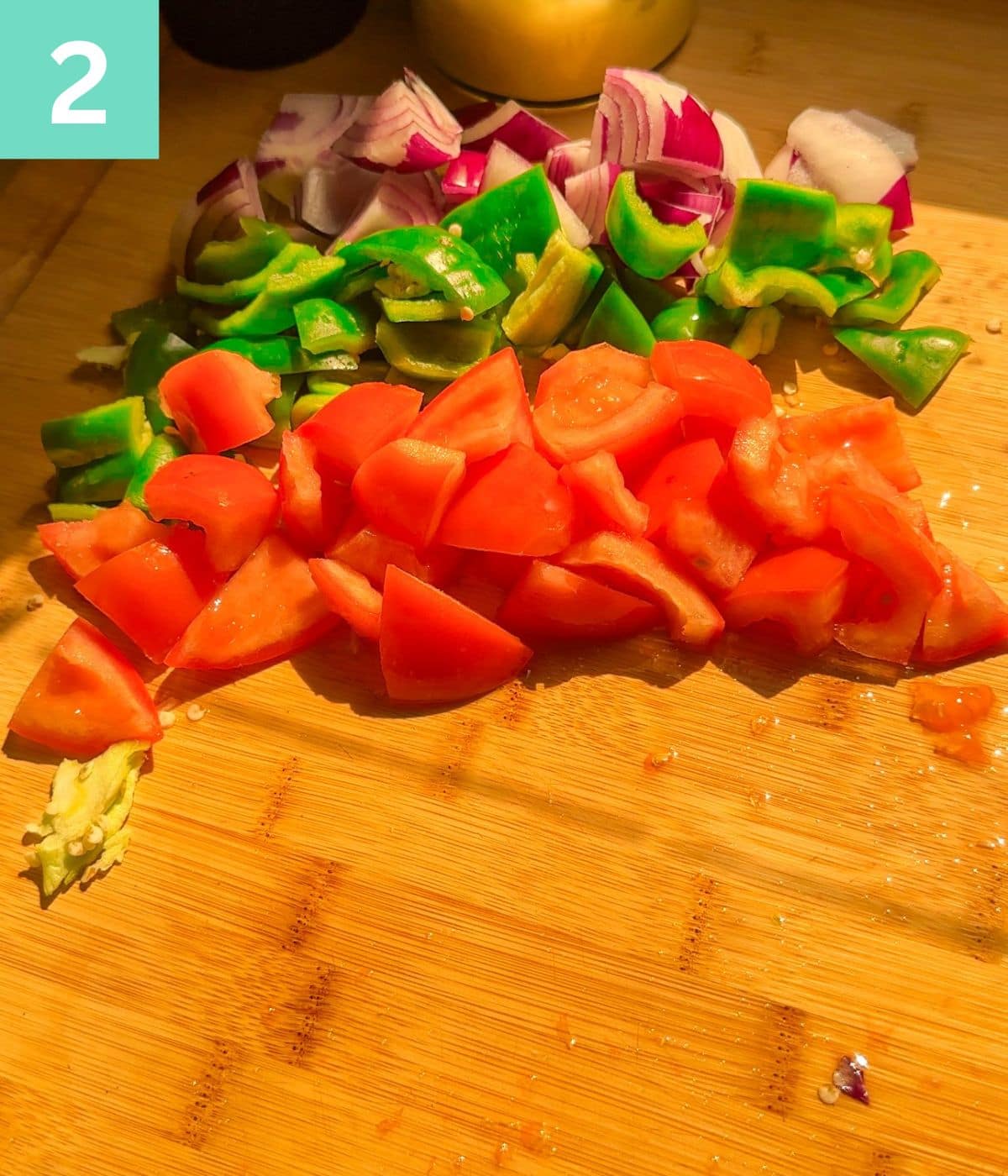
    onions, bellpeppers and tomatoes cut up in squares.

    STEP 2 – Chop up the vegetables in 1 inch squares.

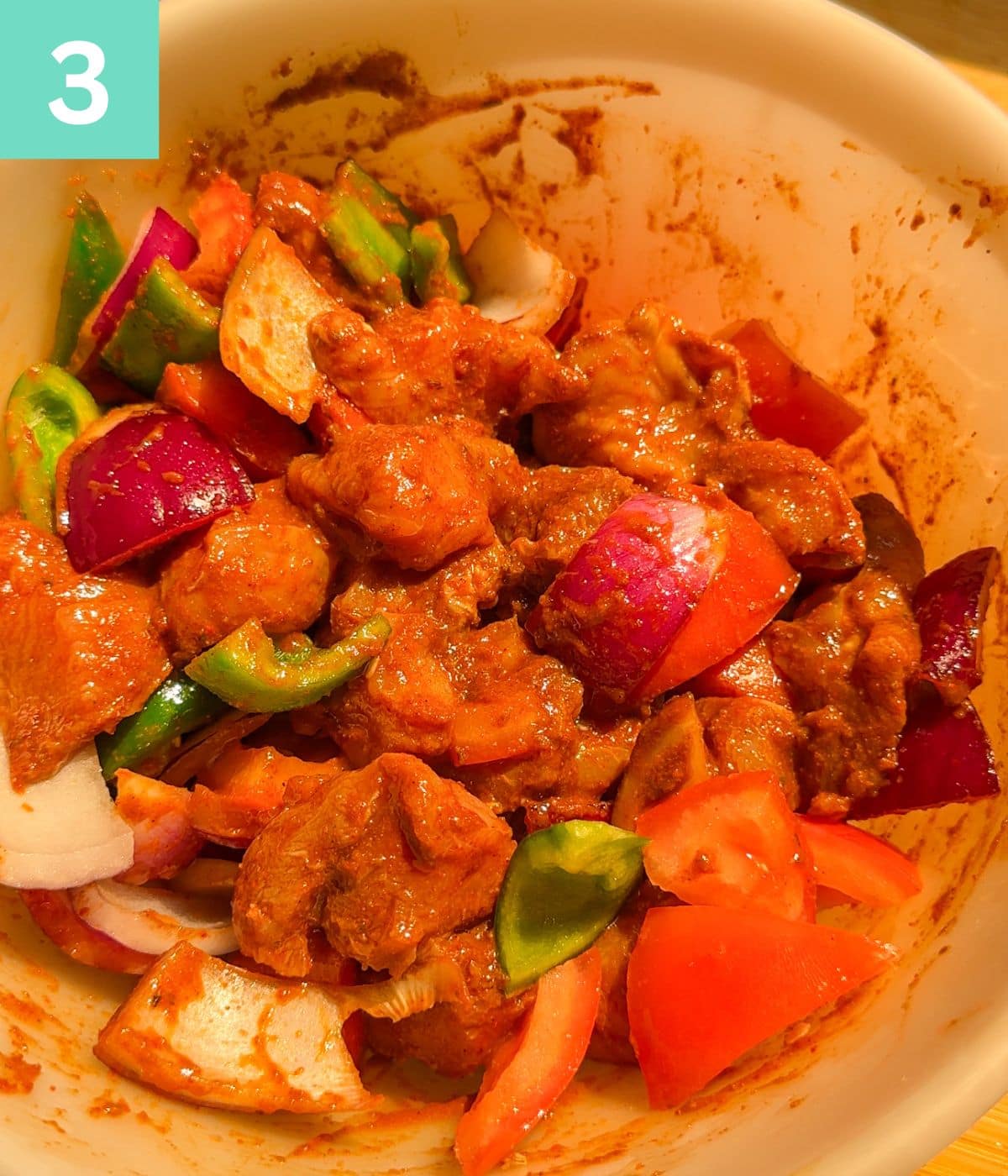
    chicken and vegetables marinated in a bowl.

    STEP 3 – Add the chopped vegetables to the chicken and marinate for 30 mins.

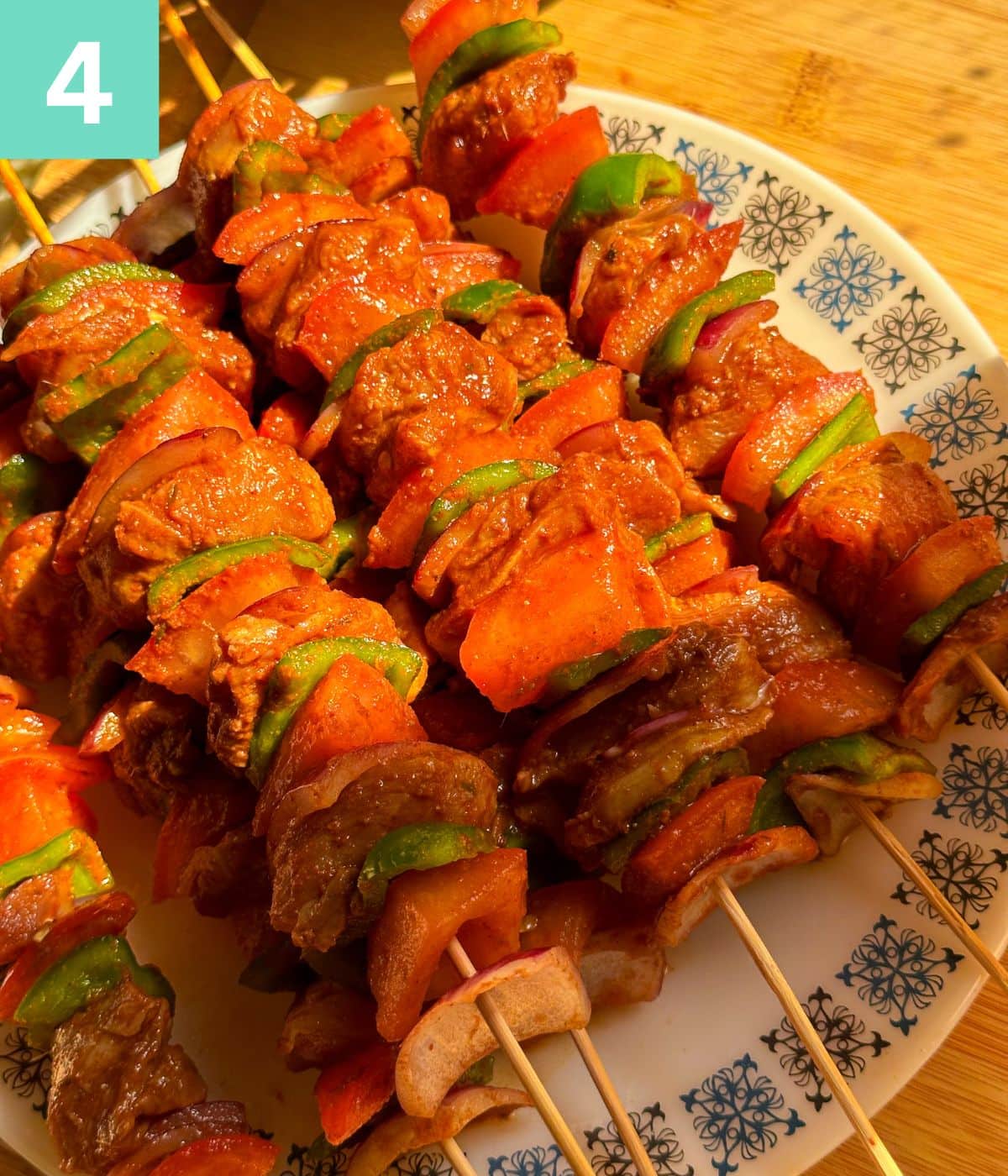
    chicken shashlik marinated and threaded onto sticks.

    STEP 4 – Thread the chicken and the vegetables onto a wooden or metal skewer. (Don’t throw away the leftover marinade)

    grilling chicken skewers on a grill pan.

    STEP 5 – Place the skewers onto a greased grill pan on the stove at medium heat.

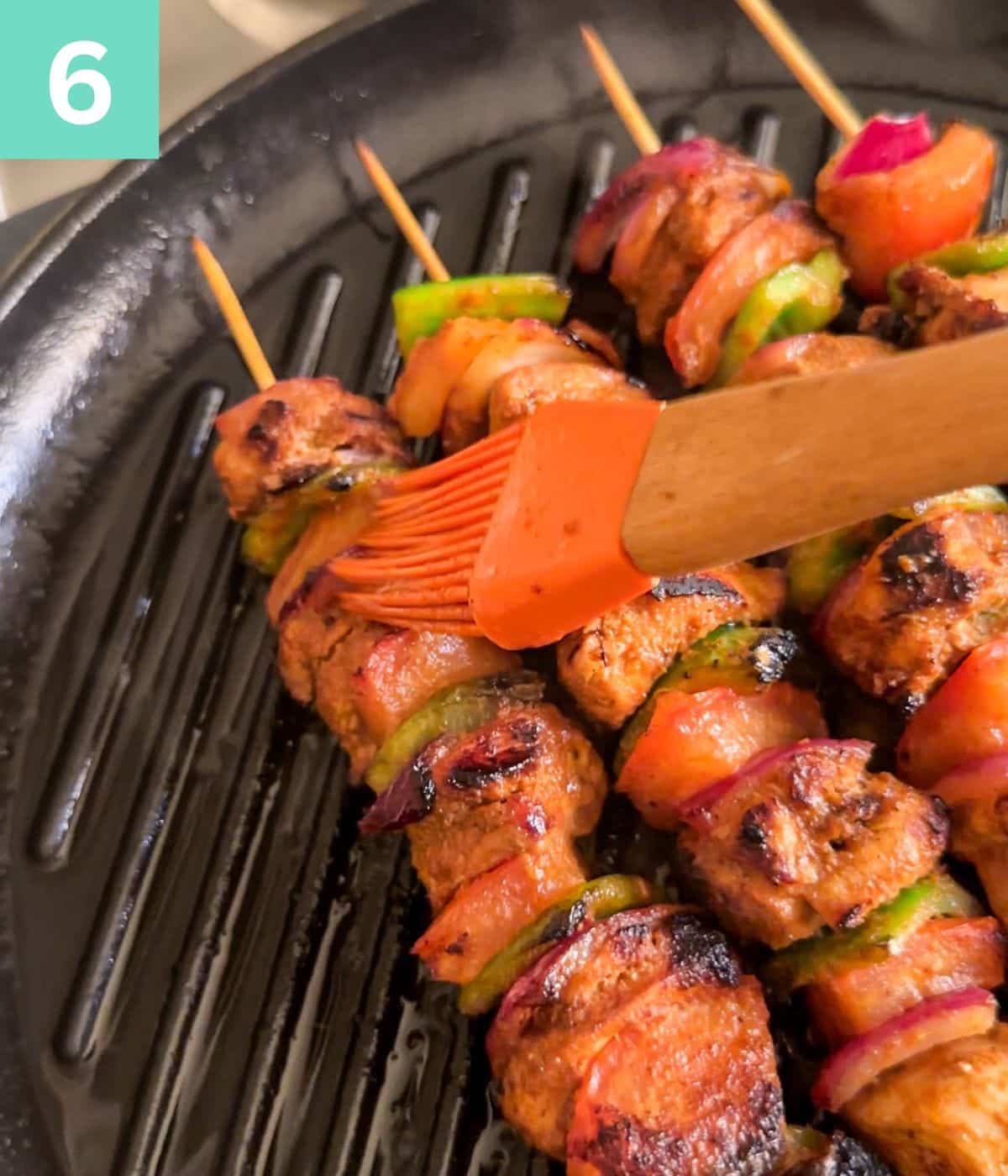
    glazing the chicken shashlik with sauce.

    STEP 6 – Flip the skewers over using a tong after 5 mins. And glaze with the remaining marinade left in the bowl.

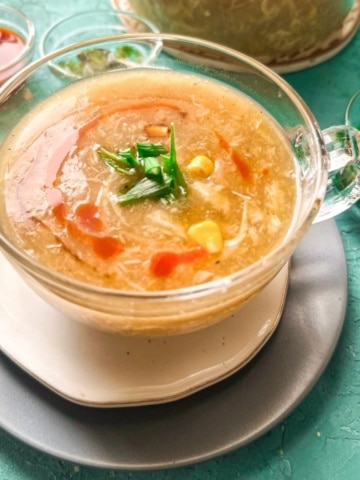
    Serve hot with your favorite pairing combo. I like to serve the sizzling grill pan directly onto the table with a mat underneath. Serve it with Chicken Corn soup and make it a complete meal.

    chicken shashlik skewers served on a grill pan.

    TOP TIPS AND ADVICE

    • IF you are using wooden skewers like me, than soak them in water for 30 minutes before using. This makes them more pliable and they don’t burn easily while on the grillpan.
    • Because of the tomato sauce, there will be some spluttering in the pan. IF you are new to cooking and grilling, either cover the pan with a lid while they on the stove or wear oven mittens to avoid any splatter on your hands.
    • Since its been a while since I’ve been cooking, I usually just flip the skewers using my hands. But you should use tongs to flip the skewers. If you are afraid of any splatter, then remove the pan from the heat temporarily. Flip all the skewers and glaze them. Then put it back on the heat.
    chicken shashlik skewers served on a grill pan.

    Recipe FAQs

    Can I make the skewers in advance?

    Yes! If you want to make it for dinner today or tomorrow. Simply marinate and thread the shashlik. Now cover with a cling wrap and let it sit in the fridge overnight. Simply leave out on the counter for 30 mins when you are ready to grill it. You can leave the marinated skewers in the fridge for upto 2 days.

    Can I freeze the chicken?

    So the vegetables tend to get soggy in the freezer, especially the tomatoes. You can freeze the marinated chicken if you like. /

    How long does the shashlik last in the fridge?

    Your marinated shashlik can stay up to 2 days in the fridge. And your grilled shashlik will last up to 5 days easily.

    Can I change the vegetables in the skewers?

    The onions, tomatoes, and bell peppers are the OG vegetables used for a shashlik, dry or saucy. They are the core 3. But of course, go with your palate, you can go ahead and add more if you like. Or swap the onions for another crunchy vegetable

    Is Chicken Shashlik Spicy?

    Yes, if you find general Indian/Pakistani food spicy, this will be spicy for you too. Although for regular spicy food eaters, the spicy level is almost minimal in this recipe. Reduce the quantity of red chili in the recipe to enjoy the flavors with less heat.

    Can I make this recipe in beef/lamb or mutton?

    Yes! Although. For any of these meats, you will have to boil your meat for about 20 to 30 mins or just until tender with salt and garlic paste. Then, you can proceed with the recipe as is.

    Can I make this shashlik recipe with fish?

    Ofcourse! Just swap out chicken for fish. I’d recommend going with any white fish of your like and avoid salmon for this recipe.

    More Indo-Chinese recipes

    Looking for other recipes like this? Try these:
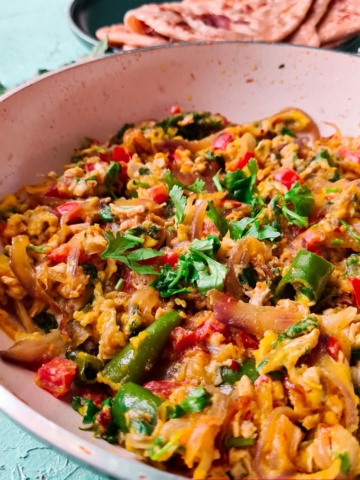
    • Chicken Corn Soup
    • Chili garlic noodles with chicken mushrooms on a black plate
      Spicy Chicken Chilli Garlic Noodles
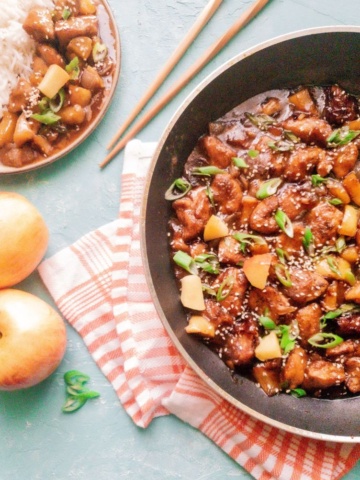
    • apple chicken stir fry in a frying pan with some apples and chop sticks on the side
      Easy Apple Chicken Stir Fry
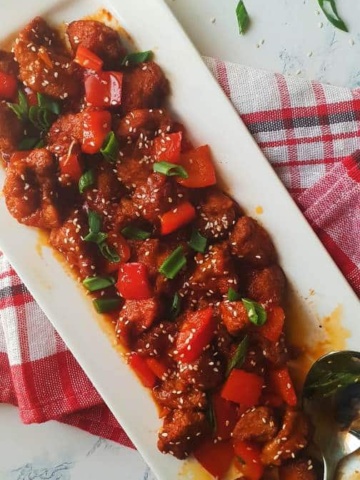
    • BEST AND EASY DRAGON CHICKEN RECIPE
      Dragon Chicken Recipe

    Do you have any questions? I’m happy to help! And of course, If you try this recipe, I’d loveeeee to see it or simply hear about it! Hit me up in the comment section below and I’ll get back to asap! Happy Cooking!

    chicken shashlik skewers served on a grill pan.

    Chicken Shashlik Dry

    An Indo-Chinese style, chicken and vegetable skewers marinated in fusion style sauces and spices, served with rice
    5 from 4 votes
    Print Pin
    Course: Main Course
    Cuisine: Chinese/Indo Chinese
    Prep Time: 30 minutes minutes
    Cook Time: 10 minutes minutes
    Resting time: 30 minutes minutes
    Total Time: 1 hour hour 10 minutes minutes
    Servings: 8 long skewers
    Calories: 150kcal
    Author: Wajiha

    Equipment

    bbq sticks wooden or metal
    A grill pan or an outdoor bbq

    Ingredients

    • 500 gm boneless chicken cut in cubes
    • 2 medium bell peppers cut in 1 inch squares
    • 2 large tomatoes cut in 1 inch squares
    • 1 large onion cut in 1 inch squares
    • extra oil for frying/baking

    Marinade

    • 2 teaspoon salt or to taste
    • 1 teaspoon white pepper powder
    • 1 teaspoon cumin powder
    • 2 teaspoon kashmiri red chili powder see notes
    • 4 tablespoon tomato paste or ketchup
    • 1 tablespoon garlic paste
    • 2 tablespoon soy sauce
    • 1 tablespoon red vinegar
    • 1 tablespoon oil for marination

    Instructions

    • Combine all the ingredients for marinade in a bowl and mix. Add your chicken and coat it in the marination.
    • Add the chopped vegetables in the chicken and coat it with the marinade. Keep aside for 30 mins
    • Use wooden or metal skewers to thread the vegetables and chicken. If using wooden skewers, always soak in water for 10 mins before using.

    Nutrition

    Serving: 1skewerCalories: 150kcalCarbohydrates: 8gProtein: 2gFat: 2gSaturated Fat: 0.2gPolyunsaturated Fat: 1gMonounsaturated Fat: 1gTrans Fat: 0.01gSodium: 901mgPotassium: 301mgFiber: 2gSugar: 4gVitamin A: 1436IUVitamin C: 48mgCalcium: 21mgIron: 1mg
    Can’t wait to see your remakes! Tag meon IG with your pictures @butteroverbae

    Rice Kheer – Rice Pudding

    May 26, 2023

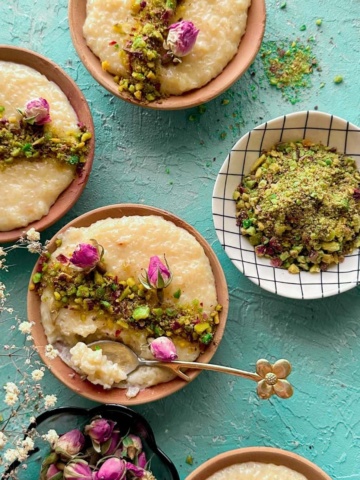
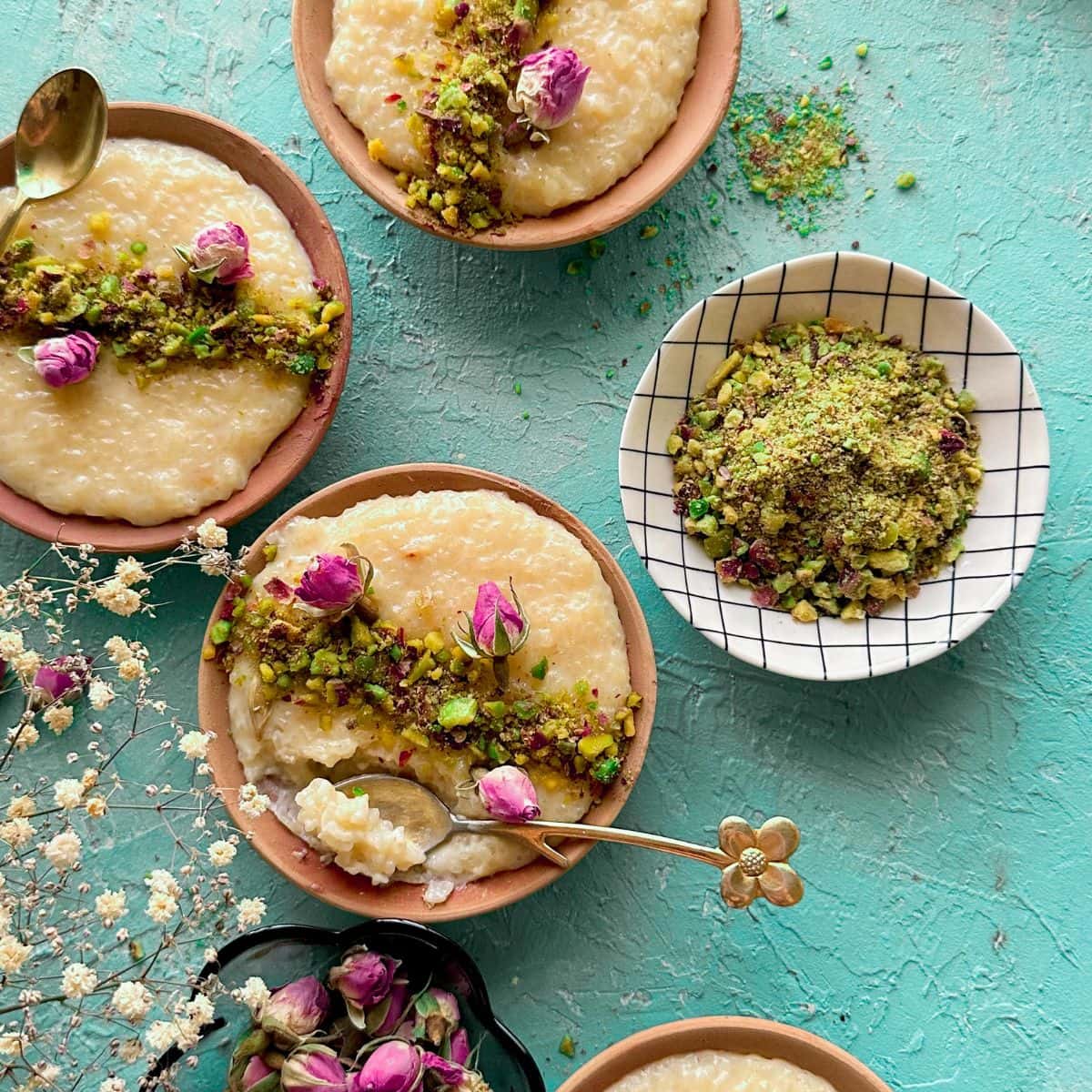
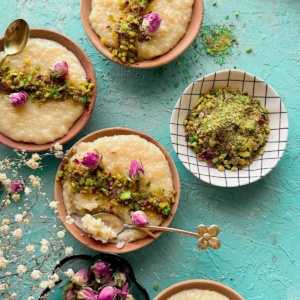
    Rice Kheer dessert served in multiple small bowls

    This delicious one-pot Rice Kheer recipe comes straight from my Pakistani kitchen to yours. I’ve adapted the classic recipe that takes hours to make, to give you this foolproof recipe ready within the hour. A classic kheer (rice pudding) is made with simple ingredients like rice, sugar, and milk. The smooth texture and simple flavors of kheer make this a crowd-pleaser and a kid’s favorite!

    Rice Kheer dessert served in multiple small bowls
    [feast_advanced_jump_to]

    What is Kheer?

    Kheer is essentially a South Asian milk-based pudding. Rice kheer also known as chawal ki kheer (in Urdu) is made with rice. But other variations of kheer exist, like the lesser-known tapioca kheer.

    Because of the simplicity of the recipe, it is popular for both, regular weekend dessert nights and for elaborate festivities like Eid, Diwali, and dinner parties. Kheer Puri is also a popular Sunday brunch option, where cold kheer is served with crispy fried puris. My mom also loves adding khara masala keema to this Sunday brunch.

    If you follow me on Insta, then you know your girl loves a good silky smooth dessert in summer. And a cold nice kheer, malai kulfi, and rose honey milk cake are my top 3 go-to heat-killers!

    Ingredients

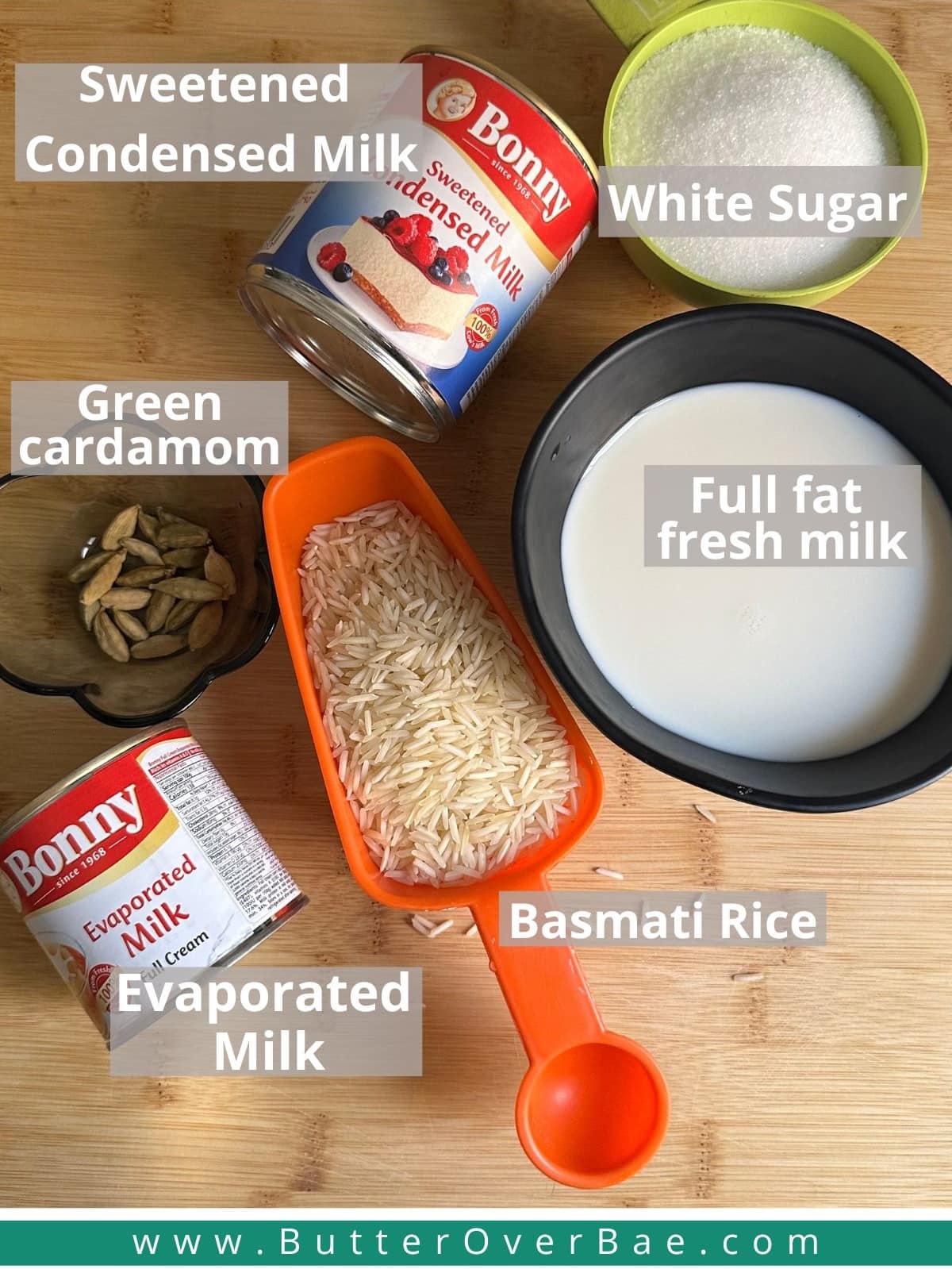
    The traditional stove-top Rice kheer uses only sugar, rice and milk and is simmered at low flame for hours to allow the milk to cook down and give it depth and flavor. I use sweetened condensed milk and evaporated milk to achieve the same depth of flavor but in less time.

    labelled ingredients for kheer
    • Rice – I use regular basmati rice for kheer. Long grain and other variations don’t matter for this recipe.
    • Green cardamom – I add whole pods but you can use 2 to 3 pinches of green cardamom powder instead if you want.
    • Three milk sources – Full-fat milk, Sweetened condensed milk, and evaporated milk. (more on substitutes down below)

    See the recipe card for full information on ingredients and quantities

    Substitutions

    So the basic trio of milk, rice, and sugar is of course mandatory for this recipe. Let’s talk about the other 2 milk sources.

    Sweetened Condensed Milk – Use a combo of more sugar and heavy cream instead.

    Evaporated milk – I use evaporated milk to adjust the thickness and the sweetness of the kheer once it’s cooked while enhancing the flavor. You can use any milk alternative that you have at hand. The following are great substitutes for evaporated milk:

    • Milk powder mixed with milk to make a thicker milk alternative
    • Regular milk mixed in with chunks of khoya, or Indian mithai like barfi, kalakand
    • Unwhipped Heavy cream

    PROPTIP: Simply use heavy whipping cream and sugar and skip the evaporated milk and condensed milk entirely if you are out of one or the other. You will need 500ml of heavy cream for the recipe quantities mentioned on the card.

    Instructions

    Since this is a one-pot recipe, there aren’t any complicated instructions to follow. But I’ve put together a pictorial to show you what the kheer looks like in different stages of cooking.

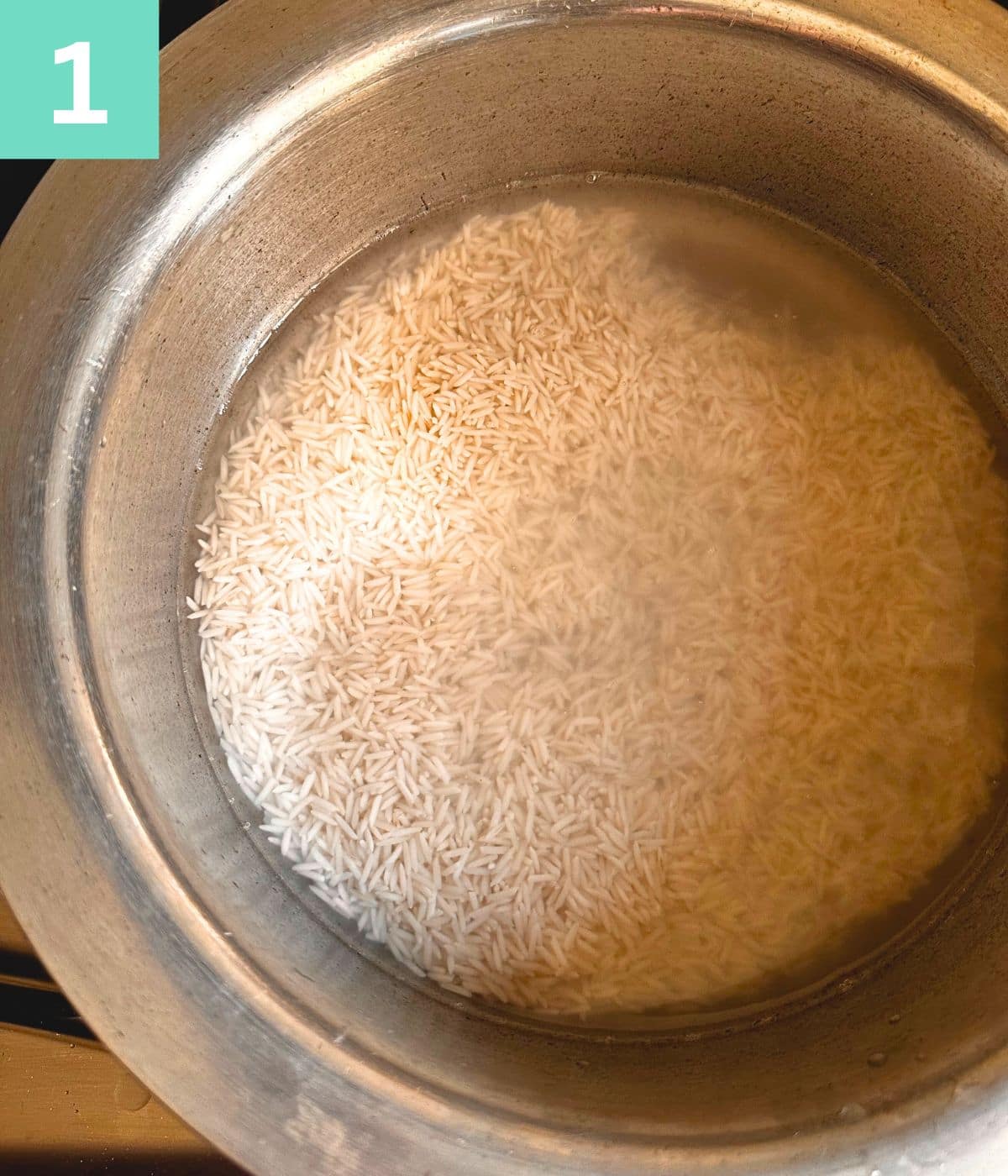
    rice soaked in water

    STEP 1 – In a wide pot, boil the soaked rice at low heat in the water. This will take about 10 mins, during which time you don’t need to stir the rice

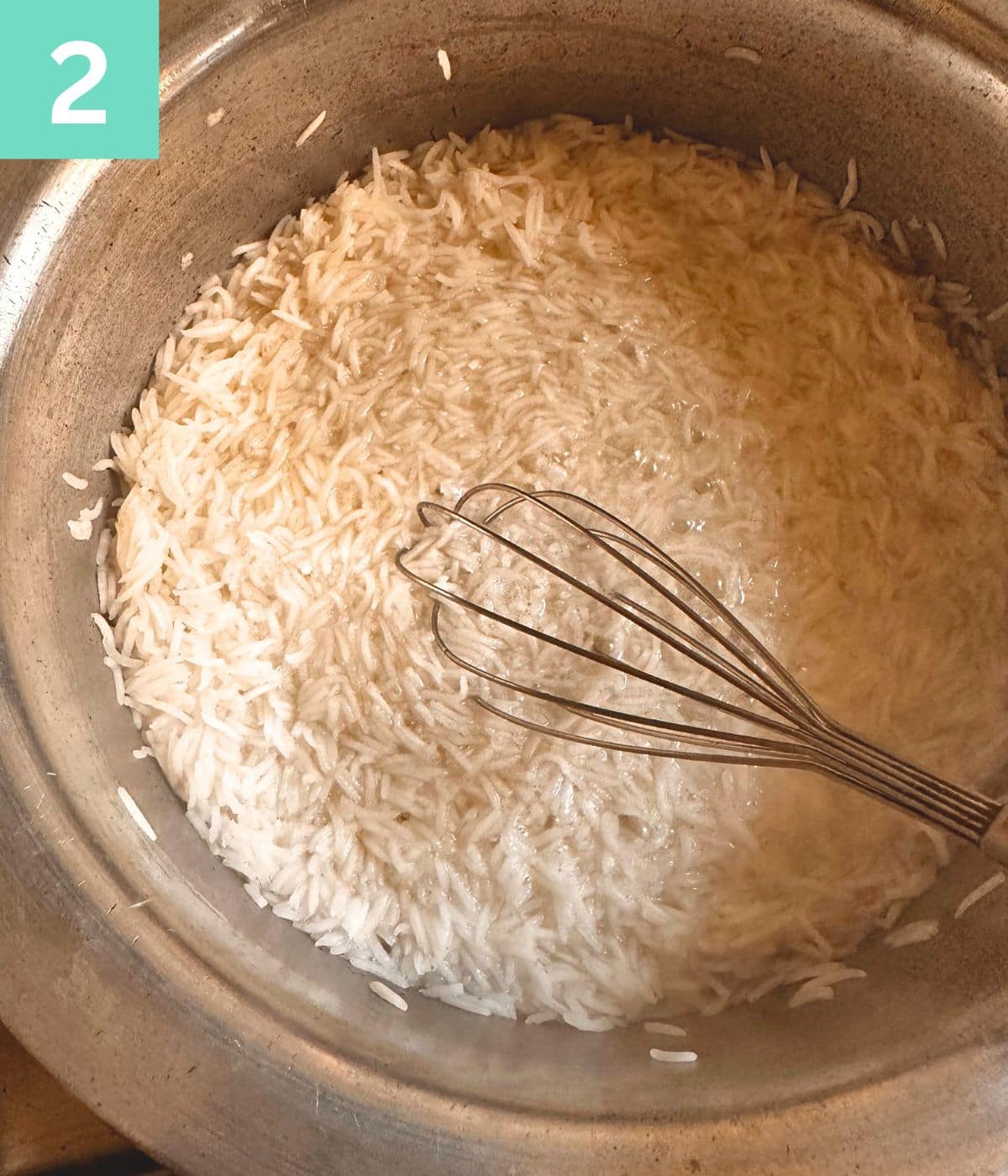
    partially cooked rice in a pot with a whisk

    STEP 2 – Use a hand whisk to stir through the rice once the water evaporates and the rice has doubled in size.

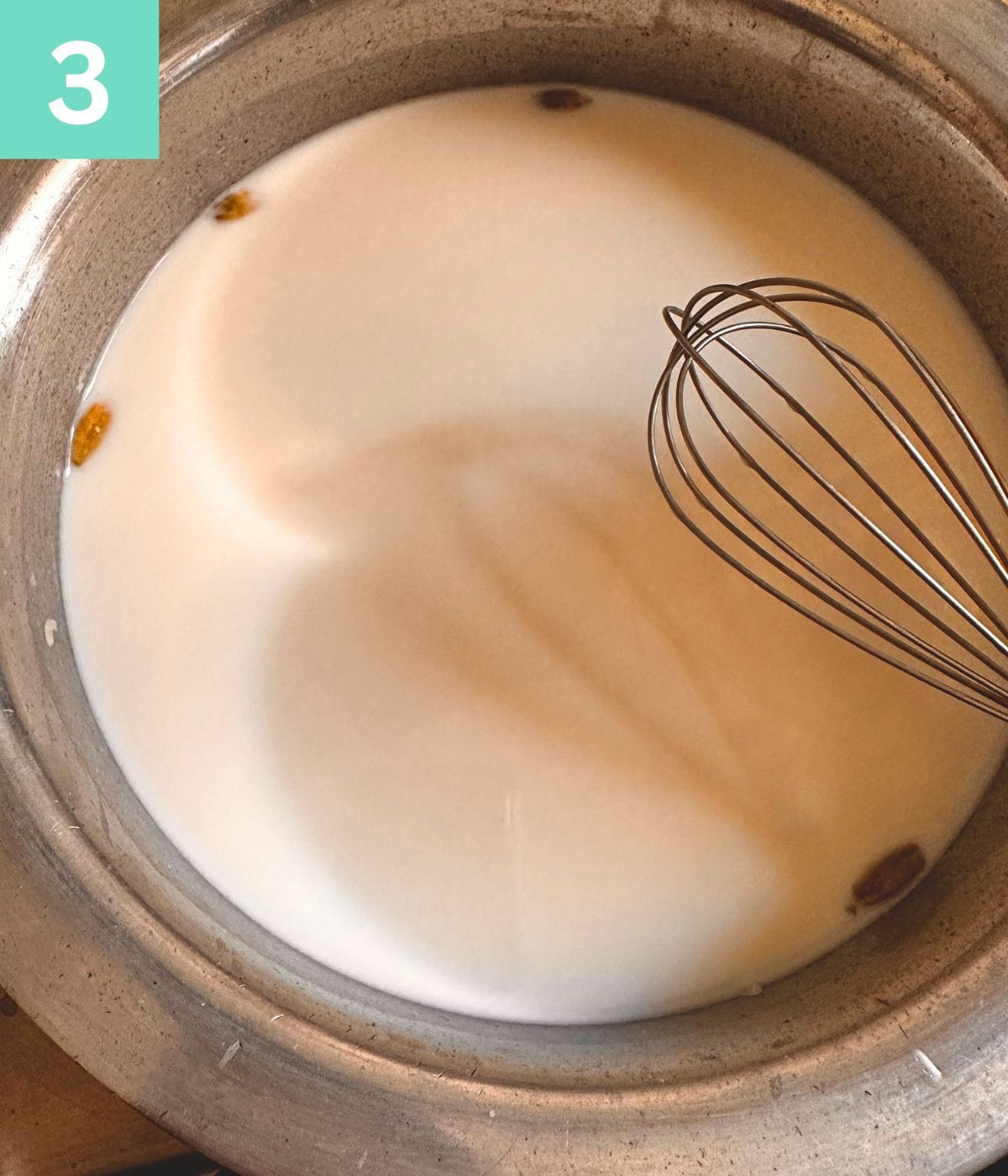
    milk, green caramom and rice in a pot

    STEP 3 – Add in milk and green cardamom and let the rice cook in the milk at medium to low heat.

    milk and rice boiling in a pot forming a crust on top

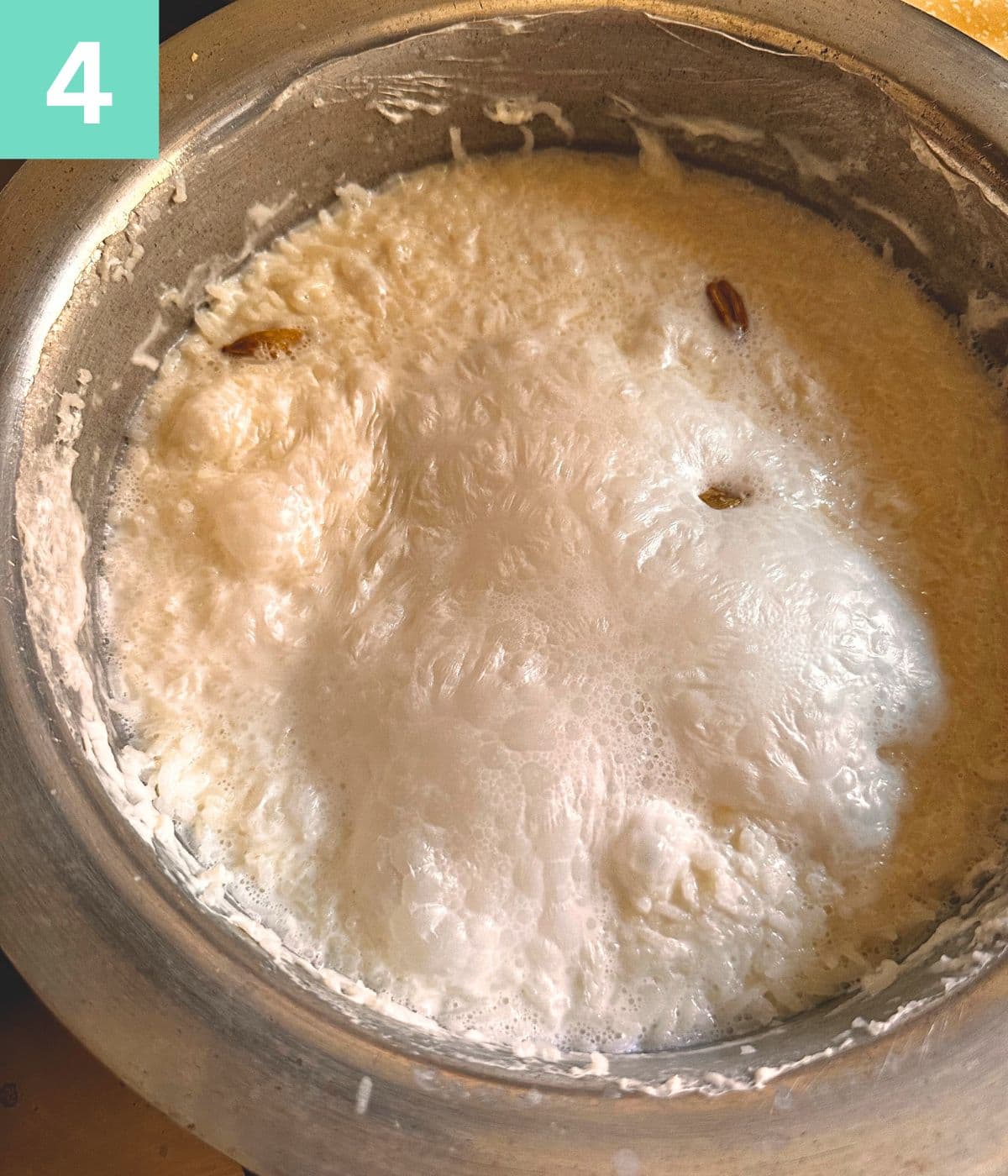
    STEP 4 – Your milk will form a crusty top while it’s boiling. This is normal. Whisk occasionally but you can leave the milk unattended for 5 to 6 mins at a stretch.

      rice and milk cooking, being mixed with a whisk

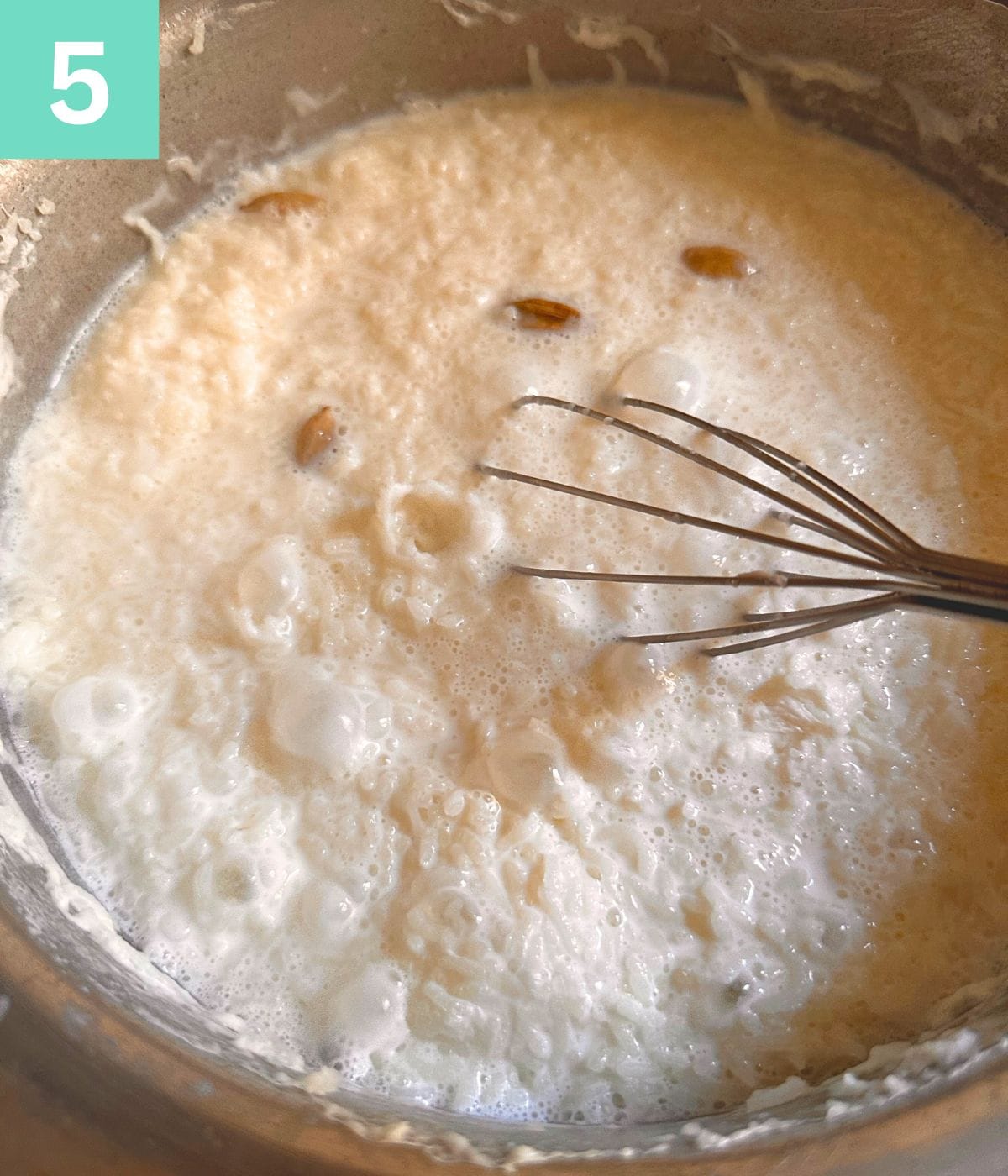
      STEP 5 – After 15 to 20 mins, you will see a thick porridge-like consistency of the kheer.

      adding sugar to a pot of rice and milk

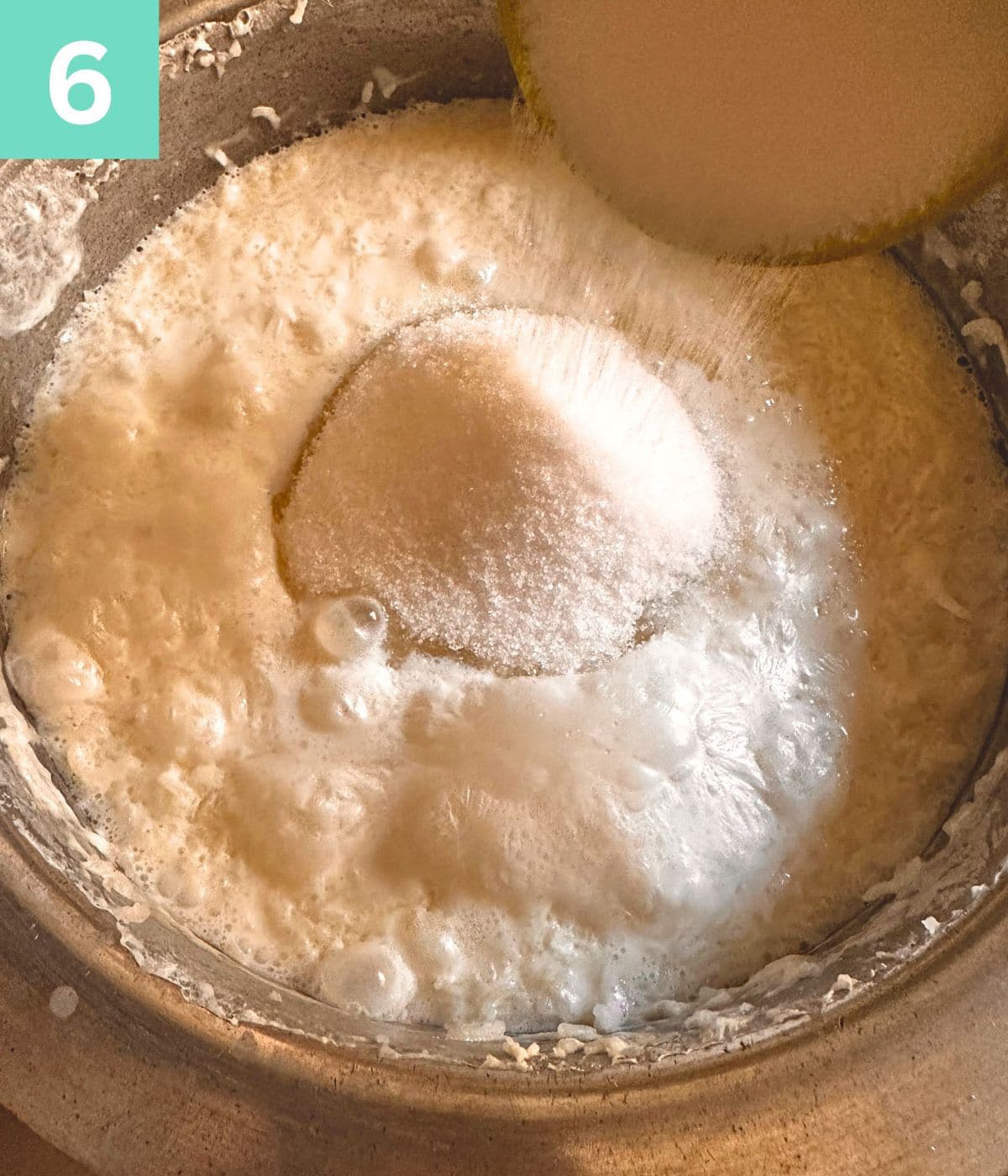
      STEP 6 – Add in your sugar.

      adding condensed milk to the pot of rice kheer

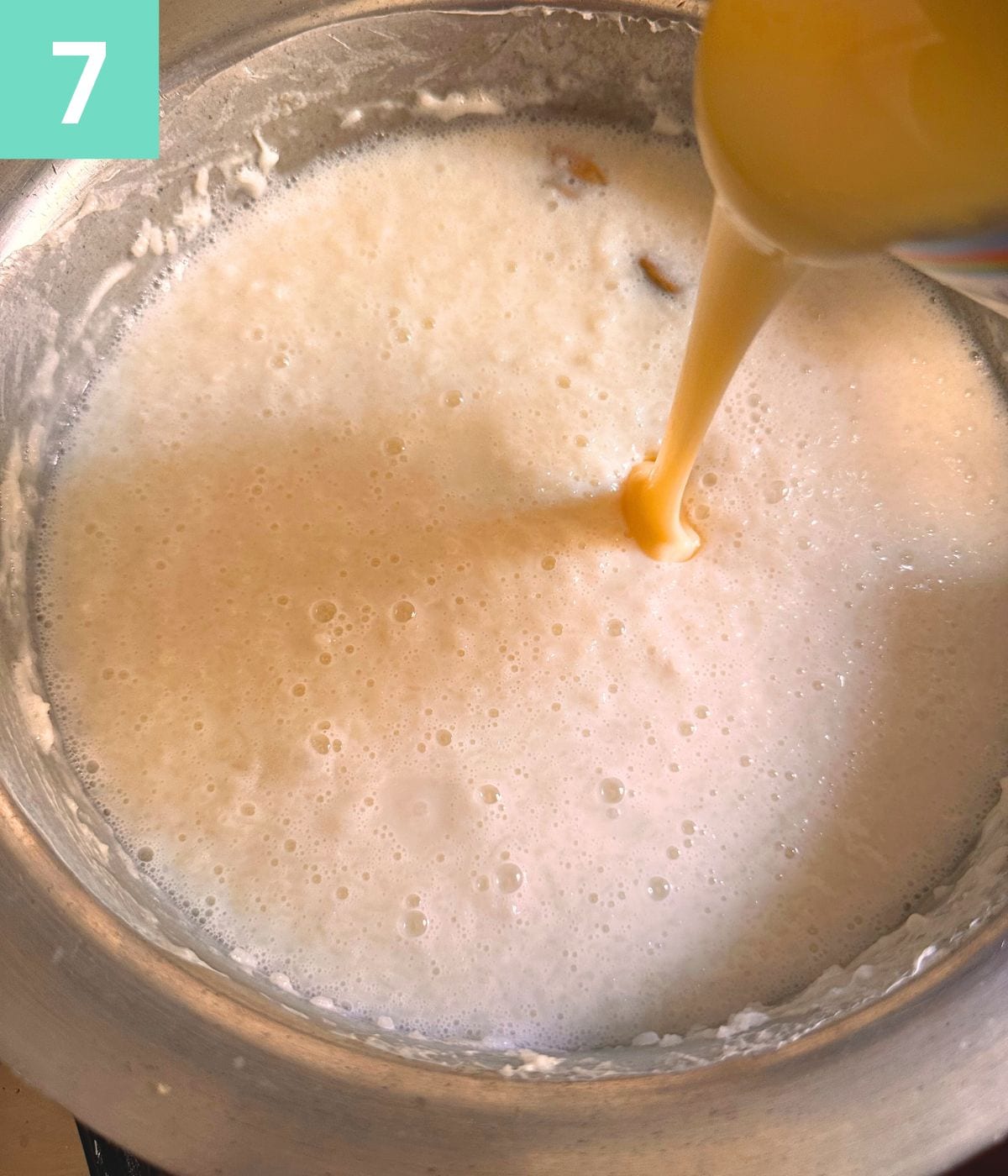
      STEP 7 – And add in your condensed milk. Now the kheer will liquefy again a little bit. This is normal. Let it cook for another 10 mins at medium to high heat. Whisk occasionally.

      adding evaporated milk to a pot of rice kheer

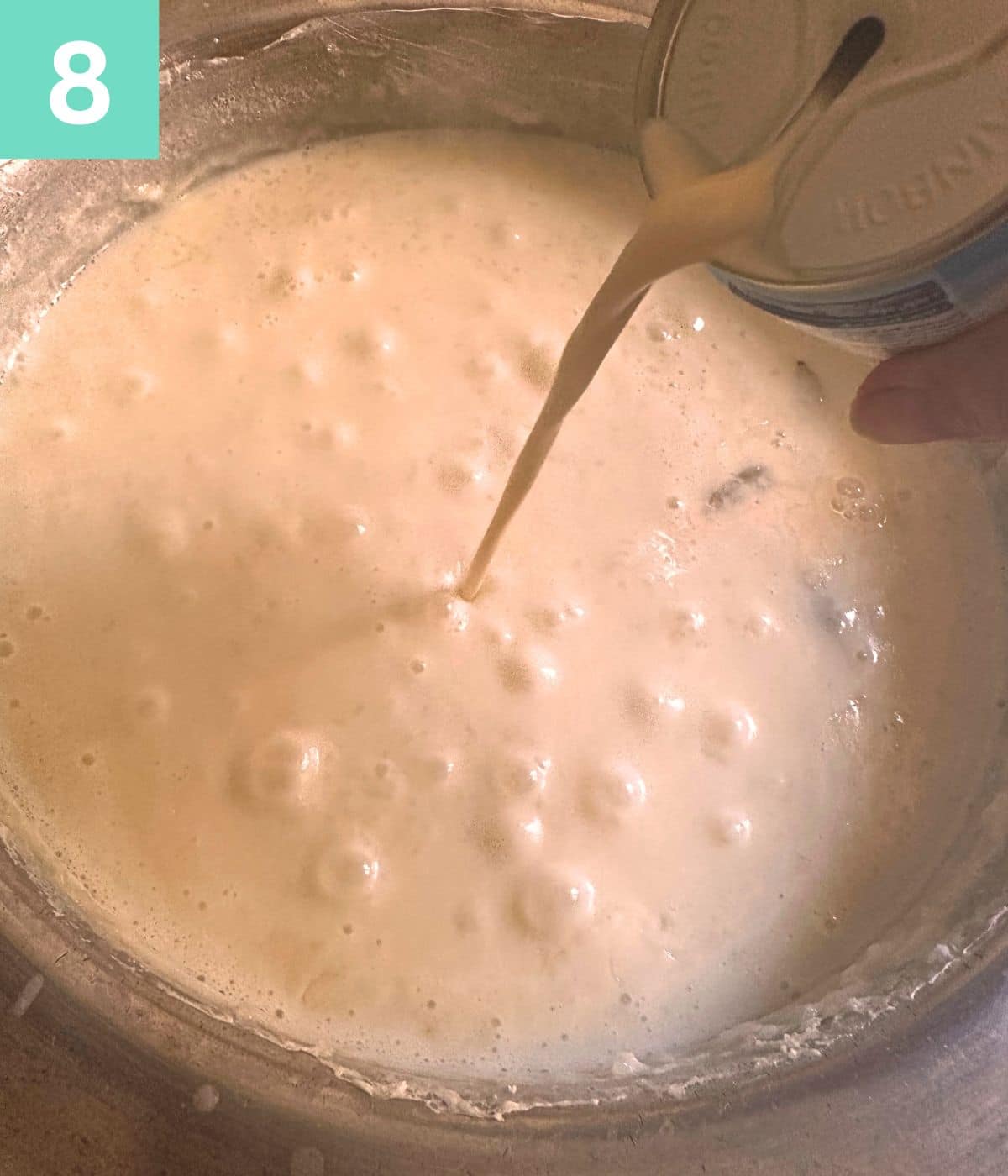
      STEP 8 – Turn off the flame of the kheer and let it cool down. Now add evaporated milk as much as you like for your desired thickness and consistency.

      Expert Tips

      • Most recipes will ask you to either break the rice by hand after soaking them or grind them in a food processor. But my favorite hack is to use a hand whisk instead while cooking, which naturally breaks the rice grains and reduces an additional step.
      • I used these cool clay pots that you see in the pictures to serve the kheer because that is how they are traditionally served. But the authentic clay pots need to be soaked in water overnight. If you use them, make sure you soak them overnight, or else they will absorb all the liquid from the kheer. Don’t ask me how I know that.
      • Cooked Kheer might splutter slightly towards the end of its cooking, so just be mindful of that while stirring.

      Garnish and Serving

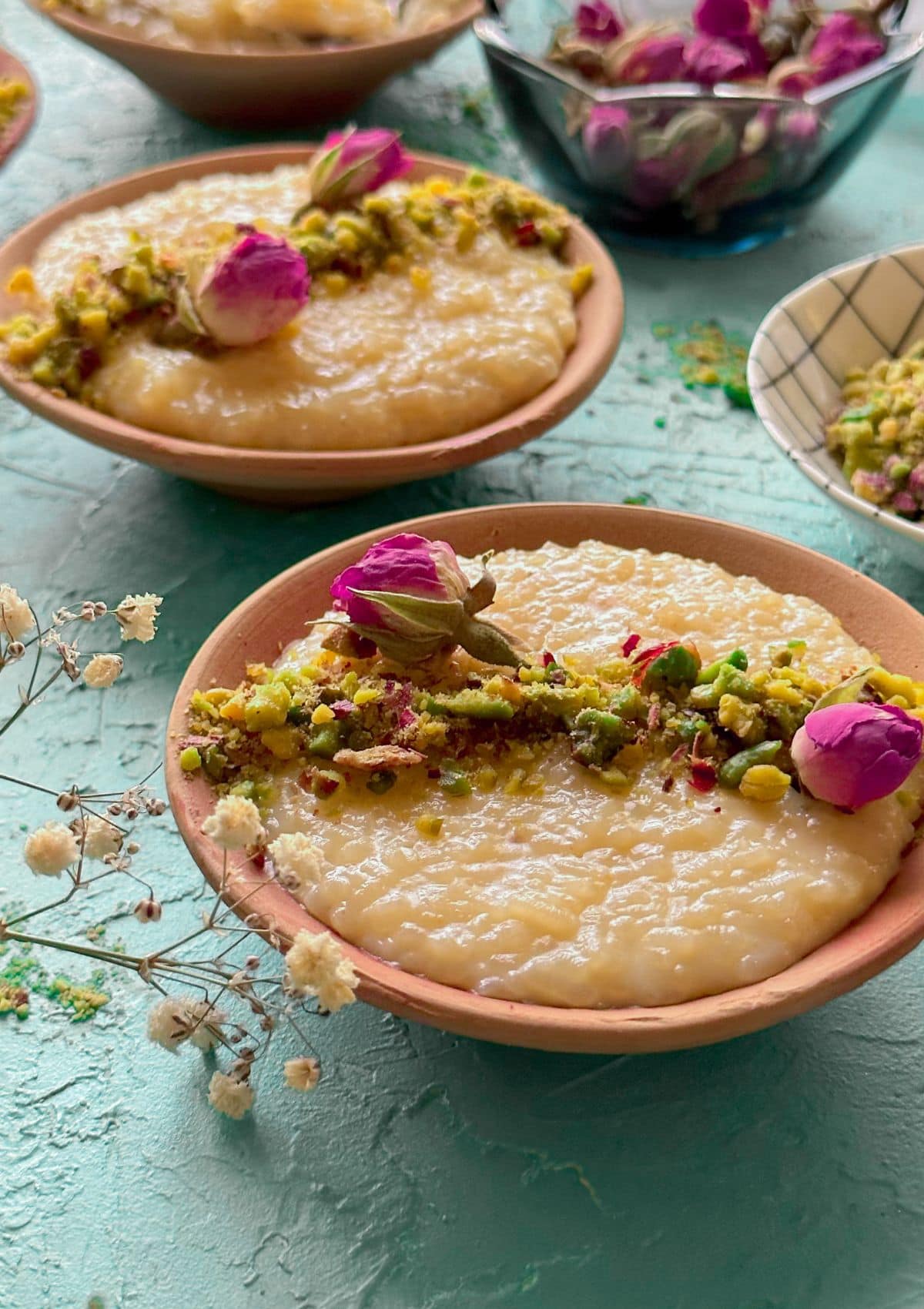
      rice kheer dessert served in clay bowls

      Rice kheer is served cold. As the cooked kheer cools down, it forms a thin milky crust on top as it reacts with air. I personally am not a fan of this and I usually cover the kheer with a lid once its done cooking. But some of my family members like the crust, so they usually pour the hot kheer into a serving bowl immediately and allow it to cool in the bowl with the crust on top.

      The best garnishes for kheer are chopped or sliced pistachios and almonds. I also like to add rose petals for a little pizazz. You can incorporate the nuts into the kheer itself and then some more for toppings, or only as toppings.

      Equipment

      In traditional South Asian kitchens, kheer is usually made in aluminum pots because they are usually heavy bottom and the milk doesn’t burn easily in aluminum pots. You can also use any heavy bottom pot made with stainless steel or Dutch Ovens. You can also use a girdle or a tava underneath the pot if your pot isn’t heavy base.

      How to make Dairy-Free Vegan Kheer

      As you can see this dessert heavily relies on multiple milk sources for flavor and cooking. You can easily make a dairy-free kheer by using milk substitutes like nut milk and soy milk. Use coconut cream in place of the evaporated milk and condensed milk. You may have to adjust your sugar quantities as this recipe uses sweetened condensed milk.

      FAQs for making Kheer

      How long can the kheer last in the fridge?

      Your kheer can last up to 7 to 10 days in the fridge easily. Make sure to keep it in an airtight container or covered by cling wrap to avoid any other aromas seeping into it.

      Can you freeze Kheer?

      Yes, yes you can! Once your kheer cools down completely, skip adding the evaporated milk and freeze. The kheer becomes slightly more liquid once defrosted. So you can either cook it again once it cools down or freeze a thicker batter by simply skipping the evaporated milk.

      What to do if my kheer starts to burn?

      If your heat is too high or your pot doesn’t have a thick base, your milk will burn from the edges turning it brown and giving your kheer a burnt aroma and aftertaste. While stirring the kheer if you see any browning on the edges of the pot, simply reduce the heat to low. If your heat is already low and you see your kheer is still burning on the edges, then add a tava or a pan on the base of your pot. If you somehow left your kheer unattended then you might find a big chunk of the bottom has burnt. In this case, turn off the heat and without stirring, simply pour the kheer from the top into a bowl. Try to save as much of it as you can and simply continue cooking this saved kheer in another pot.

      Should I rinse the rice for Kheer?

      Rinsing rice is usually done to remove any extra starch. But for Kheer, the starch helps to enhance the smooth texture of the recipe. I’d suggest not rinsing the rice for this reason, but go with your preference.

      What to pair with Kheer

      Since kheer is a dessert, its a stand-alone dish. But like I told you in the beginning, it pairs really well with hot crispy fried puris for brunch.

      More Pakistani and Indian Desserts

      Looking for other recipes like this? Try these:
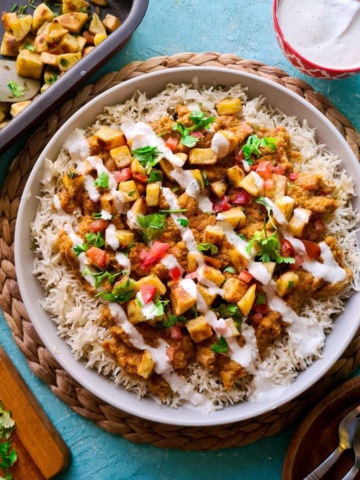
      • gulab jamuns, a sweet fried milk ball dessert shown garnished with nuts in a silver platter
        Gulab Jamun with milk powder
      • bars of egg halwa stacked up.
        Anday ka halwa – Egg halwa
      • dripping rose syrup on malai kulfi icecream bar.
        Easy Malai Kulfi Ice Cream With Condensed Milk
      • Lab e shireen or creamy fruit custard
        Lab e Shireen – Creamy Fruit Custard

      Do you have any questions? I’m happy to help! And of course, If you try this recipe, I’d loveeeee to see it or simply hear about it! Hit me up in the comment section below and I’ll get back to asap! Happy Cooking!

      Rice Kheer dessert served in multiple small bowls

      Rice Kheer – Rice Pudding

      A one pot traditional South Asian dessert, made with rice, sugar and milk. Garnished with nuts and served cold.
      5 from 2 votes
      Print Pin
      Course: Dessert
      Cuisine: pakistani, South Asian
      Prep Time: 0 minutes minutes
      Cook Time: 50 minutes minutes
      Total Time: 50 minutes minutes
      Servings: 10 servings
      Calories: 405kcal
      Author: Wajiha

      Equipment

      1 heavy bottom stainless steel pot Or use a flatpan beneath your existence normal bottom large saucepans
      1 hand whisk

      Ingredients

      • 1 cup Basmati rice soaked in water for atleast 20 mins
      • 2 cup water
      • 1 Litre full fat milk
      • 2 cup white sugar or to taste
      • 1 can condensed milk 375 gm
      • 1 can evaporated milk (add more or less according to thickness preferred)

      Garnish

      • 2 tbsp sliced or chopped pistachio and almonds or any nuts you like
      • rose buds or petals optional

      Instructions

      • In the pot, add rice and water. Simmer at medium flame until all the water evaporates and rice doubles in size. Use a hand whisk to stir the rice
      • Add green cardamom and milk and let it simmer at low flame. Whisk with your hand whisk from time to time. This will take 20 mins
      • Add sugar and condensed milk and cook for another 20 mins. Whisk to make sure the rice grains don't stick to the bottom of the pan.
      • You will see the rice grains will have broken down into smaller bits and the rice and milk would now be in a pudding consistency. Turn off the flame and let the kheer cool down.
      • Now add evaporated milk. Add as much as you like for the consistency you prefer.

      Notes

      • To substitute Sweetened Condensed Milk – Use a combo of more sugar and heavy cream instead.
      • To substitute Evaporated milk – I use evaporated milk to adjust the thickness and the sweetness of the kheer once it’s cooked while enhancing the flavor.  The following are great substitutes for evaporated milk:  a) Milk powder mixed with milk to make a thicker milk alternative. b) Regular milk mixed in with chunks of khoya, or Indian mithai like barfi, kalakand. c) Unwhipped Heavy cream
      • Use a tava or pan below the pot if you see your kheer is burning at the edges
      • Kheer which is near to completion, might splutter a little bit, just be mindful of that. 
      • You can adjust how much-evaporated milk you want to add depending on how thick you want your kheer to be. 

      Nutrition

      Serving: 1gCalories: 405kcalCarbohydrates: 85gProtein: 10gFat: 10gSaturated Fat: 6gPolyunsaturated Fat: 0.4gMonounsaturated Fat: 3gCholesterol: 36mgSodium: 131mgPotassium: 431mgFiber: 0.2gSugar: 70gVitamin A: 357IUVitamin C: 2mgCalcium: 339mgIron: 0.3mg
      Can’t wait to see your remakes! Tag meon IG with your pictures @butteroverbae

      Pakistani Chicken Karahi

      February 1, 2023

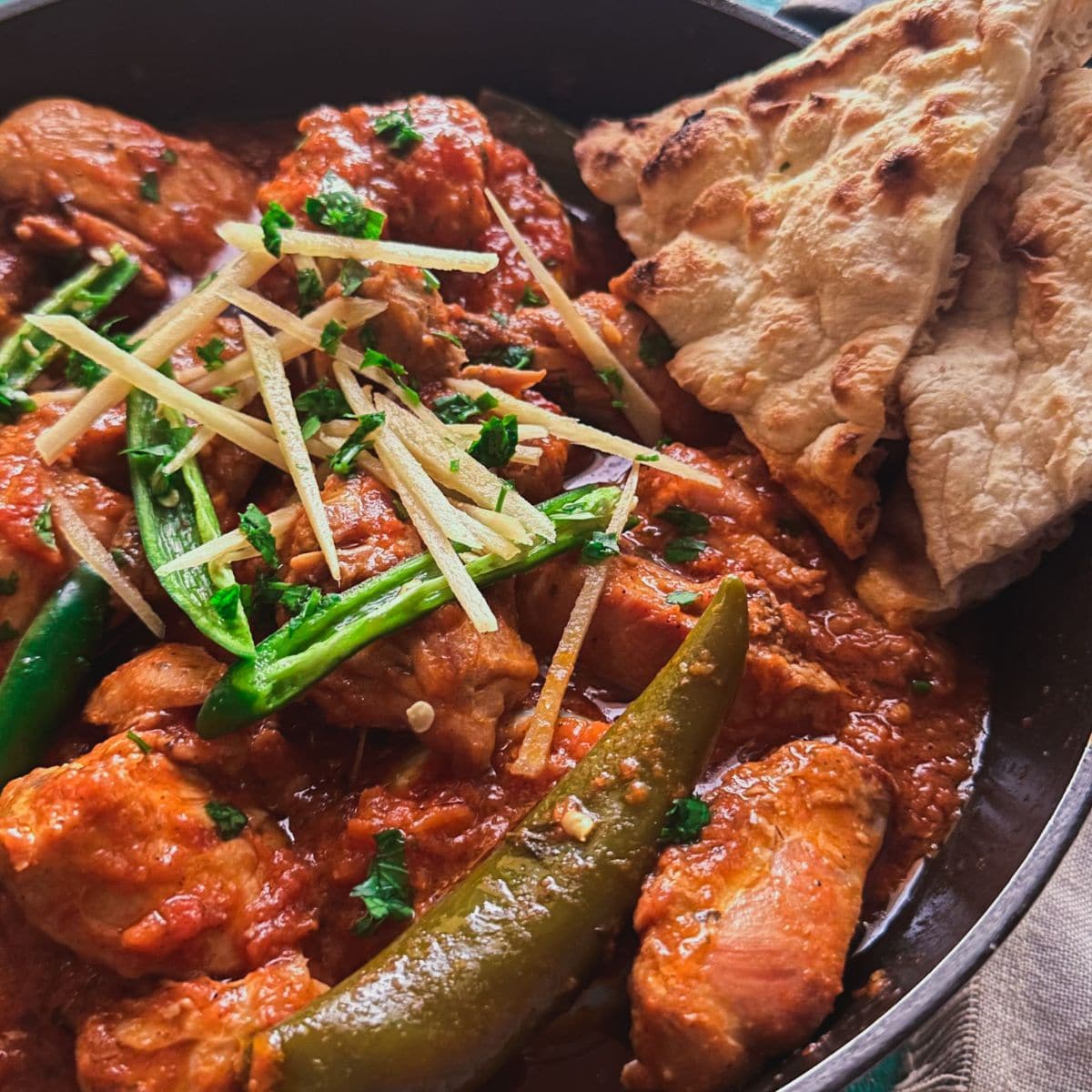
      Chicken Karahi is one of the easiest, most popular delicious chicken curries ever made! The chicken is seasoned with minimal spices and cooked in a beautiful tomato curry. A very popular attraction in dhabas and restaurants. And for you chefs at home, I’ve tried and perfected this recipe to give you that authentic taste!

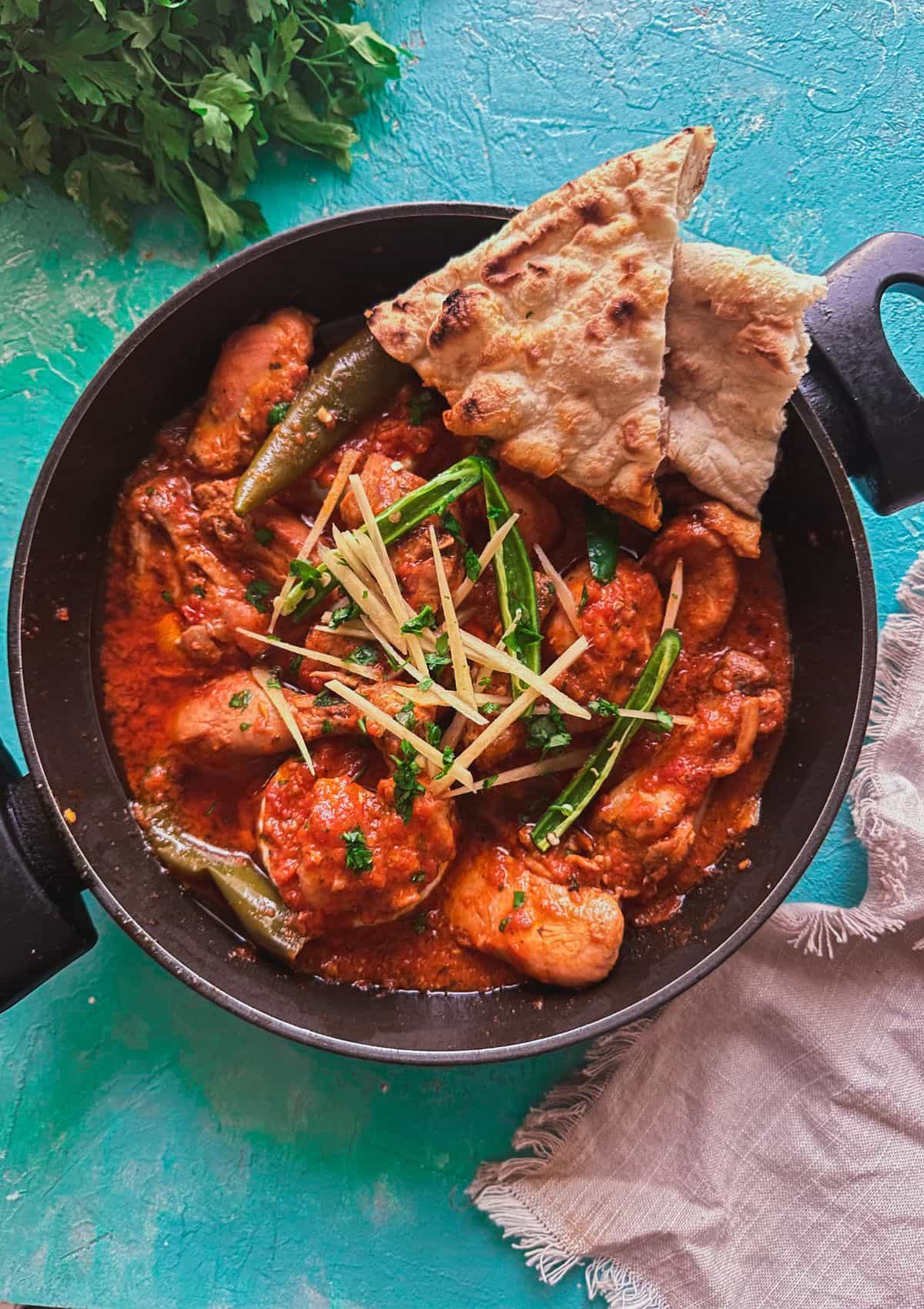
      chicken karahi which is a type of curry served in a bowl with naan bread on the side.
      [feast_advanced_jump_to]

      What is Chicken Karahi

      Karahi or Kadai means “wok” in Urdu/Hindi. The dish got its name from the wok it’s cooked in. These South Asian woks are usually cast iron and heavy bottom and the chicken is traditionally cooked in enough oil and tomatoes to not stick to the pan. The chicken karahi originates from the Khyber Pakhtunkhwa (formerly Northwest Frontier) province of Pakistan.

      The OG chicken karahi is essentially a “dry curry” cooked with minimal spices and soft, tender tomatoes. So it doesn’t hold a lot of liquid gravy as the classic Chicken ka salan does. The distinguishing features of an authentic chicken karahi are a red tomatoey base, garnished with ginger, cilantro, and green chilies

      And like all great creations, the classic Chicken Karahi has also inspired a truckload of variations and fusion-style recipes. Balochi Karahi and White karahi are popular examples! Remind me to share those recipes with you too!

      Normally the Karahi made in restaurants is made in a Wok and then covered by a conical lid like a Tagine. It’s a quick recipe and an active one at that. Where the chef constantly keeps stirring the chicken in oils and tomatoes on an open fire. For ease, I’ve adapted the recipe slightly to be more suitable for home cooking.

      What makes karahi authentic?

      With so many recipes all around the internet for karahi, it is possible that you will come across recipes that use onions and/or yogurt in their recipes. And I tell you, as a karahi purist, It IS a crime! A crime I tell you, to add onions or yogurt or any third ingredients to make the base of this curry! The variations of karahi have all sorts of ingredients and that’s fine! But if you are making the Original karahi, it needs the tomatoes to take the centre stage! It will hold a slight tang because of the tomatoes, adding onions (which are inherently sweet) balances off the tomatoes and then essentially give you a basic typical South Asian curry.

      Notes on Ingredients

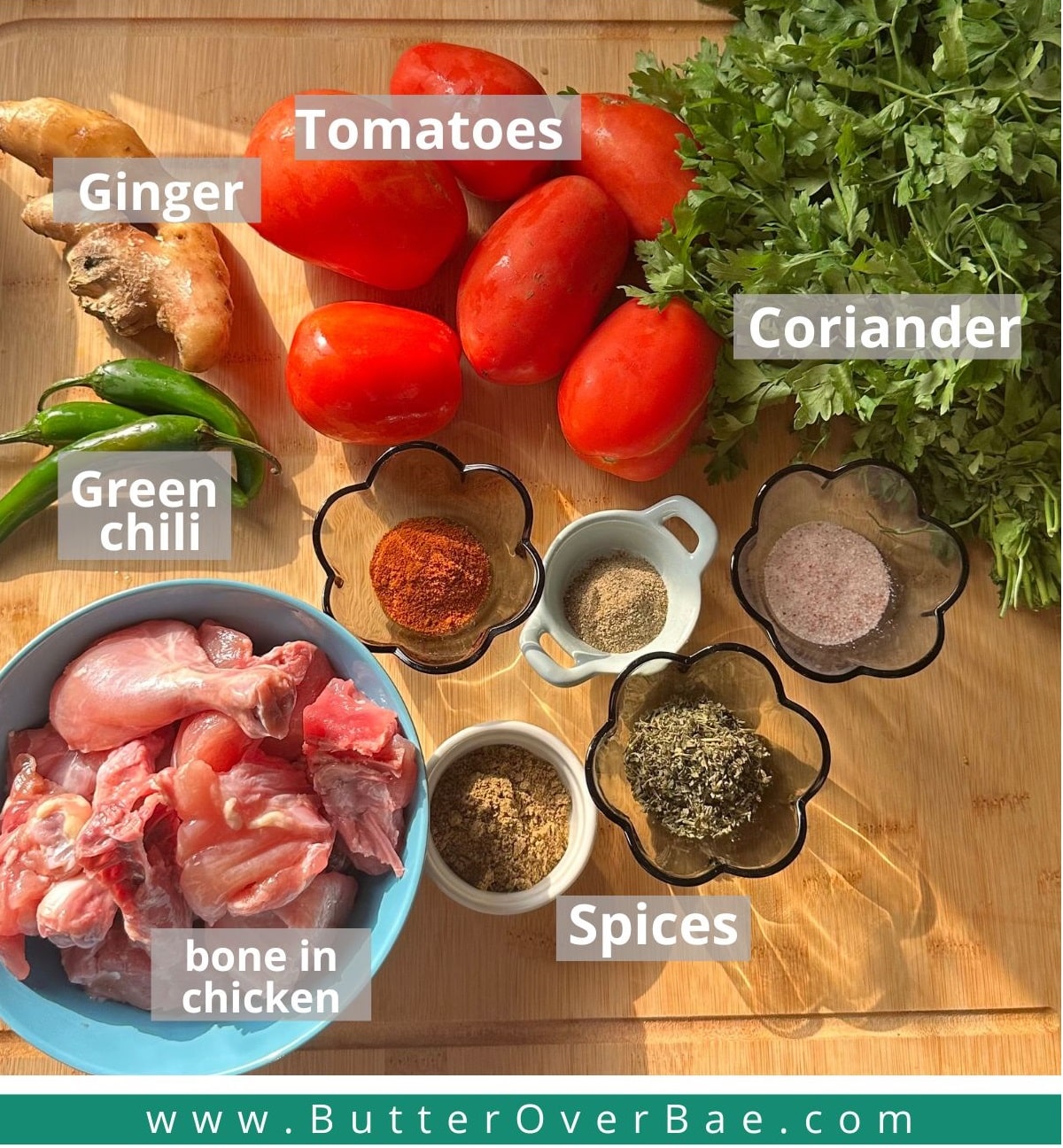
      As I said, the ingredients used are super basic, and with the exception of maybe 1 or 2, you will probably have all the other ingredients at hand.

      ingredients laid out for chicken karhai
      • Chicken – So for the traditional recipe, I would prefer you go with bone-in chicken cut into small pieces with the skin removed. You should get about 16 to 18 pieces of a normal 2 lb chicken.
      • Spices – This recipe uses basic spices like freshly ground black pepper, salt, and cumin powder. The only 2 fancy ingredients you need are the Dried fenugreek leaves and Kashmiri red chili powder. The Kashmiri red chili powder is milder than regular red chili so you can use a larger amount without making your gravy overly spicy. It brings that beautiful red color to your dish without packing in a ton of heat.
      • Green Chilies – The green chilies used for karahi are literally called “karahi mirchen” in Urdu. These are essentially lighter green in color and super mild tasting. They are also essentially bigger and similar to jalapenos.
      • Garlic paste – Most curry recipes call for garlic ginger paste but for Karahi, we are going to garnish with julienne cut ginger slices so the basic paste we use is simply garlic to prevent an overpowering gingerness. (is that a word?)
      • Tomatoes – The star of the show! My only recommendation is to go for the reddest, most ripe tomatoes available to you. Any type would do! But my insta friends in the west have recommended Roma tomatoes unanimously.
      • Oil/Ghee – I personally prefer karahi in ghee or a combination of ghee and oil because of that added aroma it gives to the recipe. But any neutral oil works perfectly fine. Traditionally, the recipe uses a larger quantity of oil, but I have scaled it down a bit for cooking at home.

      See the recipe card for full information on ingredients and quantities.

      Substitutions and Options

      All ingredients used are fairly easy to find, but let me hook you up with some alternatives just in case.

      • Chicken – I don’t recommend using larger pieces, but you can use boneless chicken for this recipe if you like. You will just need to reduce a little more liquid than you would need to in the case of the bone in chicken.
      • Kashmiri Red chili powder – You can use paprika powder instead, in the same quantities. If you are going to use regular red chili powder, use half the quantities as Kashmiri red chili powder is milder.
      • Green chilies – IF you cannot locate “karahi mirch”, your best substitute would be regular fresh jalapenos or any other mild green chilies you can get your hands on.
      • Dried Fenugreek leaves – I would personally never want to skip this ingredient because of the aroma it brings to the dish, but since Karahi is an easily adaptable recipe, you can skip it on a bad day.
      • Tomatoes – Ok whole canned tomatoes work surprisingly well with this recipe!

      Step by Step Instructions

      Preparing tomatoes

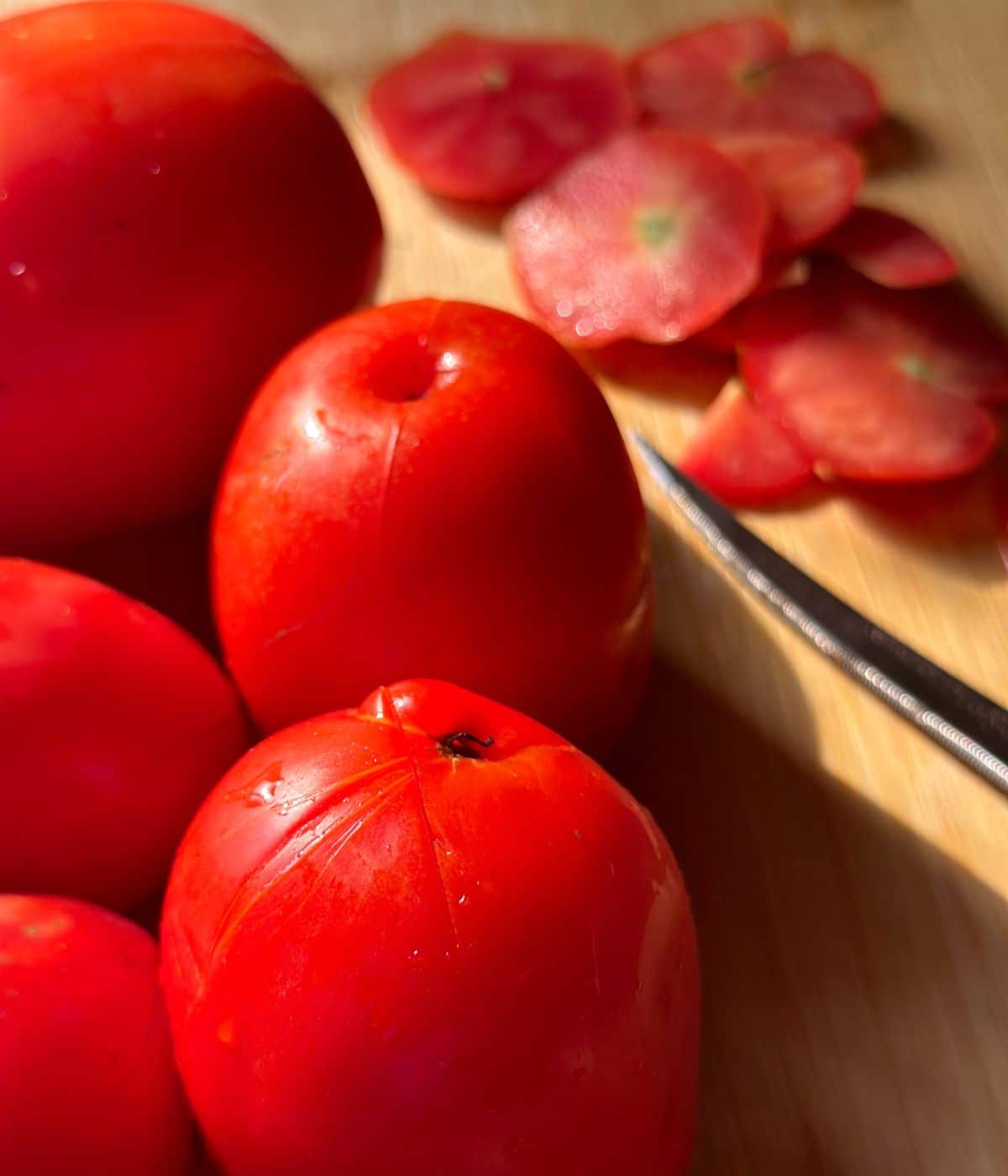
      So this is an additional step if you are using fresh tomatoes, you can skip this if you are using canned tomatoes. This step will take 5 mins but will reduce your active sauteeing and cooking time by 15 mins!

      zoomed in shot of tomatoes

      Add cuts on the bottom of the tomatoes in the shape of a cross and remove the stem areas

      tomatoes soaked in water in a bowl

      Put the tomatoes in a bowl and let it soak in boiling hot water for 10 mins.

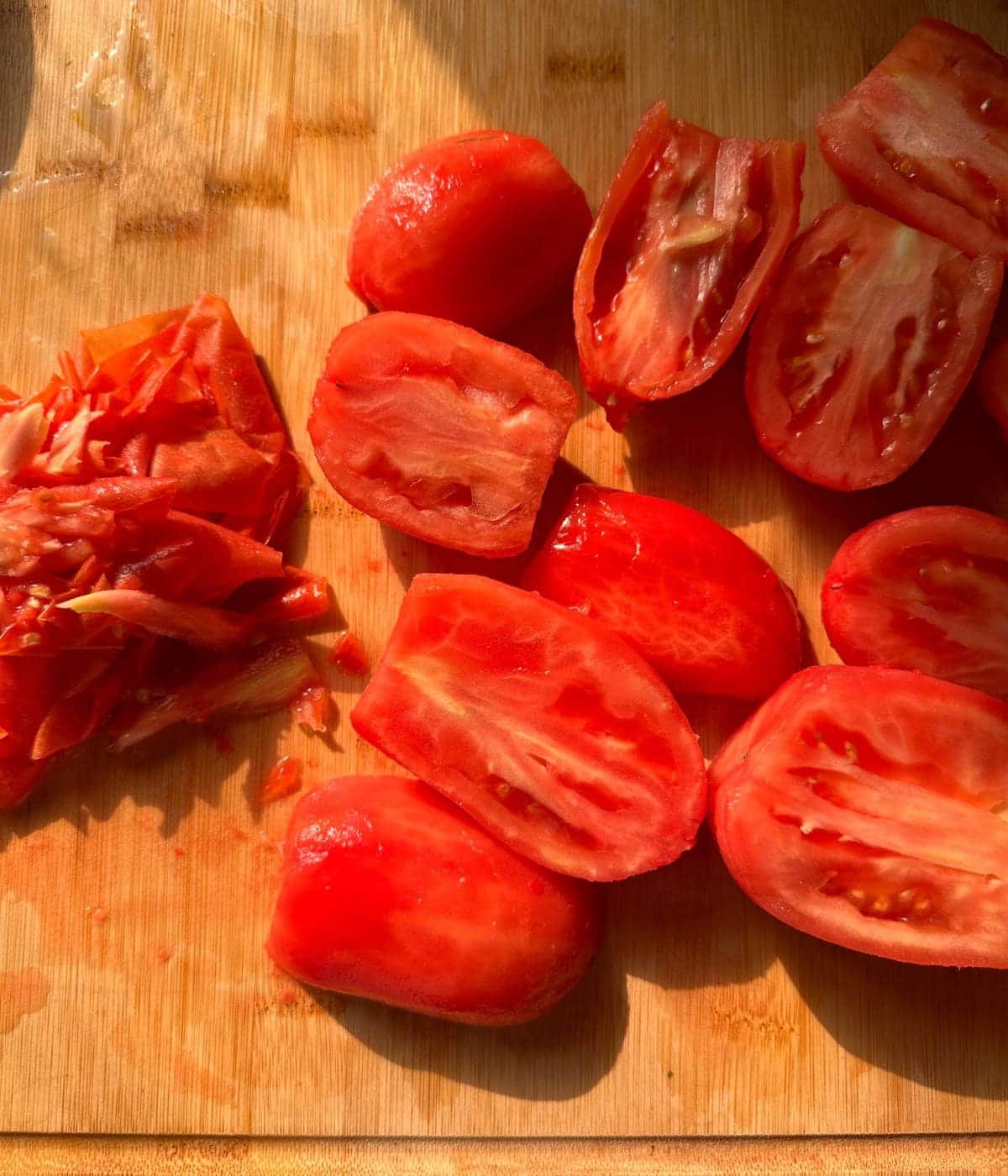
      peeled skins of tomatoes piled on the side, and peeled tomatoes kept cut open in halves

      Drain the liquid and now you should be able to peel off the skin of the tomatoes with ease. Cut them into halves.

      NOTE: The stem region of the tomatoes doesn’t tenderize well and leaves little bits of tomato flesh floating around in the karahi. This step ensures you get a nice smooth karahi base.

      Making Chicken Karahi

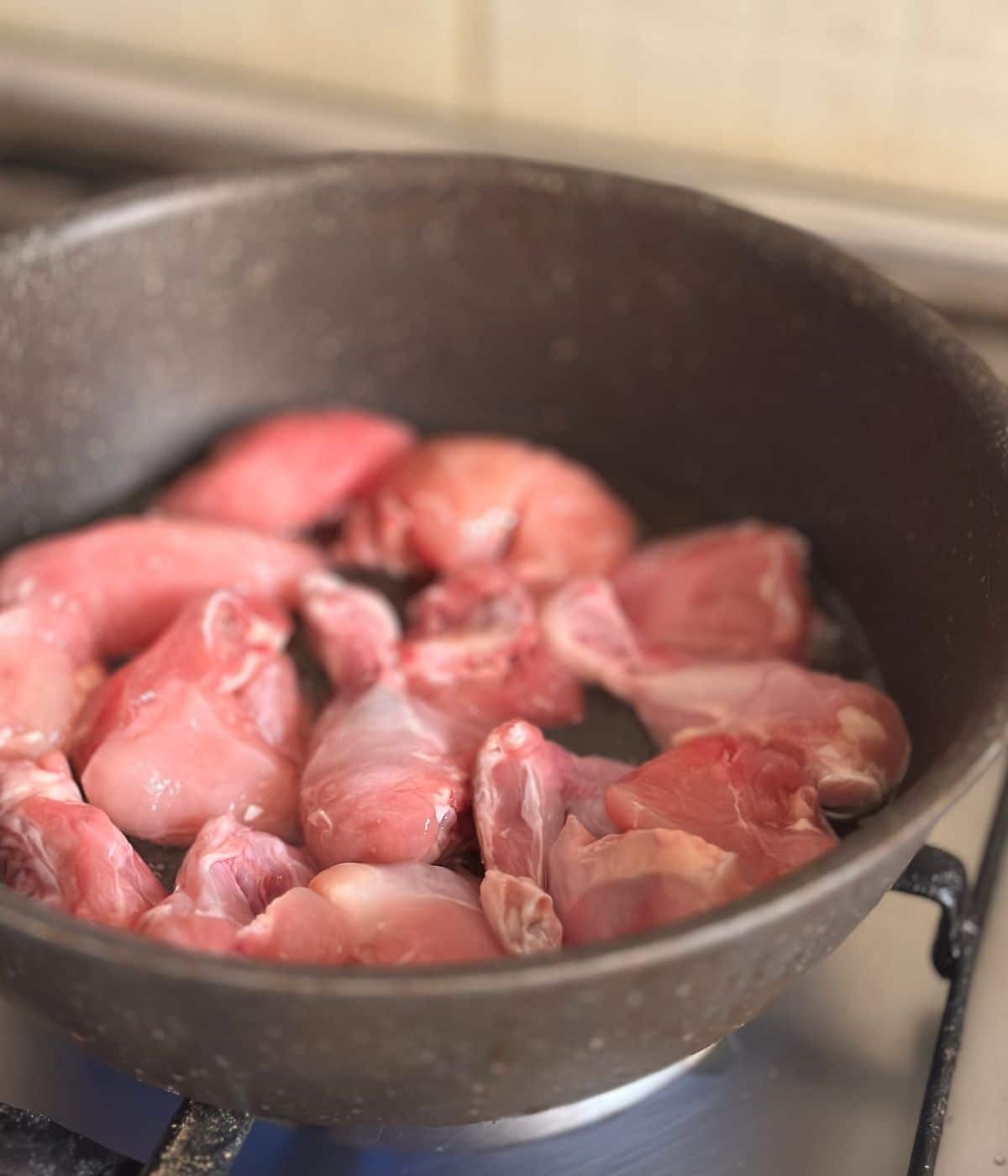
      raw chicken in a deep pan with oil

      Add your raw chicken to a pot with oil/ghee, at high flame.

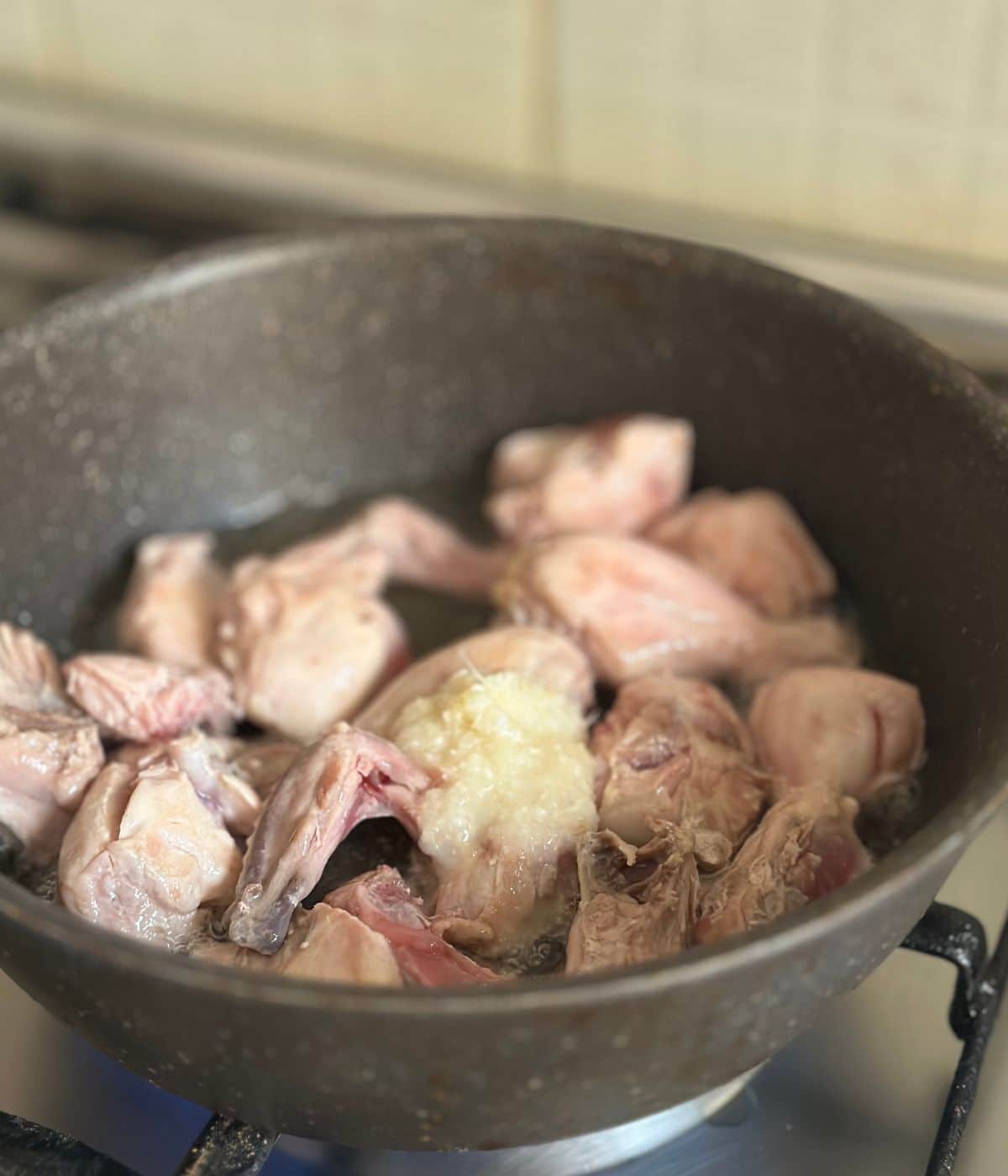
      semi cooked chicken in a pot with garlic paste added

      When your chicken turns white, add garlic paste and saute for 2 mins.

      NOTE: This step is most important in sealing in the juices of the chicken and giving it a slight sear from the pan. Don’t rush this step and allow the liquid from the chicken to evaporate completely before proceeding to the next step.

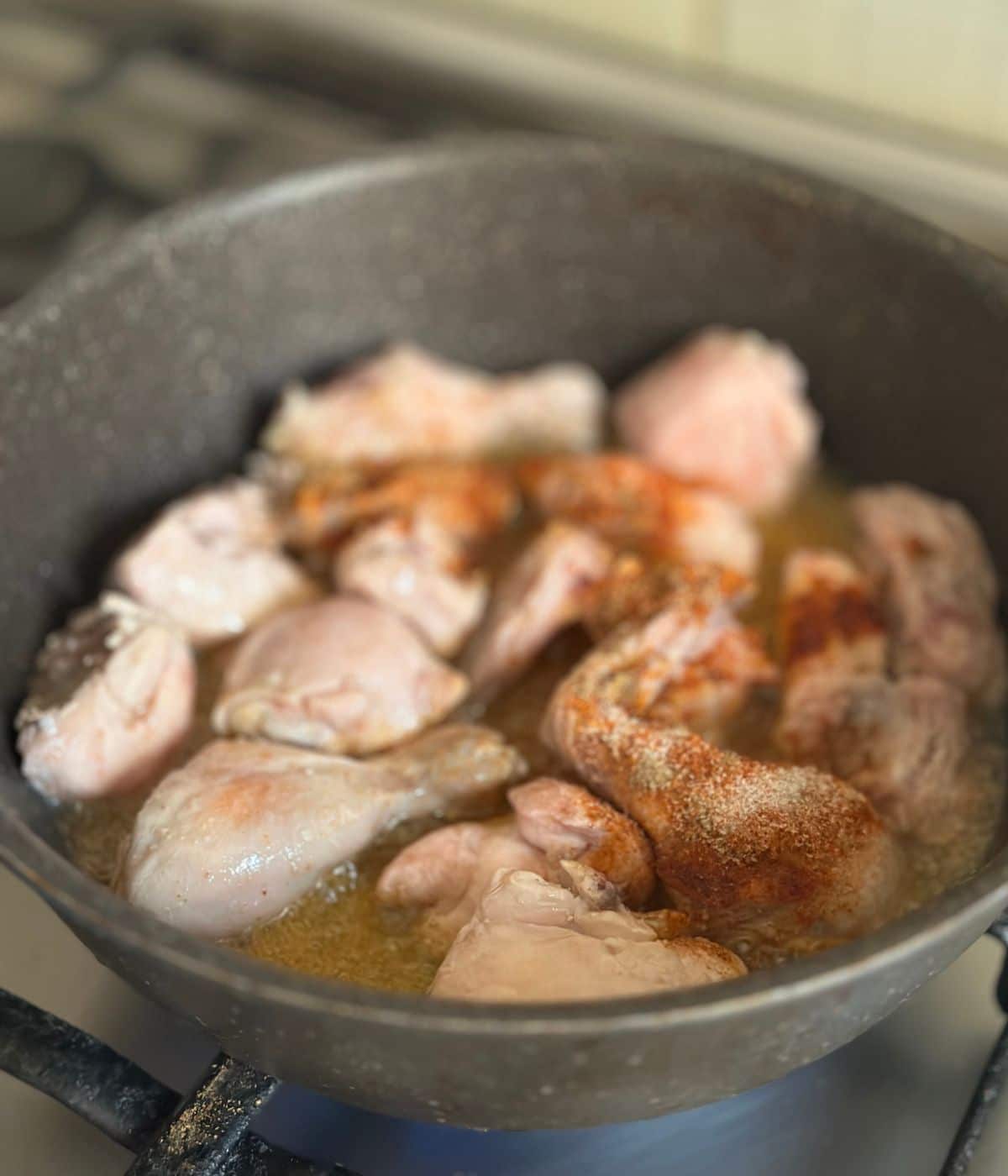
      spices added to semi cooked chicken in a pot

      Then you can add in the spices after all the water from the chicken has evaporated.

      tomatoes added to the chicken

      Toss in the tomatoes, and reduce the flame to low.

      curry covered with a pot lid

      Cover the lid and allow the tomatoes to soften up for about 5 to 10 mins

      reducing water from the tomatoes

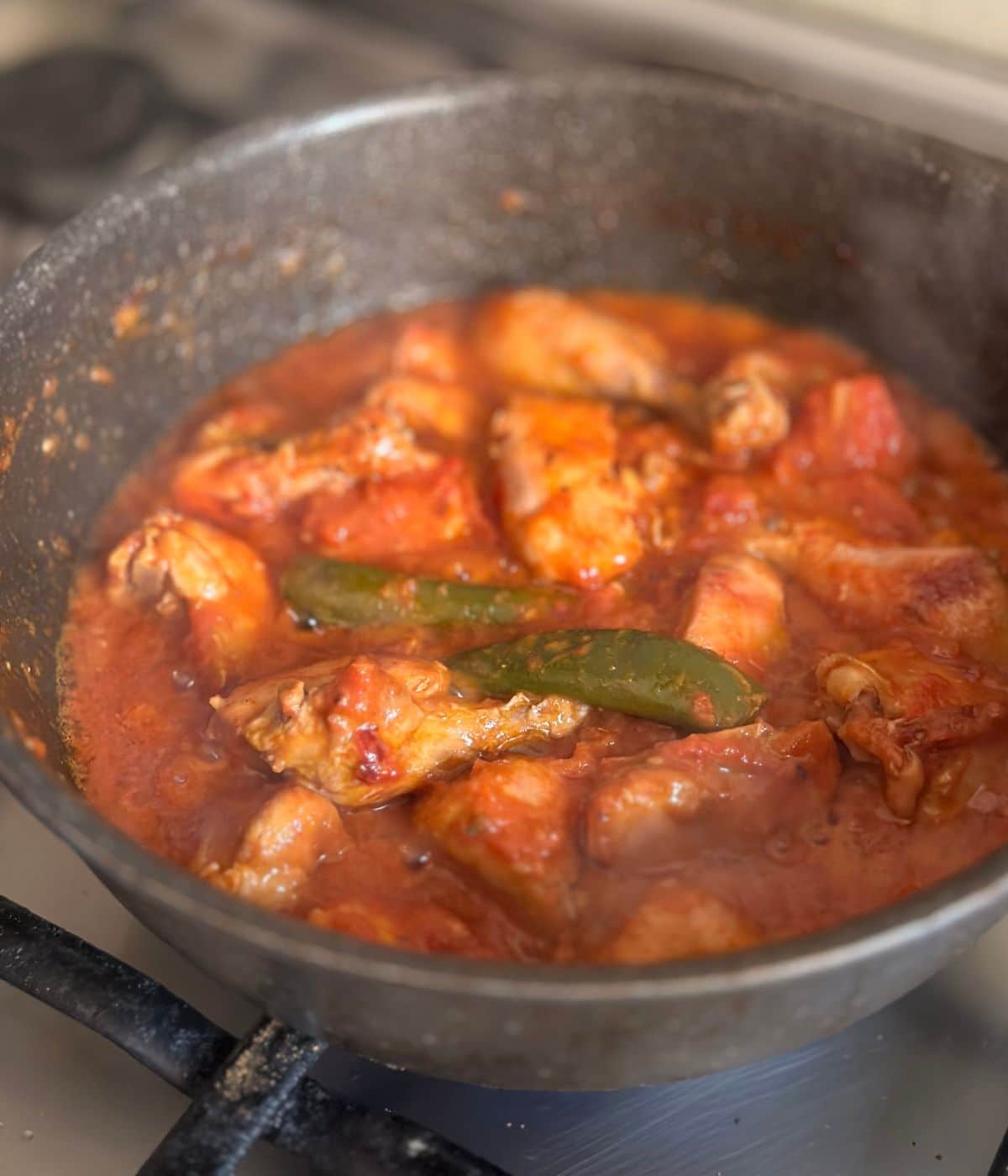
      When you remove the lid, you will see water leached out from the tomatoes. Increase the heat back to medium-high at this point and add green chilies. Put the lid back on

      adding finishing spices to the curry

      After 10 mins, you will see oil separating on the sides of the wok/pot. Reduce the flame to low and add the finishing spices

      final stage of chicken karahi

      Mix the karahi well. You can add the garnish in the pot/wok or when you dish it out on the serving platter.

      Garnish

      Normally, the garnish is simply used for decor. But for chicken karahi, the garnish is just as important as the dish itself, they add the remaining flavors to tie the dish together. We garnish the karahi with 3 main ingredients

      • Julienne cut ginger slices
      • Julienne cut green chilies
      • Chopped cilantro/coriander leaves
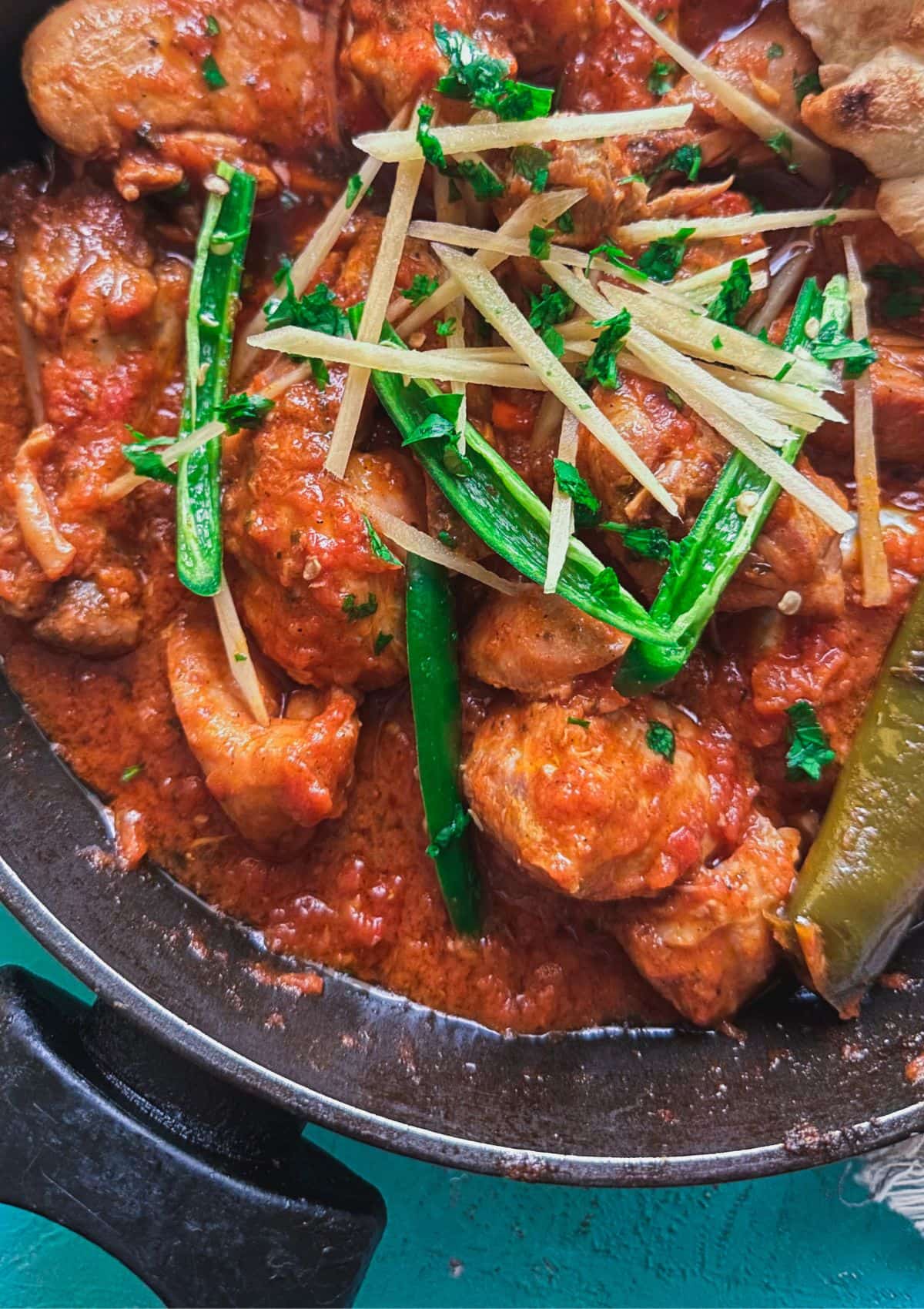
      a close up view of the curry

      Pro Tips

      • While cutting the tomatoes in halves, if you or anyone in your family suffers from kidney problems, remove the seeds of the tomatoes.
      • Always use a large wok/pan for chicken karahi. You want to give ample room to your chicken so that it doesn’t get crowded and they all can fry rather than steam.
      • Always let the water from the chicken evaporate completely before adding the spices. This ensures there is no residual “smell” of raw meat lingering, and also ensures that your chicken has been properly seared/fried in oil.
      • Follow the temperatures mentioned in the recipe, to make the best curry!
      • Crushed black pepper is another key ingredient in this recipe! Make sure to use freshly ground black pepper for that top-notch taste.
      curry served with naan

      Leftovers Ideas!

      TBH, I’ve rarely had any karahi leftovers, but when I do, I always find myself converting it into one of these dinner options:

      • Make Tahiri Rice – Simply add soaked basmati rice along with water into the leftover karahi, along with a little bit of salt to make the very popular yellow rice known as “tahiri”. An example of tahiri rice on my website is the popular Fish tahiri!
      • Sandwiches – The saucy chicken bits are great for making a spicy sandwich with onions, lettuce, and mayo.
      • Quick biryani – Layer the leftover karahi with some boiled rice, and sprinkle some chat masala on top with fried onions and food coloring. Cook at low flame for 10 mins and viola you have a quick biryani at your hand! See this Quick Karahi Biryani recipe for more information!

      Recipe Hack

      This is my favorite Karahi hack! If you are finding it hard to locate good-quality tomatoes, or end up using slightly orangy tomatoes, your curry will show it! For those days, add a tablespoon of tomato paste to your curry, and viola! Your color is back!

      Recipe FAQs

      Is chicken Karahi spicy?

      Surprisingly, unlike other South Asian food, chicken karahi doesn’t fall under super spicy dishes. The flavors are mild, even the green chilies used pack mild heat.

      Can I freeze chicken Karahi?

      Like all other Desi curries, Chicken karahi can also be frozen. If you wish to freeze the karahi, then do so without the garnish. Allow the karahi to cool down and then freeze in an airtight container or ziplock bag.

      Can I use tomato puree instead of fresh tomatoes?

      Tomatoes are one key ingredient used in the karahi. The form in which the tomatoes are used changes the texture, cooking time, and somewhat taste of the recipe. So raw tomato purees are sadly a no-no for me.

      Can I make this recipe with more gravy?

      I know most families want their karahis to have more “curry”. You can add 1/2 cup of water to your karahi to give you more curry quantity without compromising on the taste very much. The other alternative is to add 1 to 2 tablespoons of yogurt if you really wish for more curry. I would personally just add more tomatoes if needed, but of course, that gets expensive very quickly.

      Can I make this recipe using less oil?

      I have made sure that I scale down the quantities of oil as compared to the traditional recipe. But if you would like to reduce it further you can. Just know that you might not see oil separation at the end of cooking.

      What to serve with Chicken Karahi

      Chicken Karahi falls in the category of “dry curry”, where you don’t have a lot of liquid gravy. So chicken Karahi pairs really well with all desi flatbreads like Naan, Chapati, parathas, or Tandoori Rotis. Some in my house all like to pair it with good ól Daal chawal (lentils and rice), I would recommend Hyderabadi Khatti Daal for that pairing!

      Related Pakistani Chicken Recipes

      • boneless chicken handi pakistani style
        Boneless Chicken Handi
      • murghi ka saalan
        Pakistani Basic Chicken ka Salan – Chicken curry
      • a close up shot of chicken stir fry in a pan
        Spicy Chicken and Pepper Stir fry
      • Nauratan chicken curry in a black dish with yellow rice and chapati on the sides
        Nauratan Chicken Recipe- Pakistani Chicken curry with vegetables and potatoes

      Hope you decide to try this Chicken Karahi recipe! Please don’t forget to leave a rating and comment below! If you take a picture then tag me on Instagram! Thank You!

      Pakistani Chicken Karahi Recipe

      A classic restaurant style Pakistani chicken curry, made with minimal spices and lots of tomatoes.
      4.86 from 7 votes
      Print Pin
      Course: Main Course
      Cuisine: Indian, pakistani
      Prep Time: 10 minutes minutes
      Cook Time: 20 minutes minutes
      Total Time: 30 minutes minutes
      Servings: 4 servings
      Calories: 325kcal
      Author: Wajiha

      Equipment

      1 wok or karhayi

      Ingredients

      • 500 gm bone in chicken cut into small pieces
      • 600 gm fresh roma tomatoes
      • 1 ½ teaspoon table salt or to taste
      • 1 tablespoon garlic paste
      • 1/2 cup ghee or any neutral oil
      • 1 teaspoon cumin powder (zeera)
      • 2 teaspoon kashmiri red chili powder see notes
      • 1/2 teaspoon garam masala powder all spice
      • 1/2 teaspoon crushed blackpeppercorns
      • 1 teaspoon dried fenugreek leaves kasuri methi
      • 4 large Pakistani green chilies see notes

      Garnish

      • 1/2 inch ginger julliene cut
      • 1 tablespoon coriander/cilantro leaves finely chopped
      • 4 whole Large green chilies julliene cut

      Instructions

      Preparing Tomatoes

      • Add cuts in the form of an x on the base of the tomatoes and remove the stem from the top.
      • Put the tomatoes in a bowl and pour hot boiling water on them. Make sure they are covered atleast 80% in the water. Cover the bowl and let the tomatoes sit in the water for about 7 to 8 minutes
      • After 7 to 8 minutes you will see the skin of the tomatoes peeling from the cuts. Discard the water. Peel off the skin of the tomatoes and discard the peels
      • Cut the tomatoes into half and chuck them back in the bowl. Now using a potato masher or your hands, mash the tomatoes. They are now ready to be used.

      Preparing the Curry

      • Put a medium to large wok on medium high heat on the stove and add oil.
      • Add in your chicken and saute for 2 to 3 minutes or until the chicken starts to get brown scorch marks from the wok.
      • Add garlic paste, salt, red chili powder and cumin powder. Saute for another 2 to 3 mins.
      • Now drop in your prepared tomatoes and saute for 2 mins.
      • Reduce the heat to low and cover the wok. Cook for 5 to 8 mins or as long as it takes for all the tomatoes to leech out water.
      • Once you see all the water leeched out, add green chilies and bring back the heat to medium high and cook for another 8 mins or until you see oil seperating
      • Now reduce the heat to low, and add your finishing spices: crushed black peppercorns, dried fenugreek leaves and garam masala powder. Simply mix and your karhayi is ready.
      • Garnish with ginger, green chilies and cilantro leaves. Serve with Naan, paratha or Rice

      Notes

      • Kashmiri red chili powder can easily be substituted with paprika powder. Kashmiri red chili is milder than regular red chili powder. IF you are using regular Indian red chili powder then use half the quantity mentioned.  1 teaspoon Kashmiri red chili powder = 1 teaspoon paprika powder
        1 teaspoon kashmiri red chili powder = 1/2 teaspoon Indian red chili powder
      • Large Pakistani green chilies are mild and easily tolerable heatwise. You can easily use fresh jalapenos, or pablanos or any mild green chilies instead. 

      Nutrition

      Serving: 1servingCalories: 325kcalCarbohydrates: 8gProtein: 27gFat: 21gSaturated Fat: 5gPolyunsaturated Fat: 5gMonounsaturated Fat: 8gTrans Fat: 0.1gCholesterol: 113mgSodium: 209mgPotassium: 730mgFiber: 2gSugar: 4gVitamin A: 1455IUVitamin C: 24mgCalcium: 38mgIron: 2mg
      Can’t wait to see your remakes! Tag meon IG with your pictures @butteroverbae

      Shahi Chicken Pulao

      October 24, 2022

      final shot of the assembled shahi pulao

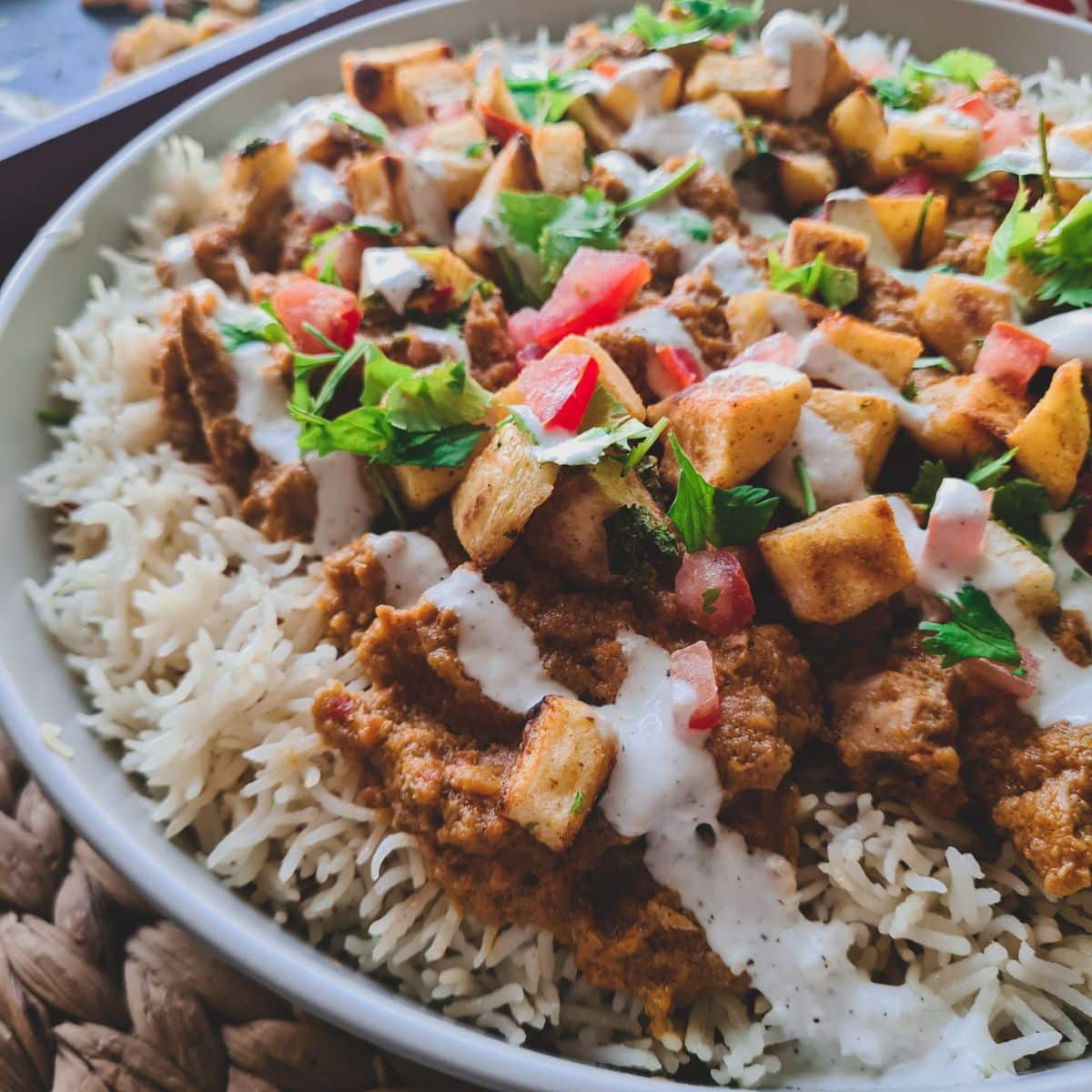
      Presenting to you, the mighty colorful Shahi Chicken Pulao, a Pakistani fusion style recipe, a main course created by yours truly! You can’t go wrong when you have layers of aromatic rice, spicy chicken curry, some potato toppings and a mild but delicious yogurt sauce to go on top of it. You don’t need sides with this! Just a big platter to showcase this beauty, and Voila! You have yourself a crowd pleaser! I dedicate this one to all you bored homechefs out there, tired of the same ol’ weekly rotations and same ol’ daawat menu.

      What is Shahi chicken pulao

      This isn’t a traditional recipe. Shahi Chicken Pulao is purely a dish that came together by inspiration, trial and error, and by serving it to a LOT of test subjects, (and I mean A LOT) who agreed to indulge me, and came over every weekend to be fed the same food, over and over again.

      This is a layered rice dish, (think Lasagna), where you prepare the components seperately and then assemble it together when you are ready to eat. It has cumin infused rice at the bottom, ladden with a thick dry delicious chicken curry, topped off with crispy spicy potato chunks and herbs, with a nice complimentary yogurt sauce to add the final drizzle. Its almost like a deconstructed Biryani, but mild tasting like a pulao. I’ve made it with as much precision, and meticulous screening as I did when I created the Nauratan Chicken, or malai chicken koftey (which have become a thing on their own too).

      Let’s face it, we all get bored of the mundane and want to step out of the rutt to feel fresh again. Cooking is no different. For me, I am the happiest when I am trying a new recipe in the kitchen, experimenting or trying out something new from the internet. Whether they make it into my permanent diary, (or permanent folder of recipes on my phone) is secondary. Just the thrill of it is enough for me to be trying something new. If you are here, than know that This is YOUR sign to try something new today!

      DID YOU KNOW? Most unique Pakistani recipes that we know come out of the Wedding industry in Pakistan, due to the high demand of “innovative and new food items” at events. Singaporean rice, Doodh dulari, Balochi tikka and balochi tikka karahi are all products of Caterers trying to come up with something new for their lavish wedding spread.

      sideview of the assembled shahi pulao

      Why this recipe is for you

      • You want to make something with left over pulao rice (yes you can do that!)
      • You don’t follow recipes exactly. While this is every food blogger’s major pet peeve, this recipe is super forgiving, you can use substitutes, shortcuts and overall make mistakes with this recipe, and still end up with a delicious meal
      • If you are a newbie to cooking, then try this before you try making biryani.
      • You can prepare it a day before and assembled on the day of.
      • You don’t need sides. This is a stand Alone dish, so doesn’t require anything to support it, just hungry humans

      Notes on Ingredients and substitutions

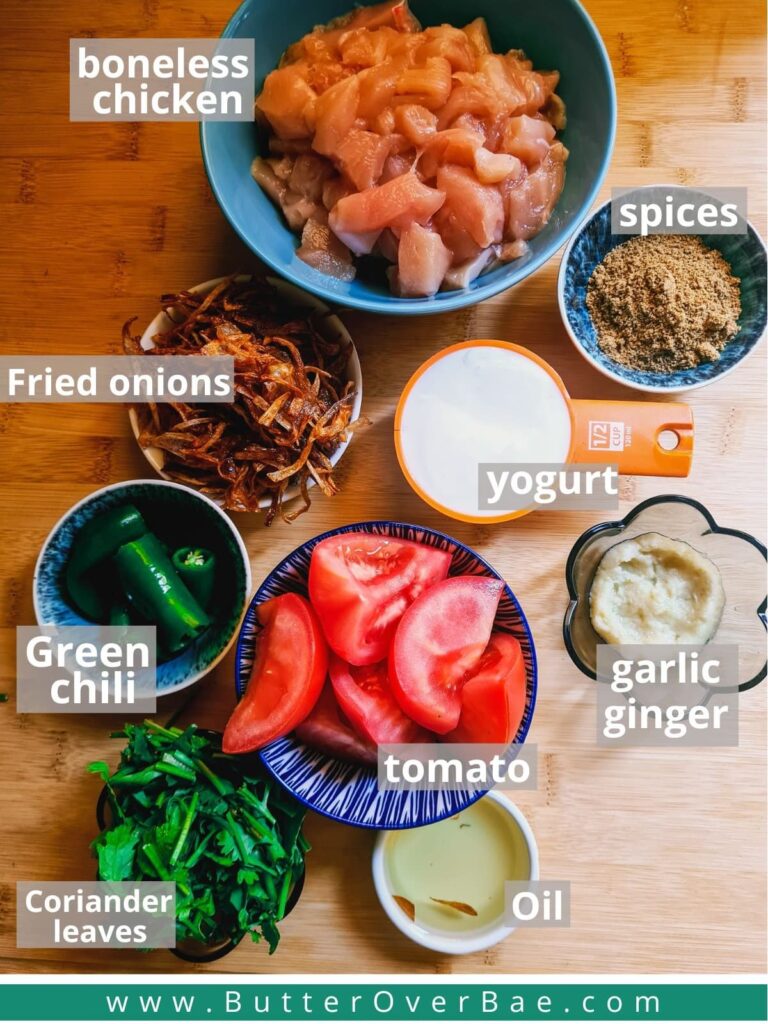
      labelled ingredients for chicken curry

      When you see the ingredient list in the recipe card, pleaseeee don’t jump off your seat. I know the list looks long and daunting, but I PROMISE, it is basic and the way they are used is also super simple.

      • Whole Spices: The pulao rice uses whole spices to infuse aroma and flavor to it. BUT, since this is a layered dish, you can easily skip them and use only cumin seeds instead.
      • Fried onions: This recipe calls for pre-fried brown onions. You can also brown the onions yourself and then use it in the recipe. If you are a fan of doing neither, than simply chop some onions and caramelize it before adding chicken to it.
      • Boneless Chicken: We need small or medium sized chunks of meat so that it is equally distributed while layering. I would not recommend bone-in chicken for this recipe.
      • Rice: Long grain Basmati rice is always the first choice for any kind of pulao. You can find them at any Asian/South Asian grocery store. The best part about this recipe is that you can also use left-over pulao rice! YES! Let’s say you made a big batch of Matar Pulao and froze some, you can simply defrost and use it! Or use last night’s pulao too!

      Cooking Instructions And Notes

      Layer 1 – Pulao Rice

      The rice are cooked fairly similar to regular pulao. For an in-depth pulao-know-how, visit the matar pulao recipe. Otherwise this is pretty straightforward.

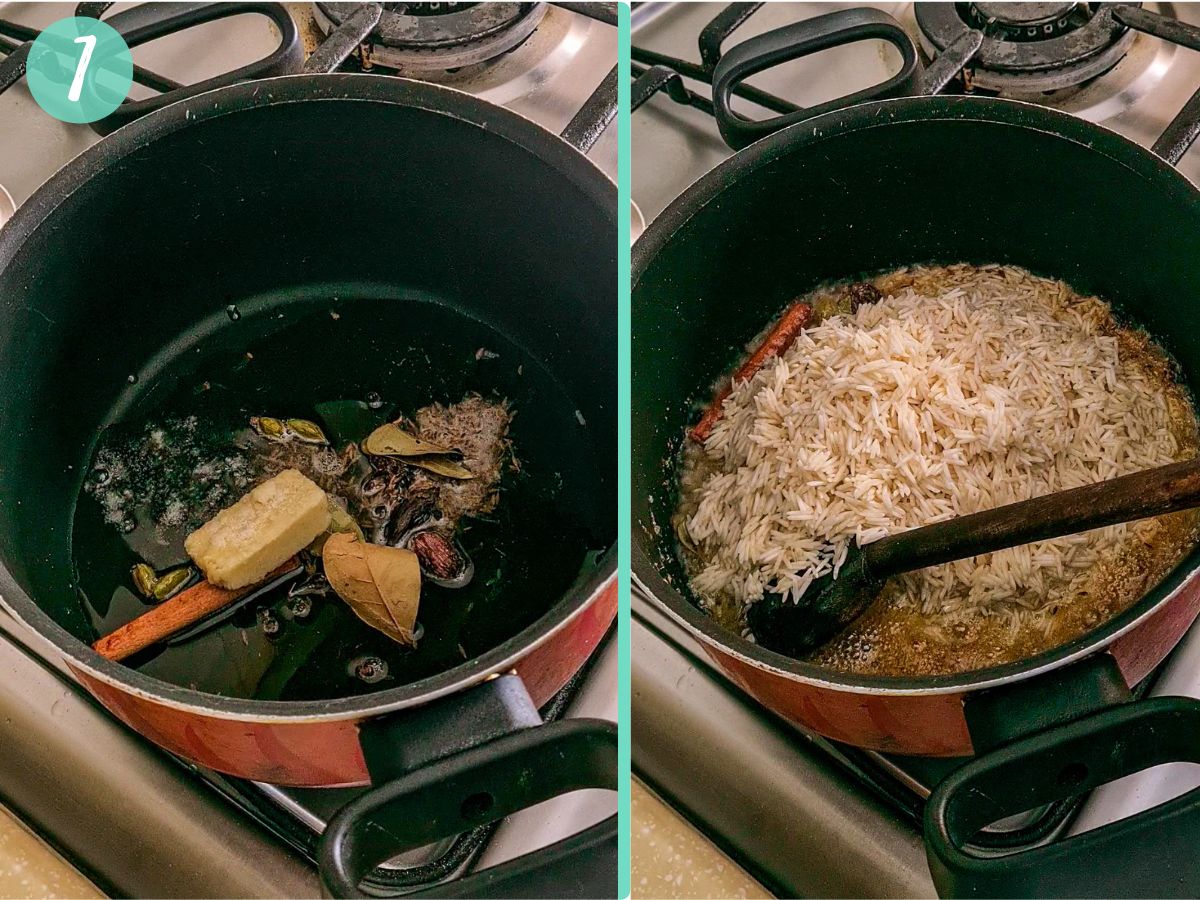
      Oil and whole spices go in the pot, along with garlic ginger paste. Saute saute saute, and then add rice, salt and water.

      whole spices added in oil in a pot, then uncooked rice added

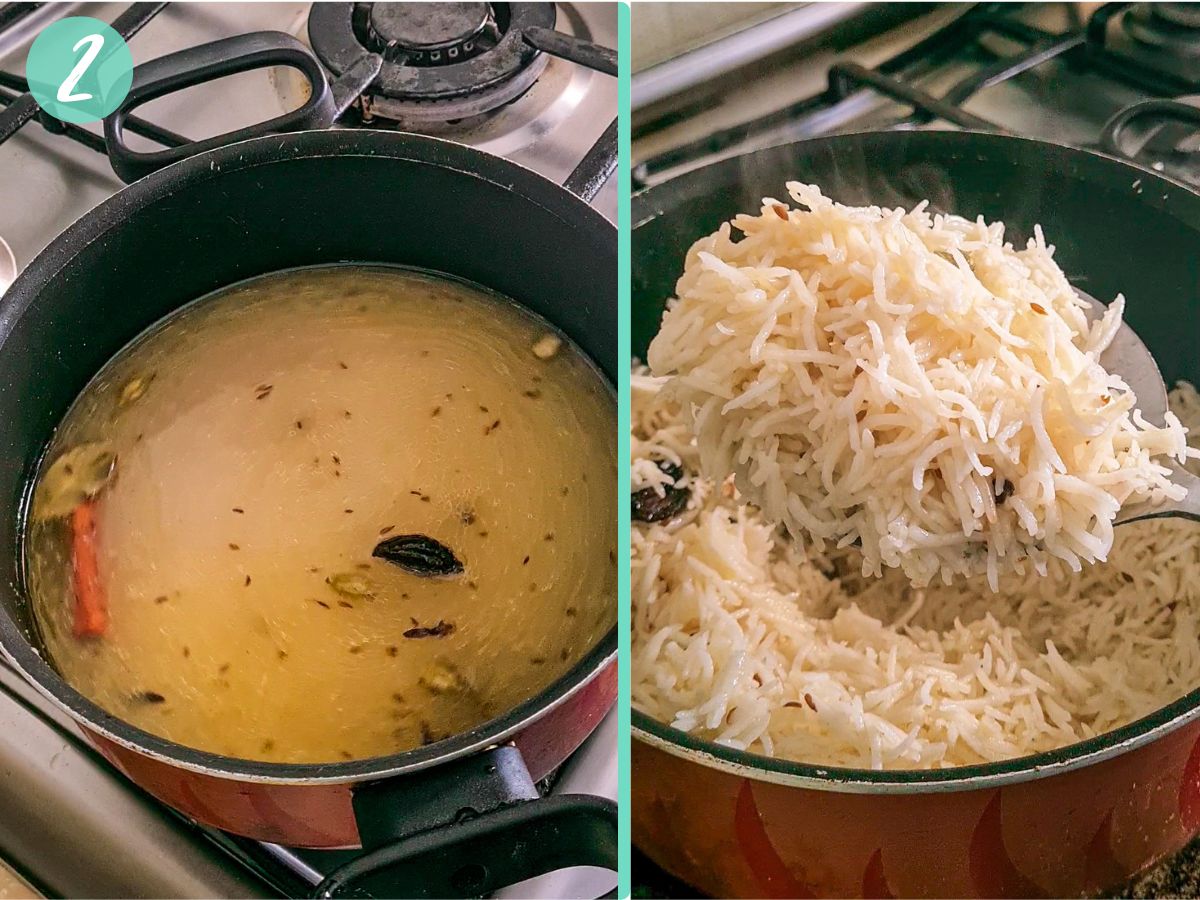
      Your water level should be 1/2 an inch above the rice. You can use the index finger method to check the water level. (In this method, you dip your index finger in the water and touch the rice. The water level should be touching your index finger’s first joint, when you touch the rice) You can also use the wooden spoon method. (Here, you mark the handle of your wooden spoon at 1/2 an inch mark and insert it in your water to touch the rice, while water level touches the 1/2 inch mark)

      water added in a pot of rice and spices. Rice is ready and fluffy

      Let the rice cook for 5 to 6 mins, and then reduce the flame to low, and let it steam for another 5 to 6 mins. Use a fork to fluff up the rice! And they are ready!

      Layer 2 – Chicken Curry

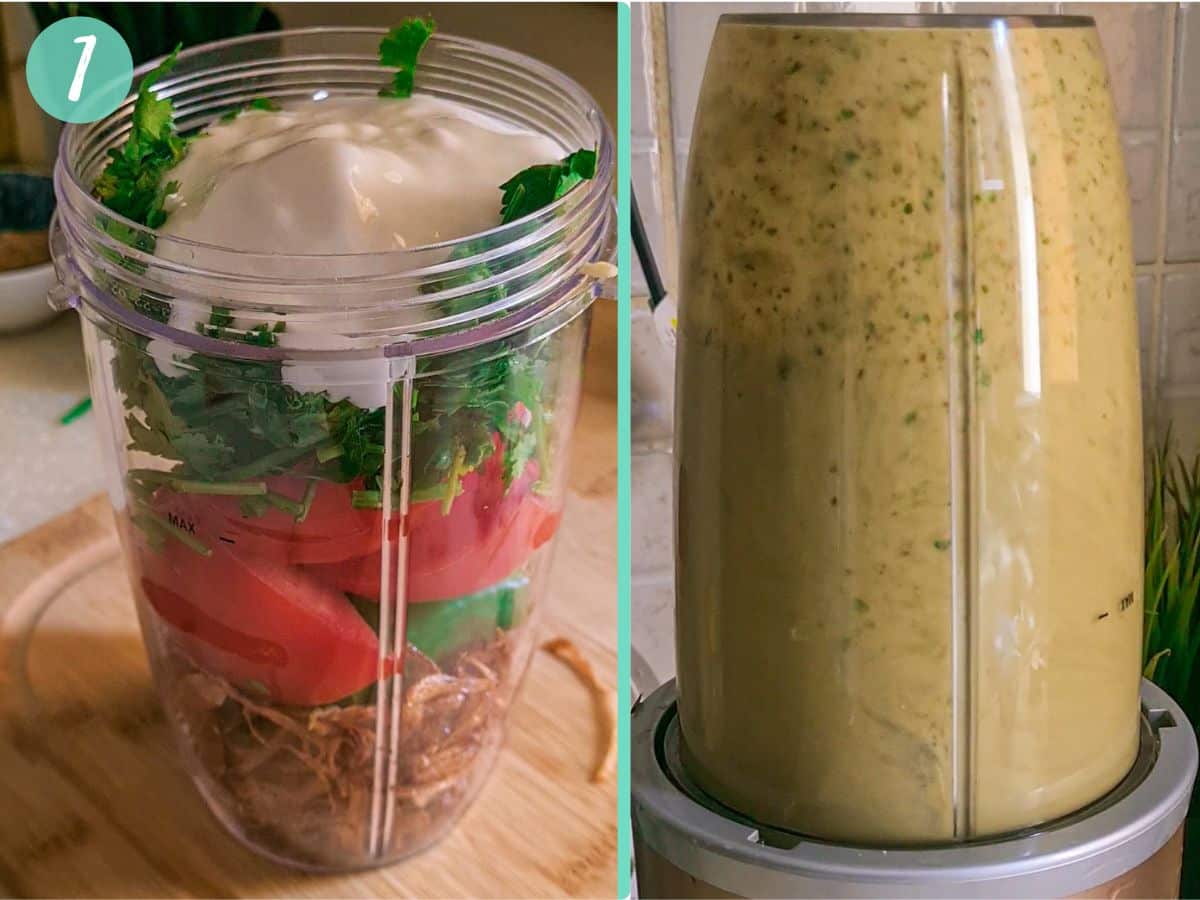
      For the curry preparation, you only need to make the curry paste. Put all the curry ingredients in a blender to make paste and start cooking.

      ingredients for chicken curry in a blender jug made into a fine paste

      NOTE: The curry paste uses green chilies as an ingredient also. It doesn’t make the recipe very spicy or anything, but if your spice tolerance level is low, than you should skip it.

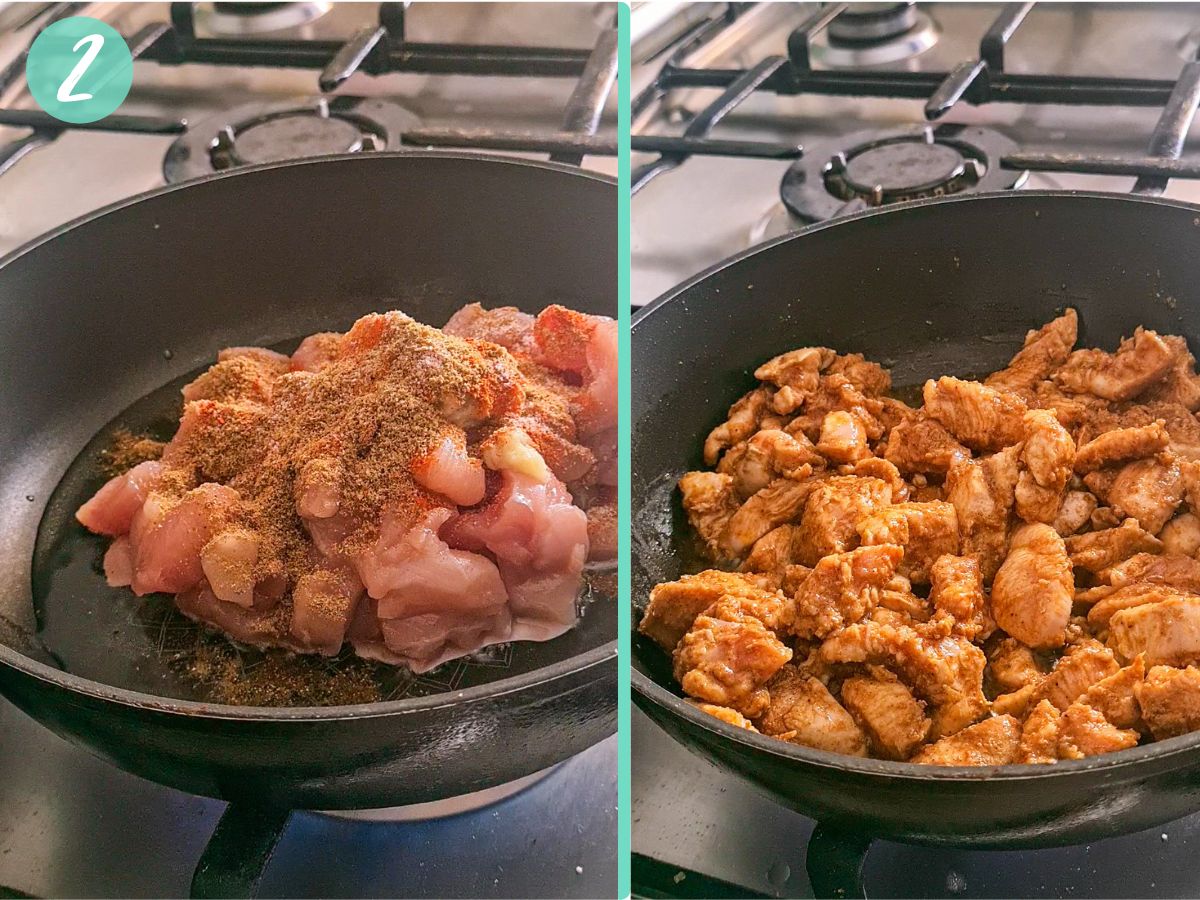
      In a medium pot, add oil, chicken, garlic paste and spices and simply stir fry the chicken at high flame. This helps to get rid of all the water from the chicken and temper the spices to take the “rawness” out of it.

      raw chicken mixed with spices in oil in a pot to get nice even brown color

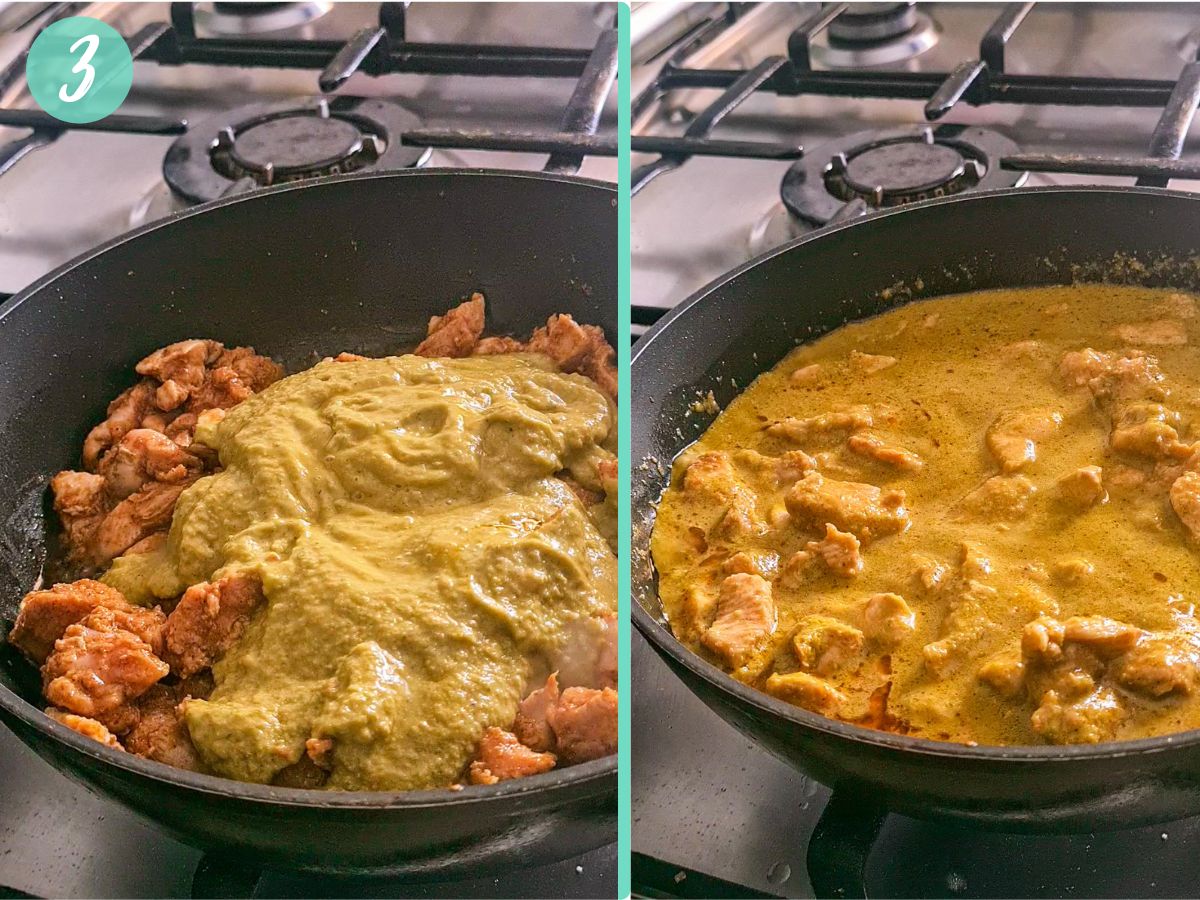
      Then go ahead and add the curry paste along with some water. Let the curry cook for 5 to 8 mins or until you see oil seperating on the sides of the pot.

      curry paste added to sauteed chicken and cooked through to make chicken curry

      NOTE: This curry is going to be towards the drier side, so shouldn’t be too liquidy. Dry out any excess water if its too runny.

      Layer 3 – Toppings

      Now for the fun part. The toppings include oven roasted spicy potatoes, chopped tomato and chopped cilantro/coriander for garnish.

      The toppings are completely open to your own choices and taste. Since this is “Shahi Pulao“, you can also add roasted nuts and raisins as a topping too, or really get creative and add roasted flax seeds, pumpkin seeds or roasted chickpeas too! I kept it fairly simple so that its open to your personal interpretation! Go crazy!

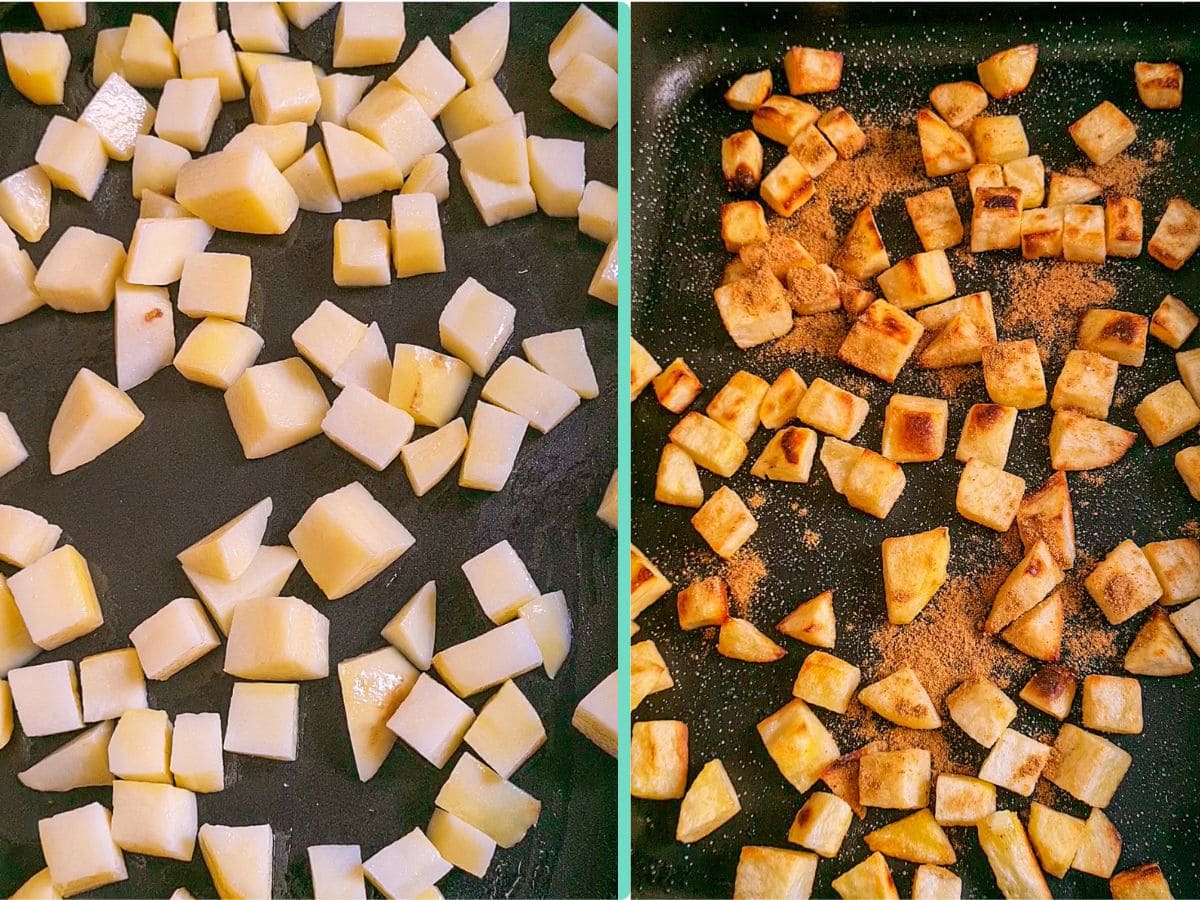
      I par-boil potatoes with salt and vinegar which reduces the baking/roasting time considerably.

      You can cook these potatoes any of the following ways

      • Deep fry or shallow fry them on grill pan on the stove.
      • Air fry them in an airfryer.
      • Oven bake / roast them with the broiler on for that nice golden color.

      HACK: As a short cut, you could use frozen tater tots, wedges or any other form of frozen potatoes from the grocery store and simply deep fry/air fry/oven-bake them at home

      potatoes cut up in cubes kept in a baking tray, baked until golden and sprinkled with spices

      Once done, I simply sprinkle chaat masala all over my potatoes to give them a nice kick. IF you don’t have any chaat masala at hand, simply season with black pepper and red chili flakes.

      Layer 4 – Sauce

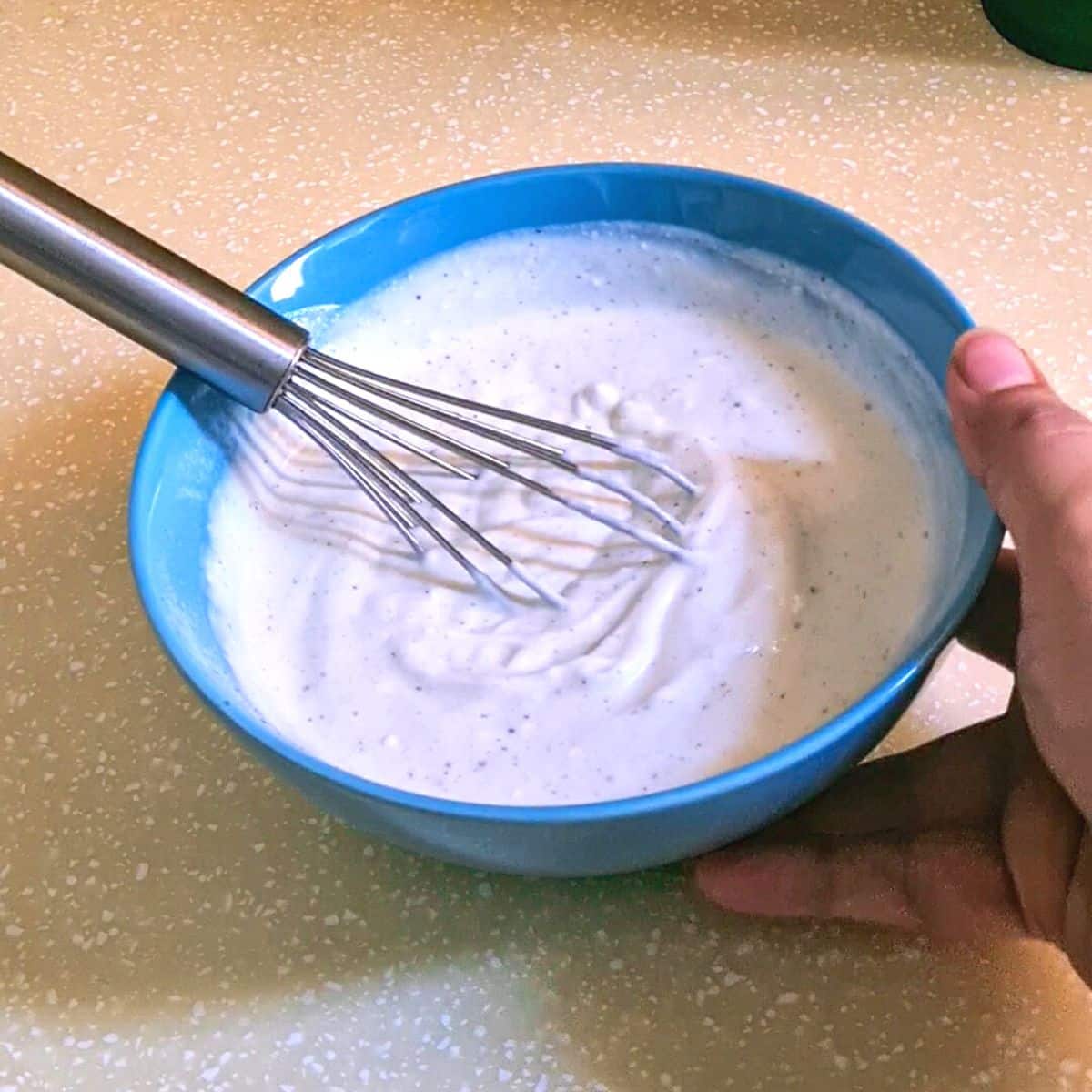
      The sauce only require that you mix up all the ingredients, thats it!

      The sauce quantity mentioned in the recipe is to give you ample amount of sauce. Some for drizzle over and some to serve on the side. If you are not too keen on sauces, reduce the quantity to half.

      sauce for drizzling on top of the pulao rice

      HACK: If you have any ranch dressing or garlic mayo at home, use that as the sauce. ( Truly a lazy girls hack my friends)

      Assembling the Shahi Pulao

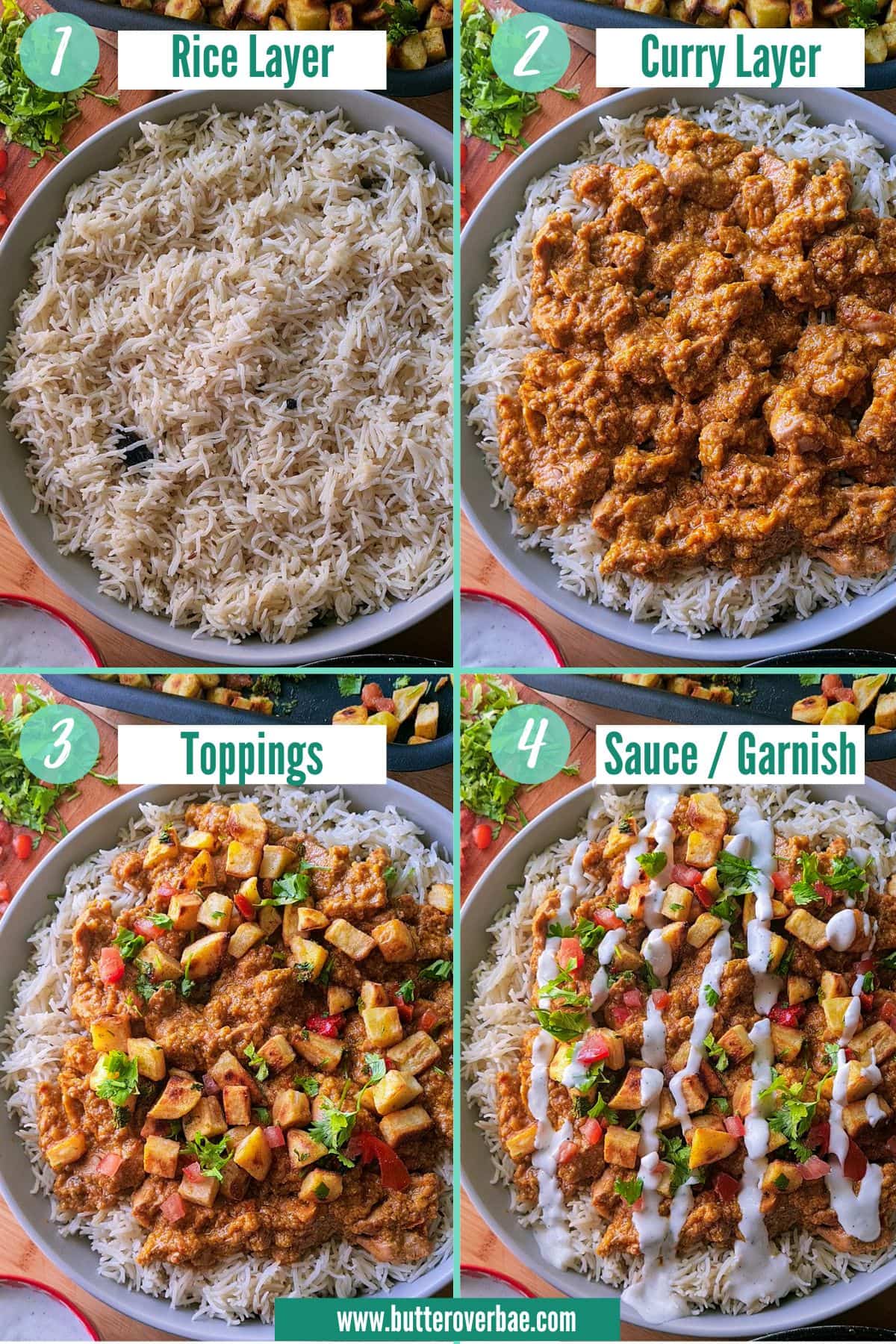
      Assembling the pulao is pretty straightforward, you layer the dish first with rice, than the curry, the toppings and finally the sauce. I usually serve the left over sauce on the side incase anyone wants extra.

      4 picture collage showing the layers of shahi pulao

      Expert Tips and notes

      • I usually make Singaporean Rice and Shahi chicken pulao with left over pulao rice. Makes for perfect layering and less work
      • You can also use boxed spice masala mix to make the basic chicken curry masala
      • Use a wider platter to showcase the assembled dish beautifully.
      • IF you feel like you’ve messed up any one of the layers by adding too much or too little seasoning or spices, don’t worry. Compensate by reducing or adding spices in other layers to balance the overall taste.
      side view of the assembled shahi pulao

      Frequently Asked Questions

      Can I skip the toppinngs or the sauce from the recipe?

      I mean I wouldn’t recommend it, but lets say you are pressed for time and need a quick win, sure! Use garlic mayo as sauce and tater tots as toppings.

      Can I make the pulao with beef or mutton?

      Boneless beef and mutton both can be used for this recipe. However, they take longer to cook. After sauteeing the beef/mutton in spices, you will have to add 2 cups of water and let the meat cook for atleast 20 mins before you can add the curry paste.

      How to store the pulao?

      Once the pulao has been dished out, simply keep it as is in the fridge to have later. The only thing drawback is your potatoes will lose their crispiness.

      What if I am left with one or 2 of the layers?

      The measurements given are right on the money, and if you layer it right, you shouldn’t be left with anything other than a little sauce, which you can use later to make wraps, salads or as a dip for fried food!

      Here are some more fusion style recipes for you to try

      Chicken tikka Nachos
      Nauratan Chicken
      Malai Chicken pulao

      Shahi Pulao

      A fusion style Layer Rice pulao dish, made with layers of rice, dry chicken curry, crispy spicy potatoes and a mild white sauce on top to tie everything together.
      5 from 3 votes
      Print Pin
      Course: Main Course
      Cuisine: Fusion Food, pakistani
      Prep Time: 30 minutes minutes
      Cook Time: 30 minutes minutes
      Total Time: 1 hour hour
      Servings: 4 people
      Calories: 515kcal
      Author: Wajiha

      Equipment

      blender

      Ingredients

      Chicken Curry

      • 500 gm boneless chicken cut in small cubes
      • 1 tablespoon ginger garlic paste
      • 2 whole onion fried until golden brown
      • 2 large tomato
      • 1/2 cup coriander leaves
      • 1/2 cup yogurt
      • 5 whole serrano green chilies
      • 1 ½ teaspoon salt or to taste
      • 1 ½ teaspoon red chili powder
      • ½ teaspoon red chili flakes
      • 2 teaspoon coriander powder
      • 1 teaspoon garam masala powder
      • 3 to 4 tablespoon oil for cooking

      Pulao Rice

      • 500 gm long grain basmati rice soaked in water for 20 mins
      • 4 bayleaves
      • 1/2 cup vegetable oil
      • 4 cloves
      • 2 black cardamom
      • 4 green cardamom
      • 1 cinnamon stick
      • 1 star anise
      • 1 chicken bouillon cube optional
      • 8 black peppercorns
      • 1 tablespoon garlic paste
      • 2 teaspoon salt or to taste
      • 1 ½ teaspoon black cumin seeds (shah zeera)

      Toppings

      • 2 cup potato cut in 1/2 in cubes, parboiled in water seasoned with salt and vinegar
      • 1/2 teaspoon salt or to taste
      • 1 teaspoon chat masala optional
      • 2 tablespoon finely chopped tomato for garnish
      • 2 tablespoon finely chopped cilantro (coriander) for garnish

      Sauce

      • 1 cup yogurt
      • 1/2 cup mayonnaise
      • 1/2 teaspoon black pepper powder
      • 1/2 teaspoon garlic powder
      • 1/2 teaspoon salt or to taste
      • 1 tablespoon lemon juice or vinegar
      • chaat masala to taste optional

      Instructions

      Layer 1 – Pulao Rice (if not using left over pulao rice)

      • Add oil, whole spices, cumin seeds and garlic paste in oil in a medium pot. Saute at medium heat till garlic paste turns slightly golden brown.
      • Add soaked rice and salt to the pot. Add enough water that your rice are atleast 1/2 an inch below the water level. Mark the end of a spoon at 1/2 an inch mark and insert it to see your rice is below the 1/2 inch mark or not. You can also use your index finger to do this, your 1 part of index finger should be submerged in water when it touches the rice.
      • Do a salt taste test of the water, it should taste balanced, not salty or underseasoned.
      • Cover with a lid and cook at high heat for 5 mins or until all the water has visibly evaporated.
      • Reduce the flame to low and steam rice for another 5 minutes
      • Use a flat spoon and toss and turn the rice upside down. You can also use a fork to fluff up your rice.

      Layer 2 – Dry Chicken Curry

      • In a medium sized pot, add oil, chicken, garglic ginger paste, all the powdered spices and salt. Saute at medium heat until chicken changes color from pink to white or brown.
      • Add all remaining ingredients listed for chicken curry in a blender to make a curry paste.
      • Add curry paste to the chicken pot along with 1 cup water. Cover the pot and cook the chicken at medium high heat for 10 mins.
      • Your chicken curry should be towards the dry side and not be very saucy.

      Layer 3 – Toppings

      • To cook the potatoes, you can either bake them in the oven or grill them on the stove.
      • To bake: Preheat oven at 450°F (230°C). Layer potatoes on a parchment paper in a baking tray and spray with cooking oil. Turn on the broiler for quick results
        Bake for 20 mins or until roasted golden brown, flipping halfway through
      • To Grill: Simply toss the potatoes on a grill pan with some oil and grill at high heat until they become golden and crispy on the outside.
      • Toss the potatoes in some chat masala and salt to complete.
      • Chop coriander and tomato for garnish

      Layer 4 – Sauce

      • Mix all the ingredients for the sauce in a bowl and set aside.

      Assembling

      • In a large wide dish, start layering with rice at the bottom.
      • Add chicken curry on the top of the rice.
      • Sprinkle potatoes, chopped tomatoes and coriander over the curry
      • Drizzle the sauce on the toppings and serve.

      Notes

      1. You can use left over pulao rice for the rice layer. All pulao rice work with this recipe, eg, matar pulao, zeera pulao or simple baghare chawal (tempered rice)
      2. For the toppings, you can add other vegetables of your liking as well. 
      3. Since pulaos are generally, mild tasting and not very spicy, the flavor profile of this dish overall is similar to that. You can add chili flakes or hot sauce to the sauce and curry if you want to bring more heat to the dish
      4. To serve the dish for a get together, you can prepare the curry, sauce and boil potatoes a day before. On the day of, simply cook the rice and grill the potatoes, while reheating the curry. 

      Nutrition

      Serving: 5servingsCalories: 515kcalCarbohydrates: 24gProtein: 40gFat: 29gSaturated Fat: 4gPolyunsaturated Fat: 14gMonounsaturated Fat: 7gTrans Fat: 0.1gCholesterol: 105mgSodium: 3373mgPotassium: 886mgFiber: 3gSugar: 17gVitamin A: 505IUVitamin C: 5mgCalcium: 198mgIron: 2mg
      Can’t wait to see your remakes! Tag meon IG with your pictures @butteroverbae

      Aloo Keema

      October 14, 2022

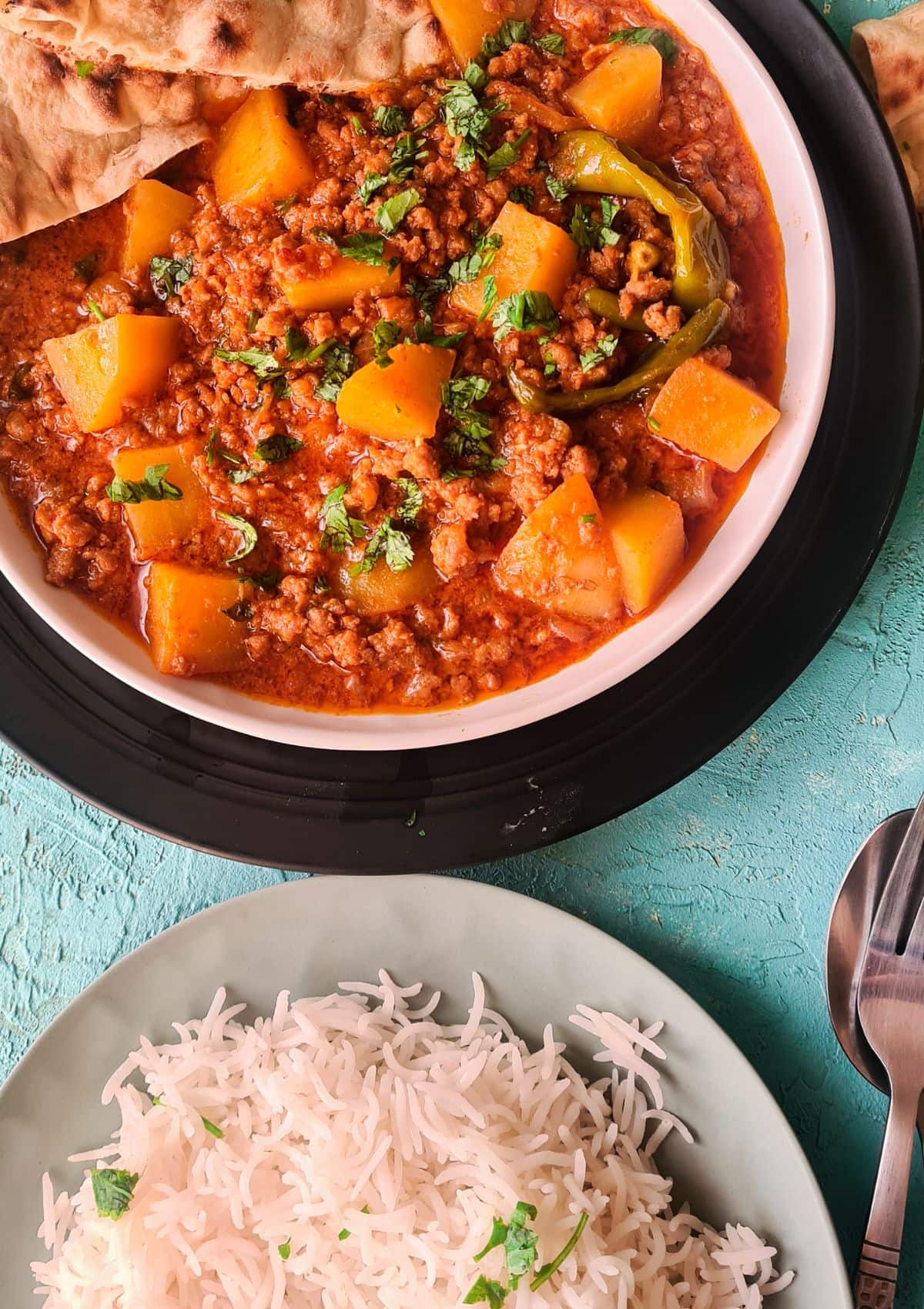
      side view of aloo keema on a white dish

      Ladies and gentlemen, I present to you the humble aloo keema, the king of comfort food, made by brown moms all over the world. Aloo keema is a traditional Pakistani / North Indian dish, eaten with rice, roti or parathas. You can call it a one-pot Ground beef potato curry. Quickest meal to whip up and remarkably hard to mess up! Lets begin!

      What is Aloo Keema

      Aloo keema or Qeema is a traditional home style Pakistani / North Indian dish made with curried potatoes (aloo) and ground meat(keema). Typically, its made with beef in most Pakistani houses, and its one of those weekly rotation kinda recipes. And I know I am not exxagerating here when I say, that all Pakistani folks have grown up eating aloo keema.

      And since it’s such a household name for us, we also have our preferences of how we like our aloo keema. My family enjoys a saucier version, while some prefer a drier stir fry consistency. Some are adamant that its only eaten with roti, and others have it with lentils and rice. And don’t get me started on the whole “Is it Aloo keema or Keema Aloo” debate. The only thing we all can agree on, it that its delicious. Its not snazyy or trendy, but it is what the heart wants after a long tiring day. After so much that is dissapointing in life, Aloo keema never dissapoints. (that was deeeep)

      Why this recipe works

      • Tried and tested. If you are new to this blog, than you need to know, that I test and re-test and consume maybe 15 versions of any recipe before I deem it “worthy” of your time and effort. This recipe, has been tried and tested to make sure that I bring you the easiest, quickest way to reach the Mom-Level awesomeness.
      • Its VERY HARD to mess up! no kidding. This is a fool-proof dish and no matter how many errors you make, you will still come up with something yum! Beginners, your welcome!
      • Super versatile! Although this recipe uses potatoes, you can go ahead and experiment with it and add any vegetables that you like, and you will still end up with something incredible.
      • Ready under 30 minutes! Now you know why this is a favorite for weekly rotations.
      • One-pot Recipe: Eh! you know that means, less clean up!
      • Left over remix: Hands down one of the best dishes to use as left overs (more on that later)
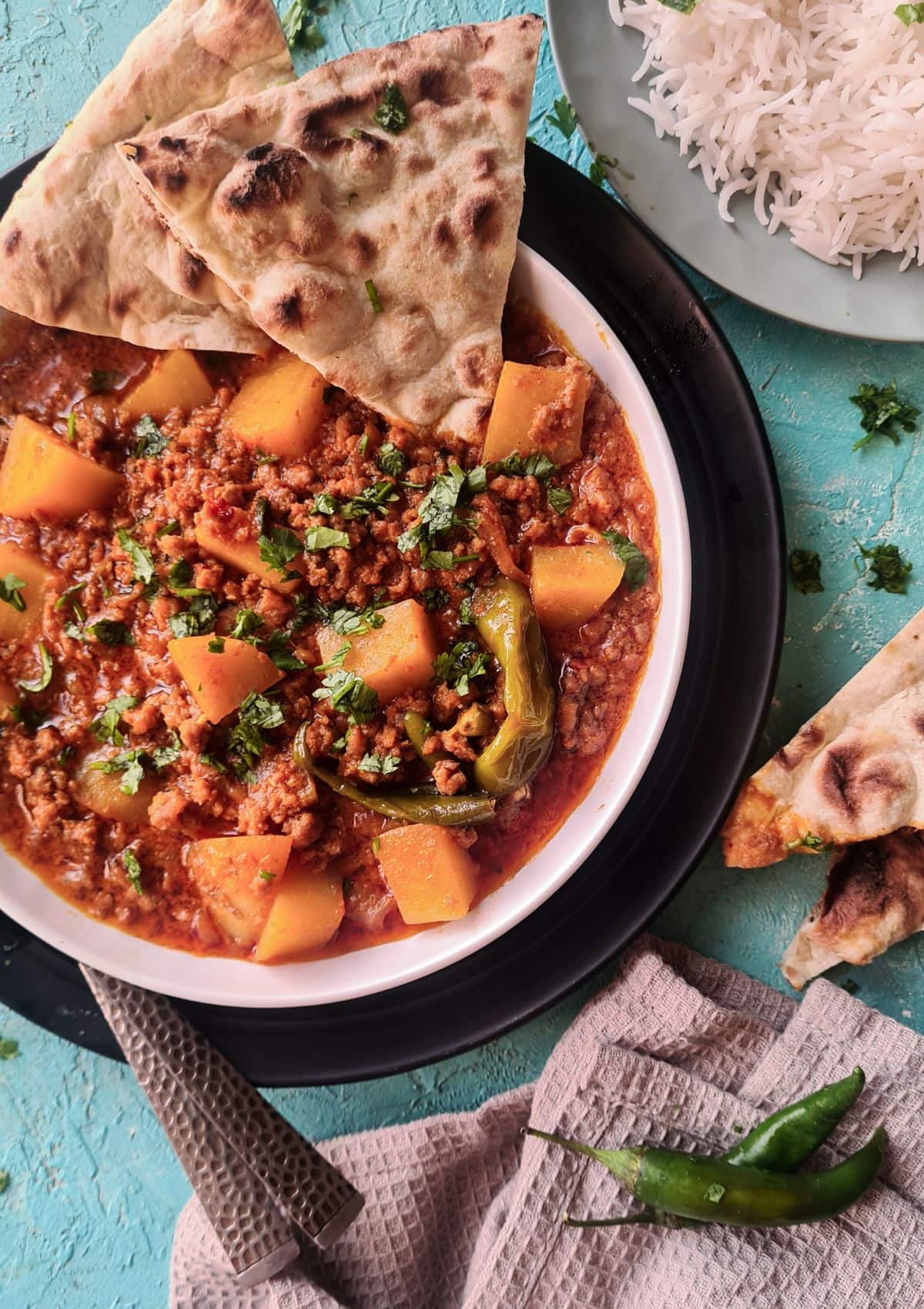
      aloo keema served with naan and rice on the side

      Some notes on ingredients and substitutes

      • Whole Spices: They add aroma and flavor to the curry. You can use garam masala powder if you don’t have whole spices. They are meant to be discarded after cooking and not eaten. You can skip them completely if you feel you will bite into them accidentally, OR you could add them in a tea infuser ball.
      • Ground beef: You will find coarse and fine ground beef when buying from butchers. I recommend using coarse ground beef for all curry based recipes. It is chunkier and gives you that bite, that you will not get in a fine grind. Full fat and lean, both work well for this recipe
      • Potatoes: All potatoes work beautifully in this recipe. However, all varieties of potatoes cook at slightly different timing. So you might have to cook some of them longer if need be. I’ve diced the potatoes into 1/2 inch cubes, which I feel works best for aloo keema
      • Tomato paste: Best thing to add to your aloo keema! They bring a slight tang and pop of color to the curry. And they don’t need a lot of time to cook. You can also use tomato puree instead, just add it while frying ground beef because purees take longer to cook.
      • Onions: This recipe requires onions to be fried golden brown at the very start of the recipe. If you are using pre-fried brown onions from the market, simply add in your onions at the end while simmering the curry in water.

      Instructions and Important Notes

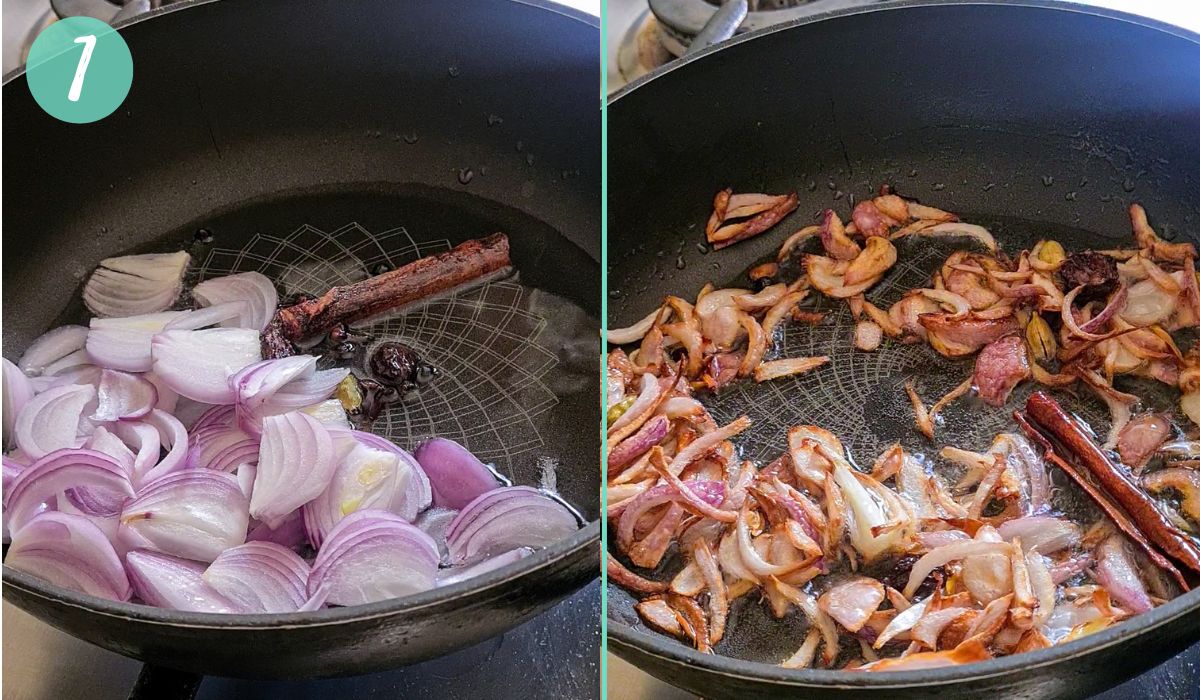
      1. Frying Onions.

      In a medium sized pot, add all the whole spices and onions and fry in oil. We need the onions to look golden brown, but not dark in color.

      NOTE: If your onions turn a slightly darker shade, don’t fret. It won’t effect the taste as much, but will only make your gravy look darker. Ofcourse burnt onions need to be discarded.

      onions frying in oil and turning golden brown

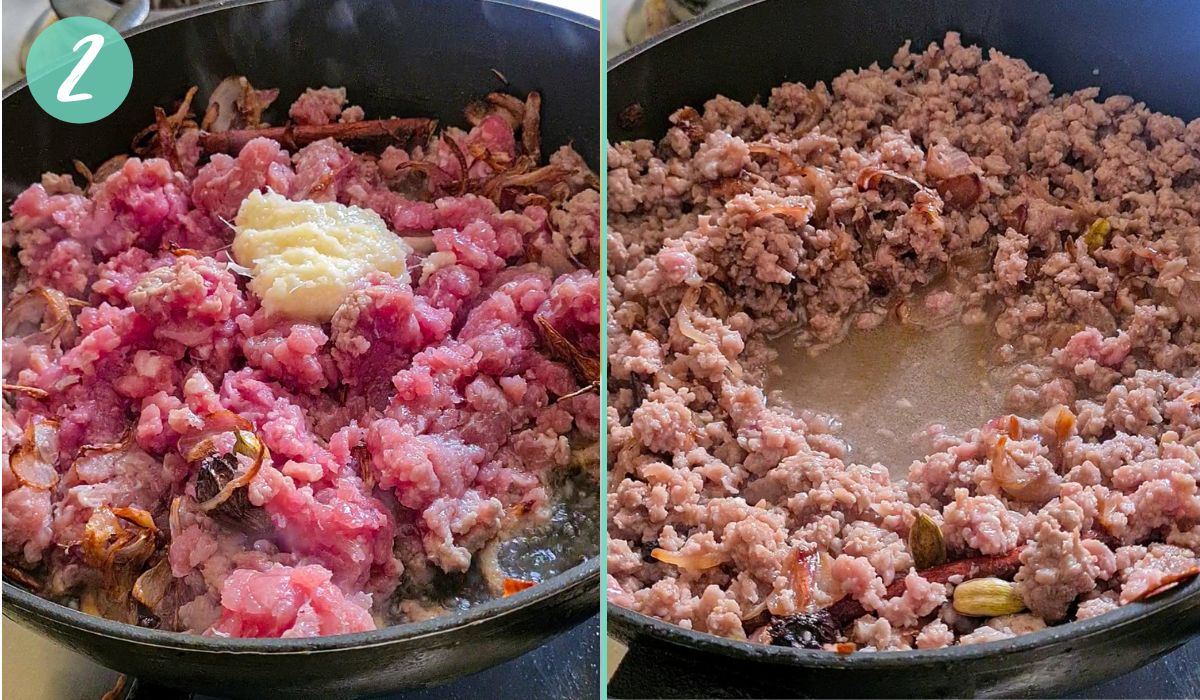
      2. Sauteeing the meat

      In goes your ground beef and garlic ginger paste. Everytime I post a meat recipe, I always talk about how important it is to evaporate all the water from it. The water in the meat carries a “raw meat smell” and if not dried, it lingers on even after cooking for a longer period of time. It takes about 4 to 5 mins, but just sautee your beef at high flame until you see oil shining through again, or see your meat dry up. This step is also called bhunnayi where you sear the beef bits in oil to get a slight color.

      keema with ginger garlic paste, sweating in a pot

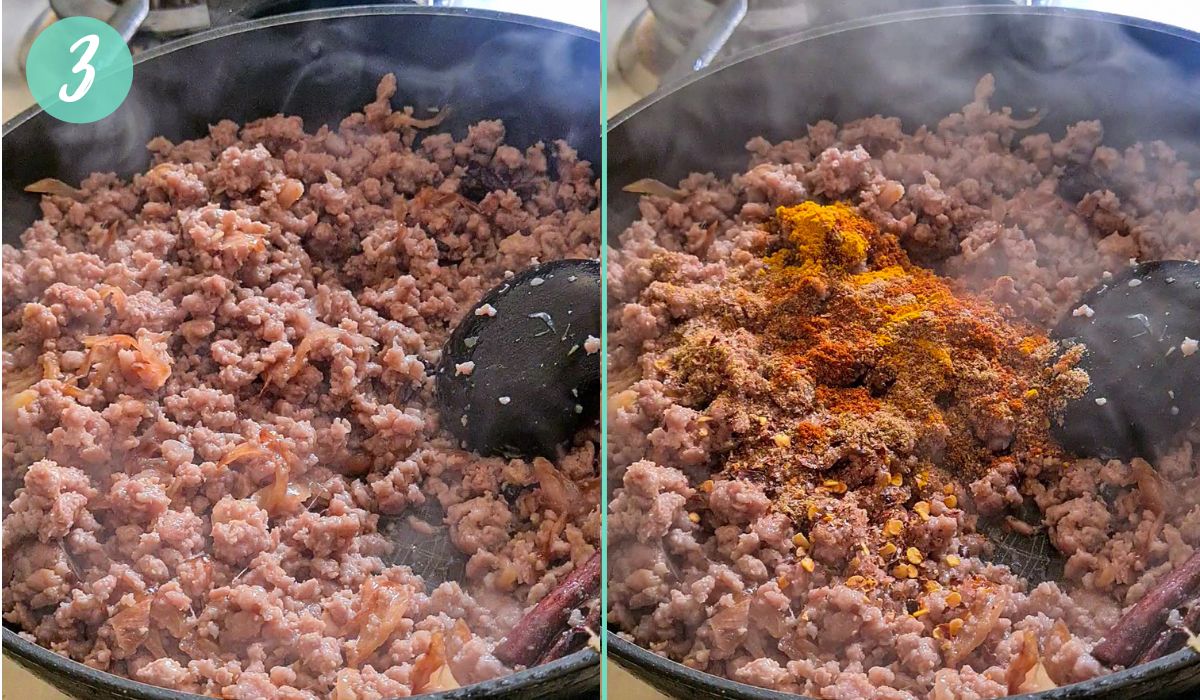
      3. Preparing the curry.

      Now your raw powdered spices go in. Give it another 3 mins of sautee action to allow them to be tempered.

      spices being added to fried keema

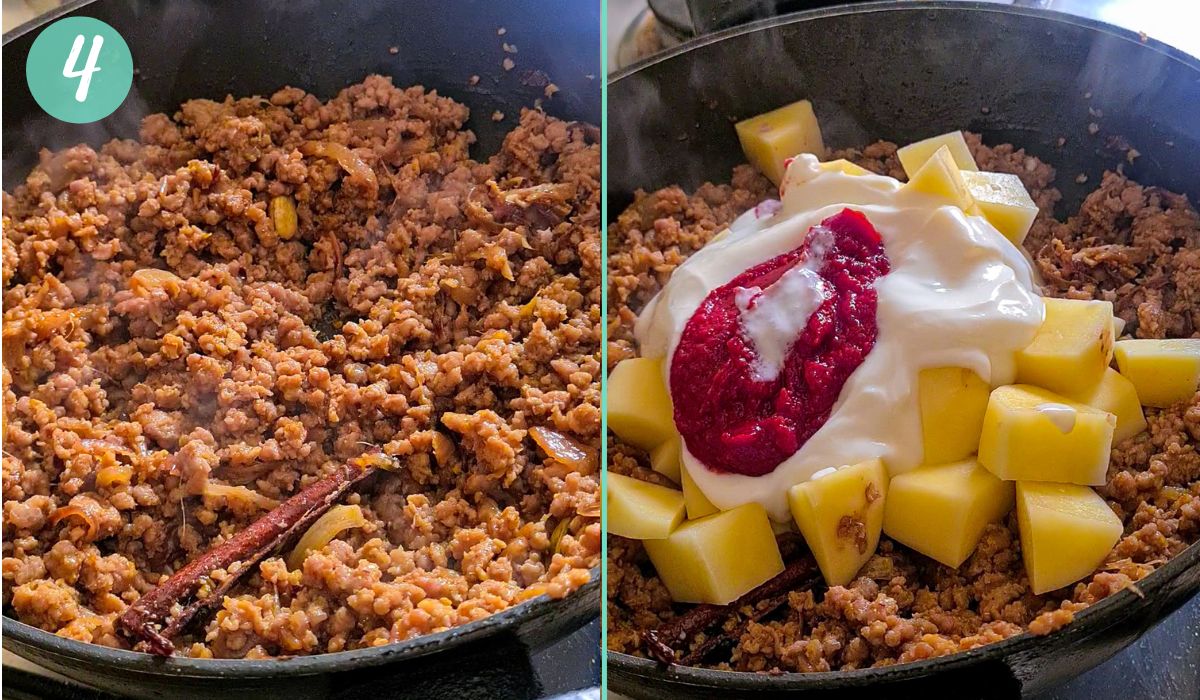
      After tempering spices, you can add the potatoes, yogurt and tomato paste all at once.

      NOTE: Any yogurt you add to a gravy should be beaten and left at the counter when you start the recipe, to bring it down to room temperature. This way it never curdles in your curry.

      spiced mince dried and loaded with raw potatoes, beaten yogurt and tomato paste, ready to be mixed

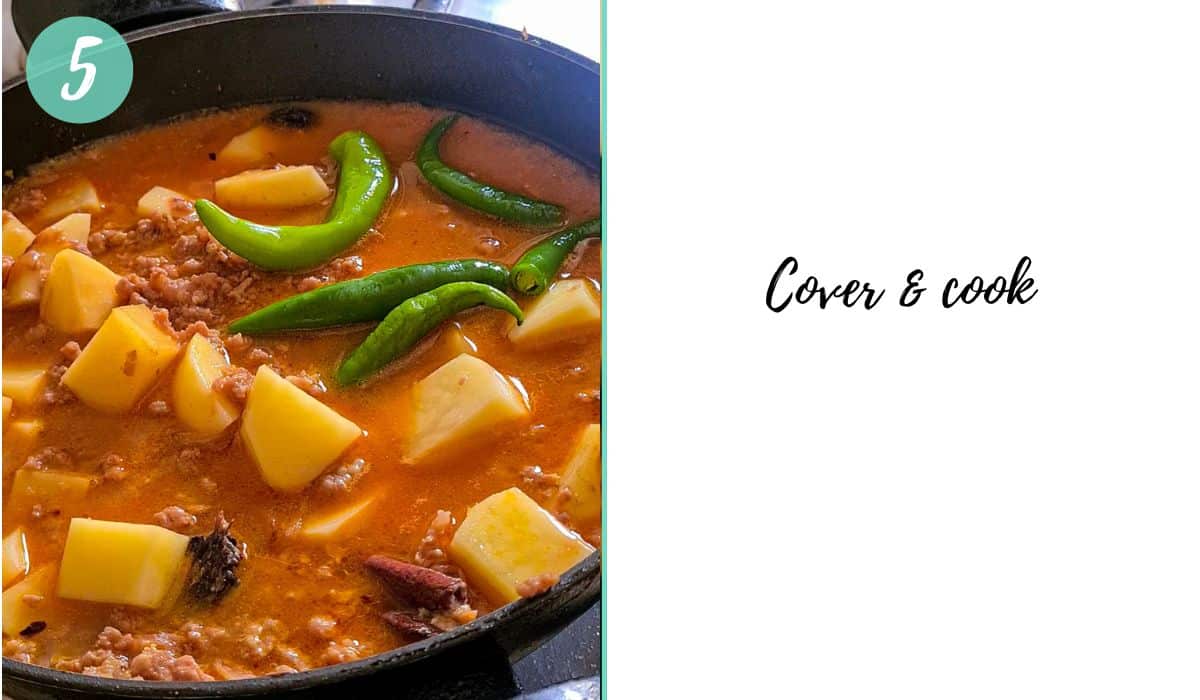
      Now add water to allow the potatoes to soften up. I’ve also added green chilies in this step. If you are someone who doesn’t like spicy food or don’t like green chilies in general, you can skip them completely. Cover the pot and let the potatoes simmer

      aloo keema with green chilies and water in a pot

      NOTE: Most variety of potatoes will cook withing 5 to 10 mins of simmering. Check in 10 mins to see if your potatoes are done. Add more water and leave for longer if you need to.

      4. Garnish

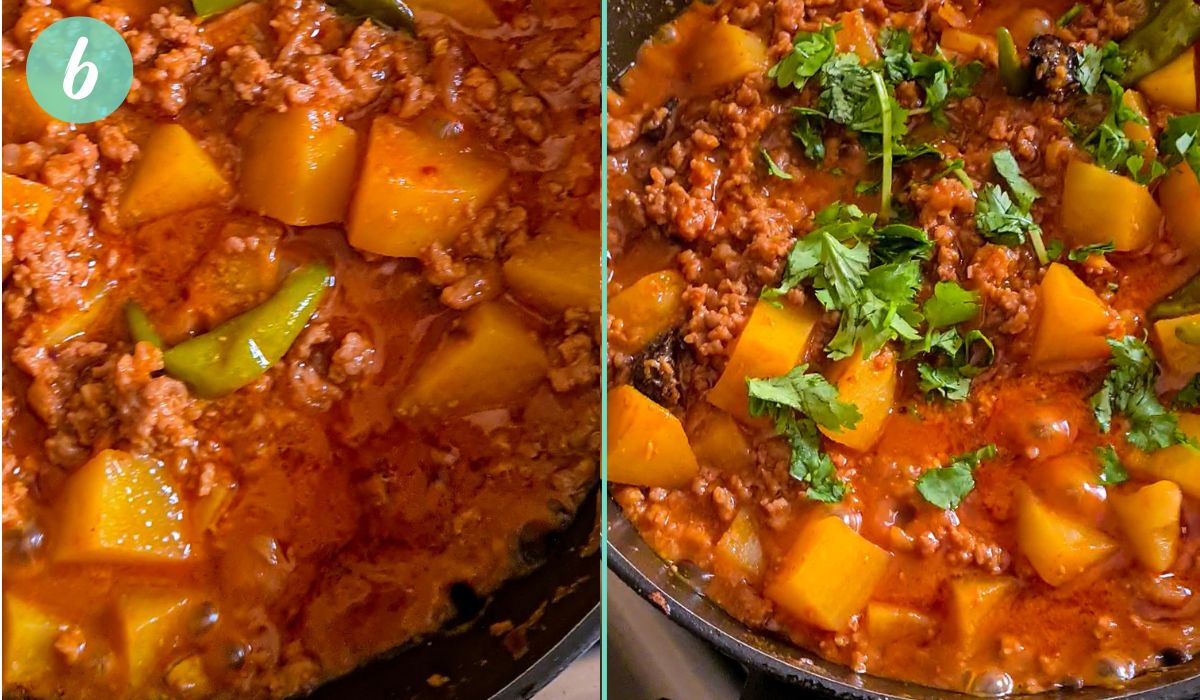
      oil seperating on the sides of the gravy, garnished with coriander

      And lastly, you know your curry is fully cooked and ready when you see oil seperating on the sides. If you are using less oil than mentioned in the recipe, then you might only catch a shine on the surface. Garnish with chopped coriander and serve.

      NOTE: This curry is on the saucier side, which is how we like it in our house. If you’d like it to be dry, than just cook at high flame for a min or 2 to get rid of the water.

      aloo keema with naan on the side

      Serving Suggestions

      This recipe pairs well with almost anything, but here are the top options

      • Flatbread ideas: Roti, Naan, Parathas, puris
      • Rice options: Basmati Rice or Matar pulao
      • Toasted bread or buns
      • Diet options: Serve with couscous or quinoa if you are avoiding rice. You can also have this on the side of cauliflower rice.

      Frequently Asked Questions

      Can I make this recipe with chicken or lamb

      Ofcourse! Traditionally, most Pakistanis use ground beef for the recipe, but it can absolutely be made with chicken mince, ground lamb or goat. The cooking times remain fairly same in all cases.

      Can I add other vegetables to aloo keema?

      Aloo keema matar (potato beef peas) is a super popular variation of this same recipe. You can also add diced carrots as well or any other hard vegetable that you like. IF you are on a low-carb diet, you can make this recipe using sweet potatoes rather than the regular ones.

      How to store the keema

      Aloo keema lasts in the fridge easily for upto 5 days. Although all potato based curries don’t freeze well. They leech out water and change their texture. I would personally not recommend freezing this after potatoes have been added.

      Can I use less oil for this recipe?

      Absolutely! Aloo keema is one of the most forgiving recipes and works just fine with all sorts of variations. The only thing you will compromise on with less oil is that oil seperation at the final stage of cooking. Thats it!

      Not a fan of coriander, can I skip the garnish?

      Yeah so many of you have talked about your distaste for coriander leaves over at instagram. Thats fine. Go ahead and use chopped parsley instead.

      Left Over Ideas

      As promised, here is my list of favorite ways to use aloo keema left overs:

      • Make toasted sandwiches with mayo, cheese and leftover Aloo keema
      • Fill it up in puff pastry sheets and bake
      • Revive the quantity by adding some boiled, seasoned peas and eat with roti, paratha
      • Boil some potatoes and add the left overs to make a mixture and make them into keema aloo patties. Coat them in bread crumbs, fry and enjoy!
      • Add half a can of pasta sauce in the left over and use as dip for nachos or crackers.

      More keema Recipes you can try

      Keema Macaroni
      Dam keema (slow cooked ground beef)
      Beef and Eggplant Nachos
      Khara Masala keema (whole spice Ground beef)

      finished shot of aloo keema

      Aloo keema

      A Pakistani / North Indian style curried potato and ground beef recipe, made with traditional spices and eaten with rice or roti
      4.63 from 8 votes
      Print Pin
      Course: Main Course
      Cuisine: Indian
      Prep Time: 10 minutes minutes
      Cook Time: 20 minutes minutes
      Total Time: 30 minutes minutes
      Servings: 6 servings
      Calories: 424kcal
      Author: Wajiha

      Ingredients

      • 1/3 cup oil
      • 1 whole large onion sliced
      • 500 gm boneless beef mince
      • 250 gm potato cut into ½ inch cubes
      • 2 cup Water – as needed to cook minced meat
      • 1 ½ teaspoon table salt (or to taste)
      • 1 tea spoon red chili powder
      • ½ teaspoon red chili flakes
      • ½ teaspoon turmeric powder
      • 1 teaspoon coriander powder
      • 1 tablespoon garlic ginger paste
      • ½ cup yogurt beaten and room temperature
      • 1 tablespoon tomato paste optional.
      • 4 whole serrano green chilies with stems removed
      • 2 tablespoon chopped coriander for garnish

      Whole spices

      • 1 stick cinnamon
      • 4 whole cloves
      • 5 black peppercorns
      • 4 green cardamom
      • 2 black cardamom

      Instructions

      • Add oil in a medium sized pot on medium heat
      • Add all the whole spices and onions in oil. Fry onions until they turn light golden brown in color
      • Add your minced meat along with ginger garlic paste and turn the heat to high. Saute the meat till all the water from the meat evaporates. This step is called bhunayyi and is used to fry the meat in oil and get rid of raw smells if any.
      • After all the water evaporates, add all powdered spices and salt. Saute for another 2 to 3 mins or until all the meat is evenly colored. Reduce the heat to low
      • Chuck in the potato chunks, yogurt and tomato paste and stir everything together.
      • Add water and green chilies to the meat, and bring back the heat to medium high. Allow the water to start simmering and then cover with a lid. Cook for 6 to 10 mins or as long as it takes for the potatoes to cook through. IF the potatoes are still hard after 10 mins, cook for another 5 and add more water if needed.
      • When your curry is ready, you will see oil seperating on the sides of the pot. At this stage, you can decide how runny you want to keep your aloo keema. You can dry out the water if you want to or leave it as is.
      • Garnish with coriander and serve with roti or naan on the side.

      Notes

      • IF you don’t have tomato paste, you can add 1/2 tomato finely chopped instead. You can also use tomato puree, but then you need to add it before potatoes and cook it for about 5 to 8 mins first, to allow the rawness of the puree to cook through.
      • You can make the same recipe using chicken mince or lamb mince. The steps and timing all stay the same for both options.
      • If you are using pre-fried brown onions from the market, directly add your ground beef to the oil with whole spices. And add the pre fried brown onions when you add the yogurt. 

      Nutrition

      Serving: 6servingsCalories: 424kcalCarbohydrates: 19gProtein: 16gFat: 32gSaturated Fat: 7gPolyunsaturated Fat: 5gMonounsaturated Fat: 16gTrans Fat: 0.1gCholesterol: 55mgSodium: 285mgPotassium: 460mgFiber: 3gSugar: 5gVitamin A: 192IUVitamin C: 5mgCalcium: 73mgIron: 2mg
      Can’t wait to see your remakes! Tag meon IG with your pictures @butteroverbae

      Peas Pulao – Matar Pulao Recipe

      October 4, 2022

      pea pulao served in a brown plate

      This classic Matar pulao recipe is as OG as any rice dish gets in South Asia. Simple whole spices for aroma, and peas for its name, you can whip this dish up in less than 30 mins! All beginner cooks welcome!

      It boasts to be the safety net of every brown mother, who runs out of ideas of what to cook in the middle of the week. But it also works for potlucks and get togethers when paired with heavier curries.

      My favorite Matar pulao combo is with Chicken Handi or the Chicken Shashlik

      What is Matar pulao?

      Matar means “peas” in Urdu or Hindi. Pilaf/Pulao/Pilav is essentially a generic rice dish, where the rice is cooked in any type of broth or stock. The broth is flavored by adding whole spices, vegetables and sometimes protein (like meat, fish, chicken). Some of you might have even heard of the popular Spanish dish called Paella, which is yet another variation of the pulao. This matar pulao is a simple version of the pulao, and is usually paired with a curry. More exotic pulaos like Malai Boti Pulao act as stand-alone dishes. They are an extraordinarily commonly made dish in every North Indian and Pakistani household.

      How is pulao different than biryani?

      This is probably the most debated topic amongst food lovers who’ve been confused when watching youtube videos with the wrong labels or went into a restaurant which served them Pulao when they ordered Biryani. The confusion between the two is common and it made sense to address it over here. Here’s how to spot the difference.

      PULAOBiryani
      One pot dish, where rice is cooked in the flavored brothA layered rice dish where rice is cooked seperately and the curry seperately and simply assembled together while steaming.
      Appears as homogenous evenly colored rice grainsAppears as a mixture of some spicy rice, some plain, some white, and some colored.
      Made with simple whole spicesMade with heavier powdered spices and with heavy curry base.
      Easier to makeRequires a few additional steps

      Bonus points for Matar Pulao

      • ONE POT RECIPE : Unlike biryanis, you can make a pulav in one pot, like this one.
      • WORKS ALONE: Usually simple pulaos are paired with heavier curries, but pea pulao can be had on its own with just yogurt and salad on the side
      • SIMPLE AND QUICK: I have a seperate category on the blog for under 30 min meals and my friend, this one falls into it.
      • The ingredients are pantry staples, and even if you are short on some whole spices, you will still be able to make it perfectly.
      • This is by far the universally kid approved recipe.
      pea pulao served in a brown plate

      Ingredients and Substitutions

      • Rice – Like most of my recipes, I recommend using long grain Basmati rice for pulaos as well. Short grain Basmati rice works perfectly too. You should be able to find Basmati rice in Asian grocery stores.
      • Whole spices – You will need cloves, black and green cardamoms, black peppercorns, bayleaves, cinnamon stick, star anise. These will infuse flavor into your broth. You might not have all of these at home at all times, and it is perfectly fine to skip them if you don’t have any. Just simple black peppercorns will work too.
      • Oil – I’ve made pulaos using ghee (clarified butter), oil and they both work perfectly. For best results, I always recommend ghee because of the added aroma. But any neutral oil would work too. If you are avoiding vegetable oil for health reasons, you can use aromaless coconut oil or aromaless olive oil as well!
      • Peas – Fresh or frozen peas, both can be used to make this recipe. You don’t need to thaw frozen peas incase you are using them. You can also use any other vegetable that you enjoy, like carrots or beans.
      • Ginger Garlic Paste – This is another household staple in South Asian cuisine. You can also chop an inch of ginger and 3 cloves of garlic instead if you are out of ginger garlic paste
      • Onion – Sliced onion adds the depth of flavor that all good pulaos have. Use any type of onion available to you. Red, white, or any really. You can use pre-fried onions that are now readily available in Asian stores. I also like to sprinkle some fried onions on top of the pulao as garnish, but is something completely optional.

      PROTIP:
      After soaking rice in water for 20 mins, rinse and wash 2 more times. This helps in removing excess starch and reduces your pulao’s tendency to be clumpy.

      Instructions

      The method to make this pulao is fairly straightforward but I’ve put in a pictorial for all you visual learners out there.

      Preparing the broth

      1 and 2 – Saute and Temper

      Add oil in a large thick bottom pot and heat it for a minute at medium heat. Then go ahead and add all your whole spices and onions. Allow the onions to caramelize and turn golden brown. This also gives your spices enough time to infuse flavor into the oil.

      2 picture collage. Image 1 shows raw onions and whole spices in oil. Image 2 shows caramelized onions in oil in a pot

      3 and 4 – Cooking peas

      Add your peas, and garlic ginger paste to your onions. Cook for 2 to 4 minutes or until the peas have released all their water and change their color slightly.

      2 picture collage. Step 3 shows garlic ginger paste and peas added to pot. Step 4 shows cooked peas in the pot

      Cooking the rice

      5 – Add soaked Rice
      6 – Adding Salt and Water

      steps 5 and 6. Adding rice and water to pot. Distal part of index finger shown.

      Add rice, salt and water to your pot. The water level should be an inch above the rice. This is by far the best method to have the perfect rice:water ratio, regardless of the width of the pot you use. To check the water level, you can do 1 of two things.

      • You can do a finger test. To do this, turn off the heat before adding rice to the pot. Then add your rice, water and salt. Dip your index finger in the water and your finger should touch the rice, while the water touches your first joint. You can turn on the heat after checking the water level.
      • If you are hesitant to dip your finger, then use the back of your laddle. Mark the back of your laddle at 1 inch mark with tape or permanent marker. Then dip to touch the rice, and pour enough water that the water level touches the 1 inch mark

      Use a spoon and taste your broth for seasoning. It should taste just right. Neither unseasoned nor overly seasoned.

      7 and 8 – Boiling rice

      After the water level check and salt taste test, cover the pot and boil the rice at high heat for about 4 to 5 mins or until most of the liquid has evaporated.

      steps 7 and 8. Water added to rice and covered with a lid

      9 and 10 – STEAM RICE

      Reduce the heat to low and use a flat spoon or a large slotted spoon to toss the rice around gently and cover. Let the rice steam for another 5 mins at lowest heat.

      FLUFF: Turn off flame and use a fork to fluff your rice and it is ready to be served.

      steps 9 and 10. Water level reduced as rice fluffs and finally ready to be served

      PROTIPS and Recipe notes

      • To avoid accidentally biting into whole spices while eating, you can tie them in a cheesecloth or a tea infuser ball before adding them to the pot.
      • Use a thick base pot for any one pot rice dish you make. If your pot doesn’t have a heavy or thick base, considering adding a flat griddle or tava below your pot during the last steaming step. This helps with evenly distributing heat during steaming and also prevents your rice from burning or browning from the bottom.
      • Don’t skip the fluffing step, otherwise you will have a clumpy rice block as your rice cools down.
      • For a deeper, richer flavor, use chicken yakhni or broth instead of water to cook the rice.
      pea pulao served in a brown plate

      Frequently Asked Questions

      What can I do if my rice is undercooked even after the time marks mentioned?

      Undercooked rice is not something to worry about and is easily fixable with this hack. Simply add 1/4th cup of a water and milk mixture into your rice while steaming and let it steam for another 5 mins. And not only will your rice be cooked in that time, but it will also be EVENLY cooked.

      What other rice can I use other than Basmati?

      I’m definitely a hardcore Basmati activist! But if you want, you can try using regular white grain rice. I would personally not suggest using jasmine rice or brown wild rice simply because they don’t turn out like a traditional pulao does.

      Can I add more flavor or ingredients to my pulao?

      Pulaos are like blank canvases. They will take up whatever flavor you enhance it with. For this pea pulao, I’ve kept the broth simple and only infused it with whole spices. You can also make these changes for a different flavor profile:

      • Replace water with bone broth or vegetable stock.   Or use a chicken bouillon cube instead to achieve the same effect.
      • Add dried fruits to the whole spices while frying them. Such as cashews, almonds or raisins.
      • If you are someone who tries to sneak in some extra fibre here and there, add your favorite seeds to the whole spices while frying. It can be pumpkin seeds or flax seeds or any other that you prefer.

      How can I reheat refrigerated pulao

      Unlike biryanis, pulao rice is cooked in its own water. So you don’t throw away the starch completely. Because of the starch content, pulao rice generally clump a little as they cool down. So when you take out your rice from the fridge, don’t attempt to break the clumps by hand. Simply put it in the plate you want to reheat it in and add a splash of water. Heat it for about 30 secs, take it out and then break the clumps if any. Reheat again for as long as you want to.

      How long can the Pea pulao be refrigerated for?

      Store the pulao in a nice airtight container in your fridge after it cools down. It would last and stay fresh for 4 to 5 days easily.

       Can I freeze leftover pulao?

      Absolutely! one of the best things about cooking pulaos as how incredibly easy they are to freeze and defrost. I always make a little extra than we need so that I can freeze 2 portions for later. Use a ziplock bag or an airtight container to freeze the pulao. Whenever you need to eat it, simply allow to thaw on the counter and then microwave like you normally would. If you are in a bit of a rush than add 4 to 5 tablespoons of water in the rice and microwave for 2 to 3 mins. It’ll be good as new! You can freeze leftover pulao for upto 40 to 50 days without causing any freezer burns.

      Serving Suggestions

      pea pulao served with chicken curry, tahini sauce, fresh salad and crisps on the side.

      Matar pulao can be eaten as a Main or eaten alongside a nice curry or kebab. Here are some options we love:

      • Chicken curry – Chicken ka saalan shorba
      • Chicken handi
      • Prawn masala
      • Raita and chicken cheddar kebab
      • Handi kebab
      • Chicken Tikka and mint chutney

      More Recipes on the Blog

      • Traditional Pakistani Chicken Yakhni (Chicken Broth Recipe)
      • fish tahiri in a pot
        Fish Tahiri – Spicy Rice and fish
      • final shot of the assembled shahi pulao
        Shahi Chicken Pulao
      • white mutton biryani made with goat meat in a black plate
        Homemade White Mutton Biryani
      pea pulao served in a brown plate

      Pea pulao (Matar Pulao)

      A popular and traditional aromatic Pakistani/ Indian rice dish, made with whole spices, peas and onions
      5 from 3 votes
      Print Pin
      Course: Main Course, Side Dish
      Cuisine: Indian, pakistani
      Prep Time: 5 minutes minutes
      Cook Time: 20 minutes minutes
      Total Time: 25 minutes minutes
      Servings: 3 servings
      Calories: 450kcal
      Author: Wajiha

      Ingredients

      • 250 gm long grain Basmati Rice or 1 1/4th cup soaked for 20 mins
      • 1/3 cup cup vegetable oil
      • 2 teaspoon pink himalayan salt or table salt
      • 1 medium medium onion sliced
      • 1 cup peas fresh or frozen
      • 1½ teaspoon garlic ginger paste
      • water as needed

      Whole spices

      • 1 star anise badiyan ka phool
      • 3 cloves
      • 5 to 6 black peppercorns kali mirch
      • 2 bayleaves tez patta
      • 1 cinnamon stick dar cheeni
      • 2 black cardamom bari elaichi
      • 4 green cardamom choti elaichi

      Instructions

      Prepare Broth

      • Add oil in a medium sized thick based pot or cauldron and put on medium heat on the stove.
      • Add sliced onions and whole spices to the pot. Saute with a wooden spoon until onions turn light golden brown.
      • Then add garlic ginger paste along with the peas. Saute for 2 to 3 mins or until the water from the peas evaporates.
      • Cook Rice
      • Add soaked rice and salt.
      • Add water to the rice making sure the water level is higher than the rice by roughly about an inch. To check the water level, you can do 1 of two things.
      • You can do a finger test. To do this, turn off the heat before adding rice to the pot. Then add your rice, water and salt. Dip your index finger in the water and your finger should touch the rice, while the water touches your first joint. You can turn on the heat after checking the water level.
      • If you are hesitant to dip your finger, then use the back of your laddle. Mark the back of your laddle at 1 inch mark with tape or permanent marker. Then dip to touch the rice, and pour enough water that the water level touches the 1 inch mark
      • Now do a taste test for salt and add more if needed. Your water should taste balanced, add more salt if needed.
      • Cover the pot with a lid and let the rice cook for 5 mins or until you cannot anymore water in the pot.
      • Use the spoon and gently toss the rice upside down. Reduce the heat to lowest possible setting and cover the pot again. Cook for another 5 to 8 mins.
      • Use a fork or a spoon to fluff the rice.
      • Serve with yogurt and kebabs or any curry of your choice.

      Notes

        • If your pot doesn’t have a heavy or thick base, considering adding a flat griddle or tava below your pot during the last steaming step
        • Skip the whole spices if you don't have any at hand.
        • If your rice are still undercooked after a total of 10 mins of cooking, then add a mix of water and whole fat milk equal to 1/4th cup and steam for another 5 to 6 mins.

      Nutrition

      Serving: 1servingCalories: 450kcalCarbohydrates: 40gProtein: 6gFat: 74gSaturated Fat: 6gPolyunsaturated Fat: 65gTrans Fat: 2gSodium: 869mgFiber: 6gSugar: 4g
      Can’t wait to see your remakes! Tag meon IG with your pictures @butteroverbae

      Tomato Chutney – Hyderabadi style

      February 28, 2022

      tomato chutney served in a steel bowl.

      This vegan Hyderabadi Tomato Chutney, aka “Tamatar ka khatta” is the delicious tangy, spicy condiment that accompanies lots of Indian and Pakistani food. Its made with simple ingredients and ready in under 20 minutes!

      tomato chutney served in a steel bowl.

      It is the PERFECT addition to any lonely rice dish you make, like Matar Pulao, Chicken Malai Pulao or steamed rice with lentils or honestly just any fried snack you can think of, South Asian or otherwise.

      [feast_advanced_jump_to]

      About Tomato Chutney

      This particular Tomato chutney is known as “Tamatar ka khatta” in Urdu/Hindi, which literally translates to “tang of tomato”. It comes from the Hyderabadi cuisine made by cooking tomatoes in oil and spices. It is closely related to tomato ka kut, which is another Hyderabadi tomato curry recipe, served with eggs on top. Hyderbadis are known for their love of tangy food. Case in point would be the Hyderabadi khatti dal. True Hyderabadis would tell you that they always have a batch of this tomato chutney in their fridge or freezer, and I must say I like that sort of ahead-thinking when it comes to food!

      Ingredients

      Here are some notes on the ingredients.

      labelled ingredients shown seperately for tomato chutney
      • Tomatoes – Fresh ripe tomatoes are ideal for this recipe. But, don’t worry, you can also use canned tomatoes.
      • Powdered Spices – Salt, red chili flakes, Turmeric, Red chili powder
      • Whole Spices – Nigella seeds (Kalonji), cumin seeds (Zeera), mustard seeds (Rye), whole red chilies (Saabit laal mirch), curry leaves. You may not have all the ingredients in your pantry, and thats fine, you can skip them if you don’t have them all but I would highly recommend not skipping the curry leaves.
      • Spice base – You need garlic and onions to get the “base” started. You can skip the onions if you don’t like them for xyz reasons.
      • Oil – Any regular cooking oil, ghee or butter would do.

      See the recipe card for full information on ingredients and quantities

      How to make the chutney

      This is a very straightforward and quick recipe. Here’s a quick pictorial to guide you through the steps.

      onions, whole spices, garlic and curry leaves in oil in pan.

      Step 1: In a deep skillet or pan, add oil. Then add whole spices, garlic, onions and curry leaves.

      spices and onion turning golden brown in oil in a pan.

      Step 2: Sauté onions and garlic at medium to low heat until golden.

      adding spices to chutney base.

      Step 3: Add powdered spices.

      chutney base ready.

      Step 4: Cook for 1 minute to allow the spices to infuse the oil.

      adding crushed tomatoes to the chutney base.

      Step 5: Add crushed tomatoes into the pan and cover with a lid for 15 minutes. Let it simmer at low flame until the oil separates from the side and the moisture from the tomato evaporates.

      tomato chutney ready and cooked.

      Step 6: When you see the oil separation, add some extra water to bring the chutney together and cook at high heat for 1 to 2 minutes. Cool the chutney down before serving.

      tamatar ki chutney ready in a bowl with spoon on the side

      This chutney is generally served at room temperature so you don’t need to reheat it if you’ve made it earlier in the day. If you are having it on the next day, simply bring it out of the fridge and let it sit on the counter for about 10 – 15 mins. No need to reheat it.

      Expert Tips

      • Fry onions and garlic at low heat to prevent them from turning brown. We need to stop cooking when they turn golden. You can add a splash of water to prevent further cooking while you add your spices.
      • Always add powdered spices BEFORE adding tomatoes. This allows the raw spices to be tempered in oil and be activated.
      • Never store your cooked chutneys in plastic tupperware. It WILL stain your plastic yellow or even corrode it from the inside if its cheap plastic. Always store chutneys in glass, ceramic or steel containers.

      Pairing Tomato Chutney

      meal showing rice, beef kebabs, raw sliced onions, salad and tomato chutney on the side
      Tomato chutney on the side of rice, salad and kebab.

      This tangy “tamatar ki chutney” is popularly eaten with rice dishes that are non-spicy on their own like Pulav rice and steamed rice. Rarely also eaten with roti, parathas and kebabs. Here are a couple of things this chutney is normally eaten with:

      • Steamed rice and lentils
      • Pulav rice, like the Malai boti pulao
      • Zeera pulav, kebab and salad (as shown in picture)
      • Served as a condiment for dinners and get togethers.
      • Used as a dipping sauces for spicy chicken samosas or chicken nuggets

      Frequently Asked Questions

      How long does the Chutney last?

      Your chutney can last for over a month easy in the fridge! Just make sure to keep it in a glass / ceramic airtight container in the fridge.

      Can I freeze the chutney?

      Absolutely! If you plan on using it later and not right away, you can easily freeze the chutney after it cools down. Freeze in a ziplock bag and simply reheat in the microwave whenever you are ready to consume.

      Can I reduce the level of spices in the chutney?

      This chutney is not overly spicy to begin with (atleast not to my “brown” palate). But if you are someone who can’t eat spicy food in general, then I’d say switch the red chili powder to paprika and you should be fine. Some people in my family also add a teaspoon of jaggery aka “gud” in their chutneys.

      Does Tomato chutney go with NON-South Asian food?

      If you are fan of fusion and experiment than absolutely! We love it as a dip with nuggets and Arabic grill platters. And because of the flavors, I can tell you it will go well with Mexican food too!

      More recipes like this

      Here are more chutneys and vegetarian recipes for you:

      • GAJAR KA ACHAr - quick spicy pickled carrots
        Gajar ka achar – Spicy Pickled Carrots Recipe
      • a plate with bottle gourd curry with rice and dal on the side on a blue background
        Lauki ki sabzi/bhujia – Bottle gourd curry
      • sweet tamarind chutney in an open jar.
        Sweet Tamarind Chutney (Imli Chutney)
      • a bowl with schezwan sauce with a few red chilies on the side against a blue backdrop
        Schezwan Sauce

      Do you have any questions? I’m happy to help! And of course, If you try this recipe, I’d loveeeee to see it or simply hear about it! Hit me up in the comment section below and I’ll get back to asap! Happy Cooking!

      top view of tomato chutney in a bowl

      Hyderabadi Tomato ka khatta

      Tangy tomato chutney, cooked with mild spices, originating from Hyderabadi Cuisine and eaten with pulavs and rice. Known as "tamatar ka khatta" in Urdu/Hindi
      4.72 from 7 votes
      Print Pin
      Course: Dips & Condiments
      Cuisine: South Asian
      Prep Time: 10 minutes minutes
      Cook Time: 15 minutes minutes
      Total Time: 25 minutes minutes
      Servings: 2 cups of chutney
      Calories: 500kcal
      Author: Wajiha

      Ingredients

      • 1 kg fresh tomatoes or canned
      • 1½ teaspoon table Salt or to taste
      • 1/2 teaspoon Crushed red chili flakes
      • 1/2 teaspoon Turmeric powder
      • 1/2 teaspoon Red chili powder
      • 1 medium onion chopped 60 gm
      • 6 big cloves of garlic
      • 1/3 cup vegatable oil

      Whole spices

      • 1/2 teaspoon Nigella seeds Kalonji
      • 1/2 teaspoon cumin seeds Zeera
      • 1/2 teaspoon mustard seeds Rye
      • 4 whole red chilies Saabit laal mirch
      • 8 to 10 curry leaves

      Instructions

      • Add onion and garlic in a food processor until finely chopped. Remove and set aside.
      • Add tomatoes in the food processor and process till it becomes finely chopped (salsa consistency). DO NOT ADD WATER.
      • In a saucepan or small pot, add oil and place on the stove at medium heat.
      • Add the chopped onion and garlic, along with all the whole spices. Saute till the onions and garlic become slightly golden.
      • Reduce the heat to low, and add all the remaining spices and salt, saute for 1 to 2 mins.
      • Now put all chopped tomatoes in the pot and increase the flame back to medium high. Once you see the tomatoes have heated up, put the lid on and let the tomatoes cook for 10 to 15 mins.
      • Once all the water from the tomatoes has evaporated, cook for another 5 mins until you see oil seperate on the sides.
      • Now add 1 cup water and cook for another 5 mins at medium to high flame or until you start seeing oil seperation again on the sides.
      • Serve warm or room temperature with rice or dishes of your choice.

      Notes

      1. The chutney or Khatta can safely be consumed for 1 month to 45 days after it has been made, if refrigerated.
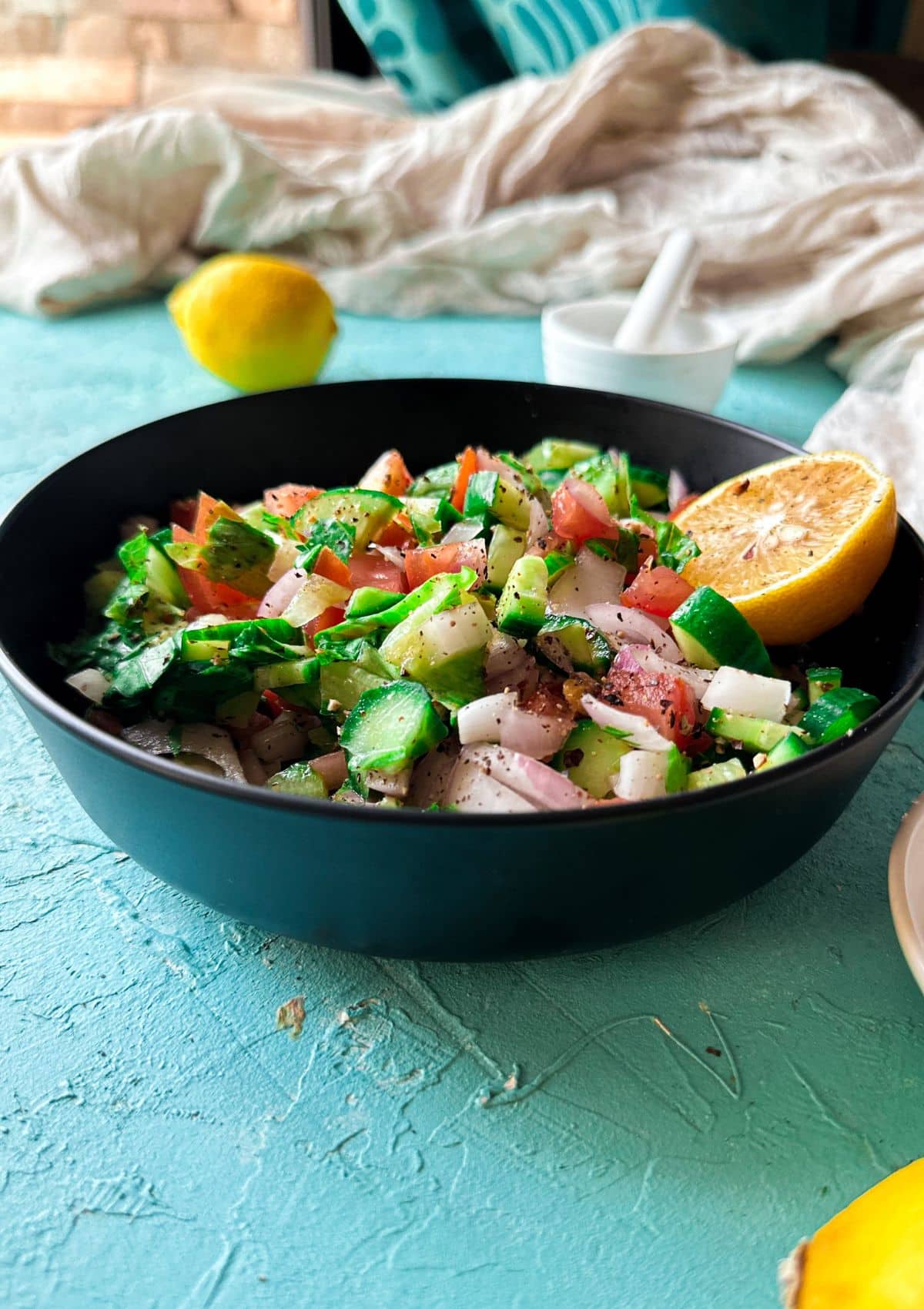
      2. You can also freeze the chutney for upto 4 months.
      3. Save the chutney in an airtight container in the fridge and simply leave outside to come down to room temperature before serving
      4. This chutney is served at room temperature so it doesn't need heating up prior to being served.

      Nutrition

      Serving: 1cupCalories: 500kcalCarbohydrates: 74gProtein: 16gFat: 78gSaturated Fat: 5gPolyunsaturated Fat: 68gTrans Fat: 1gSodium: 1273mgFiber: 18gSugar: 40g
      Can’t wait to see your remakes! Tag meon IG with your pictures @butteroverbae
      « Previous Page
      Next Page »

      Primary Sidebar

      Hey there! I am Wajiha, the blogger and cook behind Butter over Bae.
      My friends had an intervention for me, to stop me from spamming them with all my kitchen experiments and food pictures. But, instead, I made this! And now I put up my food spam for the world!

      My blog is literally all my food obsessions in one: Pakistani/Indian food, Pan-Asian recipes, and desserts! I’d loveeeee to show you around and tell you more. Grab a cup guys and click below

      Who this lady? →

      Winter Favorites

      • hot and sour soup served.
        Chicken Hot and Sour soup
      • tangy savory lentil oats
        Tangy Savory Oatmeal and Lentil bowl
      • 2 pieces of blonde chocolate chip brownie with a glass of milk on the side and a half showing tray of chocolate chip brownies with a few scattered chocolate chips all around a blue backdrop
        Easy Chocolate Chip Blonde Brownies
      • phitti hui coffee or indian whipped coffee in a mug
        Phitti hui Coffee – Pakistani Whipped Coffee
      • pakistani whipped mocha latte in glass mug
        Pakistani Whipped Mocha Latte
      • apple cinnamon latte in a glass topped with cream
        Apple Cinnamon Latte

      Popular Recipes

      • paper towel with lots of crispy golden brown onion slices on it against a grey background
        How to make crispy fried onions and store them
      • Qeema macaroni
        Keema macaroni
      • Lahori Chargha Recipe
      • khageena or spicy scrambled eggs in a pan
        Khageena – Pakistani spicy scrambled eggs
      • 2 chicken tikka pieces sitting on a bed of rice in a black plate
        Easy Chicken Tikka Recipe
      • a plate of chicken pieces and colored rice with some onion and cucumber sliced on the side
        Pakistani chicken biryani, Karachi special

      Footer

      ↑ back to top

      Privacy Policy
      Terms & Conditions

      Contact

      • Instagram
      • Facebook
      • TikTok
      • Pinterest

      All images and content are copyright-protected. Please do not use my images or recipes without prior permission.
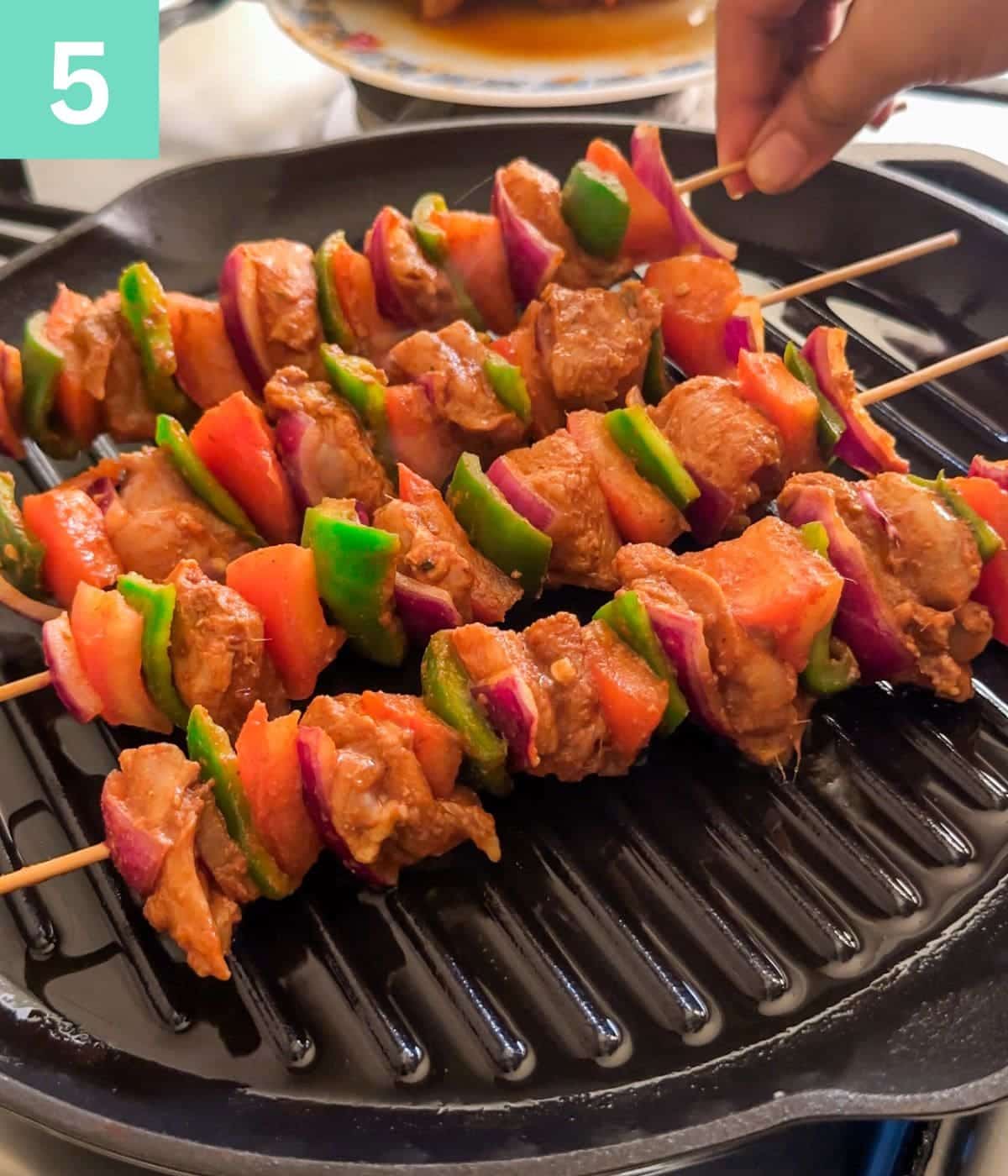
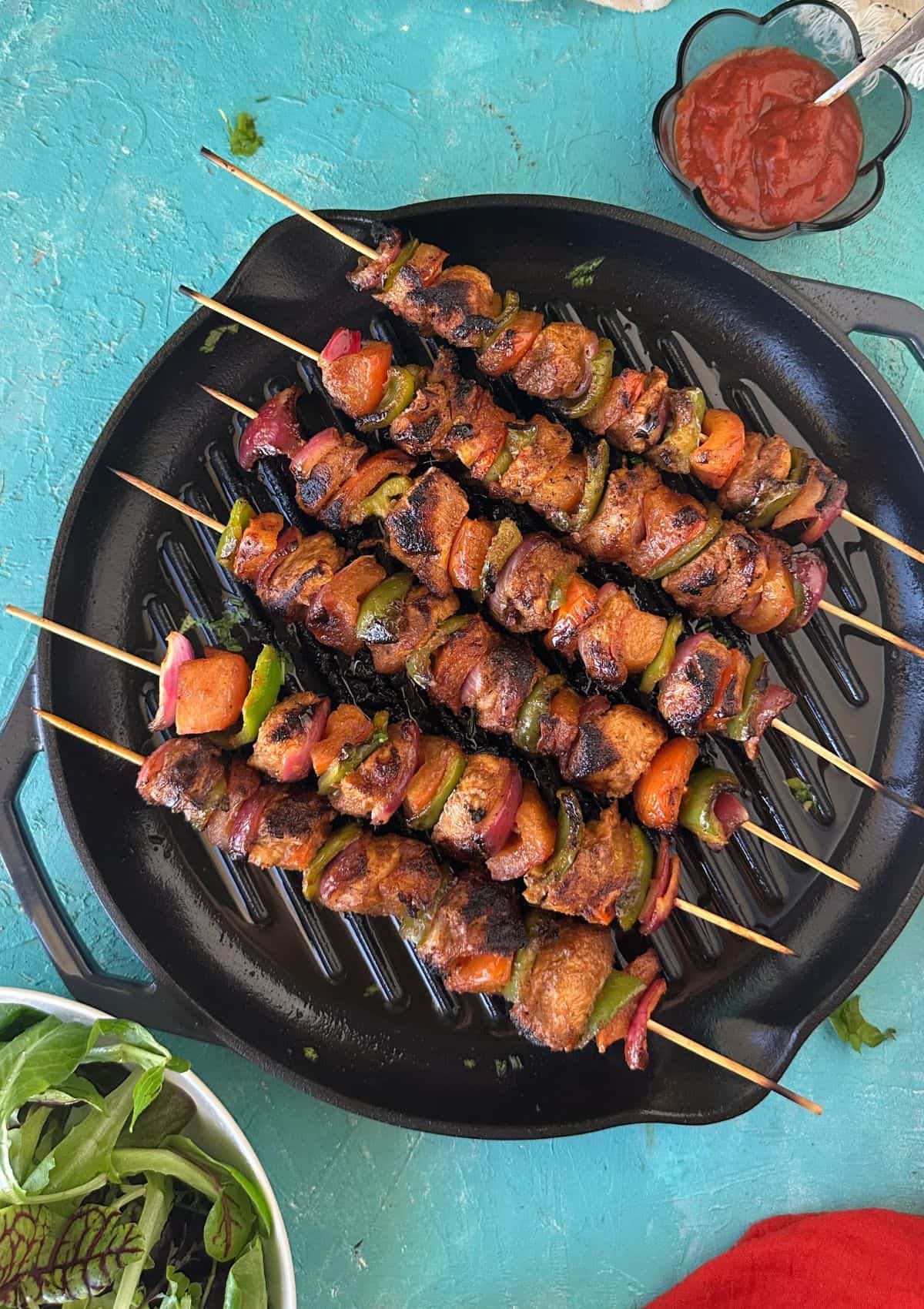
      Copyright © 2025 Butter Over Bae

      Rate This Recipe

      Your vote:


      A rating is required
      A name is required
      An email is required